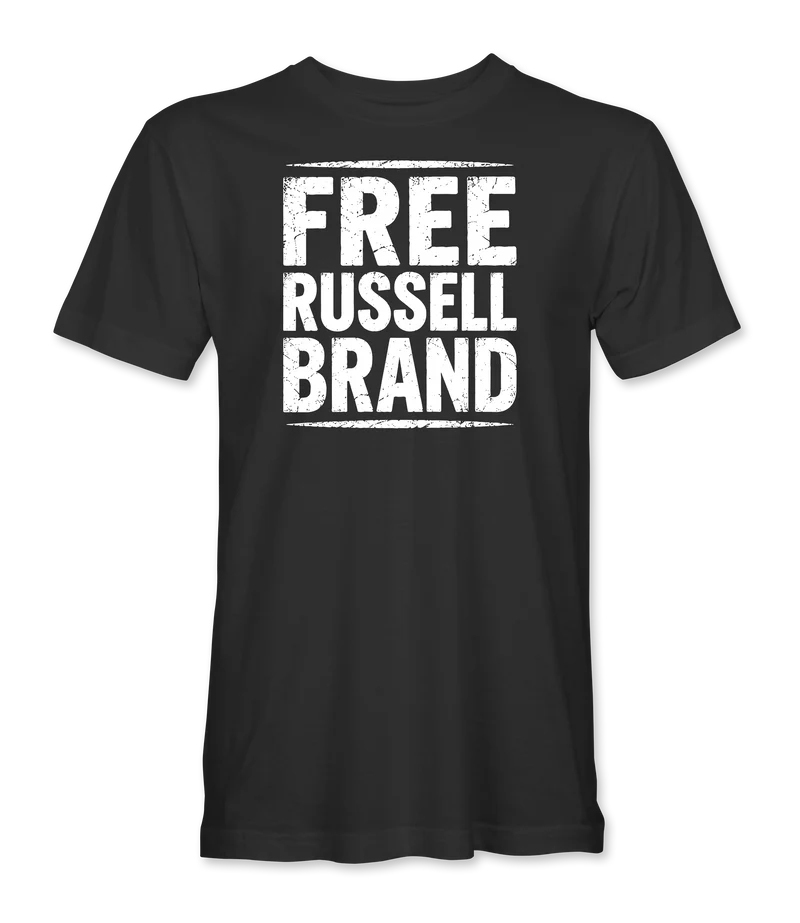
Russell Brand’s latest “Free Russell” T‑shirt is hitting the market for $34.99, a price that many fans can’t ignore as the comedian‑actor faces a 10½‑year sentence after his rape conviction.
Two weeks after the court handed down the harsh penalty, Brand’s wellness company unveiled a line of apparel bearing the slogan “Free Russell.” The items, featuring bold typography on dark fabrics, are now available online through the brand’s own website. In a separate move, Brand’s wife, Laura, posted a video on YouTube on November 15, in which she shared a message from behind bars that claims he is innocent. The combination of the merch drop and the YouTube appeal has ignited a wave of backlash across social media, sparking heated debate about accountability, marketing, and the power of celebrity influence.
The decision to launch merchandise so soon after a high‑profile conviction is not only legally precarious but also ethically questionable. While the company claims the line is a “support initiative,” critics argue that monetizing a campaign titled “Free Russell” from prison is an attempt to monetize guilt and distract from the gravity of his crimes. The situation raises questions about the intersection of commerce, fame, and justice, forcing fans, legal experts, and the broader public to confront how far an offender can still wield influence.
Background & Context
Russell Brand, once celebrated for his sharp wit and social commentary, found himself entangled in a legal nightmare after a rape conviction in 2024. The court found him guilty of sexual assault, sentencing him to more than 10½ years in federal prison. The decision followed a months‑long investigation that exposed a pattern of predatory behavior, shocking fans worldwide. Brand’s public persona—a flamboyant comedian, author, and wellness guru—has long been a paradox, merging intellectual discourse with outlandish bravado. This juxtaposition is a key part of the controversy, as his followers see him as both a provocateur and a moral guide.
The “Free Russell” merchandise is part of Brand’s wellness enterprise, an online venture that sells coaching, books, and lifestyle products. The initiative, launched just weeks after his sentencing, claims to raise funds for Brand’s legal defense and to support those affected by sexual abuse. However, the timing raises eyebrows: an individual already facing a decade in prison is using a platform to generate revenue, effectively turning the spotlight back onto himself. The $34.99 price tag, while modest compared to other celebrity brands, feels like a deliberate attempt to make the product accessible to a wide audience, potentially generating significant sales.
Brand’s wife, Laura, has played an instrumental role in this narrative. She posted a YouTube video on November 15, delivering a message from the confines of his cell. In it, Brand asserts his innocence, framing his legal troubles as a “misunderstanding.” The video, amplified by his followers, presents a stark contrast to the court’s findings, hinting at a strategic use of social media to influence public opinion. The joint effort—Brand’s merch line and Laura’s YouTube appeal—creates a powerful marketing engine that capitalizes on his existing fan base, despite the legal and moral implications.
What People Are Saying
The reaction to the “Free Russell” merch launch has been swift and intense. Online communities, especially those dedicated to #MeToo activism, have decried the attempt to monetize an ongoing legal battle. Critics argue that Brand’s move is a blatant attempt to shift the conversation away from the severity of his crimes and onto a consumerist front. The hashtag #FreeRussell, which once trended as a lighthearted fan rally, has now become a target for condemnation, with many calling for a boycott of his products.
Supporters of Brand, however, defend the initiative as a genuine attempt to rally financial backing for his legal defense. They point to his long history of self‑help advocacy and suggest that he is exercising his right to raise funds for his own legal battles. Some followers view the merch line as a symbolic gesture—an expression of solidarity that transcends the legal verdict. Nonetheless, the support remains a minority voice in the broader conversation, which leans heavily toward accountability and justice for victims.
Within the broader entertainment industry, the case is prompting discussions about how celebrity brands can navigate legal controversies. Some experts warn that launching merchandise during a criminal trial can be seen as a violation of court orders, potentially jeopardizing Brand’s standing. Others note that the legal ramifications are unclear, raising questions about whether Brand can profit from a venture while incarcerated. The situation has become a cautionary tale for celebrities seeking to monetize their brand during legal disputes, underscoring the need for transparency and ethical considerations.
What Happens Next
Legally, Brand’s current position remains precarious. If the court issues a prohibition on profiting from his persona or brand during the sentence, the “Free Russell” merchandise could face seizure or legal action. The company’s website may also be scrutinized for compliance with federal regulations that prevent convicted individuals from exploiting their notoriety for financial gain. Meanwhile, Brand’s defense team might need to address whether the merch line constitutes an illicit income source, potentially influencing the outcome of his appeals.
From a public relations standpoint, Brand’s next move will likely hinge on the evolving legal narrative and the public’s appetite for his brand. If the court upholds restrictions, he may have to halt the sale of the merchandise immediately. If not, the company might face mounting pressure from consumer advocacy groups, possibly leading to a voluntary pullback to protect its reputation. Social media platforms, sensitive to content that could be construed as exploitative, may also intervene, limiting the promotion of the product.
For the wider audience, the case remains a stark reminder that celebrity influence can outlive the consequences of one’s actions. Fans who previously idolized Brand’s humor and advocacy now find themselves reevaluating their support. The backlash serves as a broader societal reckoning with how the public consumes celebrity culture, especially when it intersects with criminal behavior. Ultimately, the “Free Russell” merch saga may shape future guidelines on how public figures engage in commerce while facing serious legal repercussions.
The situation unfolds as a powerful illustration of the tension between fame and responsibility, leaving everyone to confront how justice, commerce, and the fan base intersect in the modern era.
The Bottom Line
At MyWorldPulse, we see Russell Brand’s merch launch as a stark reminder that celebrity influence does not exempt one from legal and moral consequences. The decision to monetize a brand named after a rape conviction while serving a 10½‑year sentence feels like a calculated attempt to sidestep accountability and capitalize on a devoted fan base. It also risks diluting the seriousness of sexual violence by turning it into a marketing angle, which is disconcerting for survivors and the broader public. While Brand’s supporters argue for the right to fund a legal defense, the timing and messaging of the T‑shirt campaign suggest an ulterior motive: divert attention from the gravity of the crime and shift the conversation to consumerism. In a world where social media can amplify or quell a narrative, the #FreeRussell backlash shows that audiences will not tolerate a brand that appears to exploit criminal notoriety for profit. The entertainment industry must confront the question of whether its stars’ public personas can be leveraged during ongoing legal proceedings without compromising justice. This case should serve as a benchmark for stricter compliance and ethical transparency in celebrity branding strategies.
Reference:
- Official post on Russell Brand’s verified social media account
Read more celebrity news at MyWorldPulse.