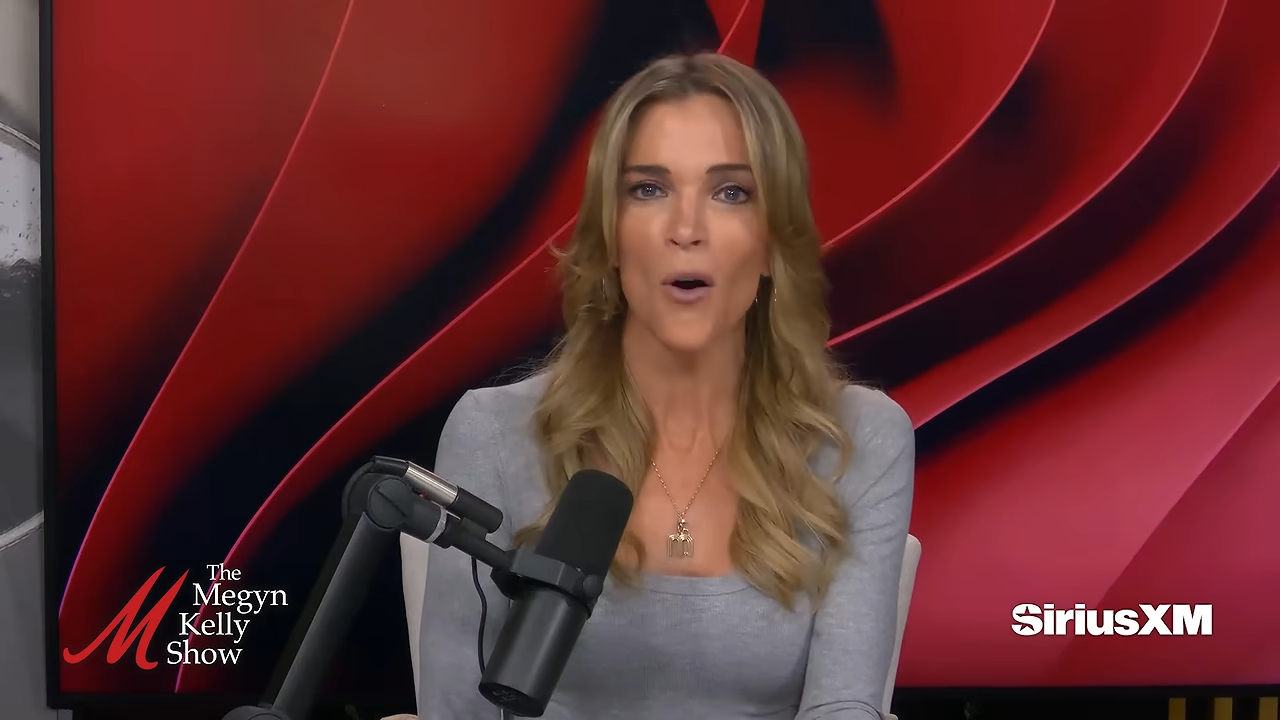
In a jaw‑dropping moment that sent shockwaves through the viewing public, Megyn Kelly—now 56 and back at the helm of her own primetime show—deemed Leonardo Di Caprio a “fat slob” during a segment that was meant to celebrate the actor’s 52nd birthday. The comment, delivered mid‑segment in a tone that was far sharper than Kelly’s usual measured delivery, left many viewers stunned and a torrent of social‑media backlash that swirled around the clip within minutes of its airing.
For Kelly, the incident is the latest chapter in a long history of high‑profile on‑air confrontations. Having left a long‑running daytime format in 2017 to launch her own program, she has cultivated a reputation as a hard‑hitting journalist willing to take on everyone—from politicians to Hollywood royalty. The brand of sensationalism that has made her a household name has, in this case, taken a turn toward personal vitriol that many felt was unwarranted and unprofessional.
Di Caprio, on the other hand, has spent the past decade building an image as a leading climate activist and philanthropist. From blockbuster hits like “Titanic” to Oscar‑winning dramas and critically acclaimed documentaries on climate change, he has cultivated a persona that blends artistic ambition with a genuine commitment to social causes. The birthday tribute on the program was intended to highlight both his cinematic legacy and his environmental work, but Kelly’s remark abruptly shifted the narrative from celebration to scandal.
Background & Context
Megyn Kelly’s career has always been a study in contrasts. She rose to prominence on a major morning show in the mid‑2000s, later becoming the first female moderator of a presidential debate. When she left that platform in 2017, she launched a late‑night talk show that positioned her as a fearless commentator, unafraid to challenge anyone in front of a live audience. Her style has been described as a blend of journalistic rigor and unfiltered opinion, a combination that has drawn both praise and criticism over the years.
Di Caprio’s public journey is a tale of evolution. After early roles in teen dramas, he broke through with “Titanic,” which catapulted him into global stardom. Over the next two decades, he has become a box‑office heavyweight while simultaneously building a reputation as a climate advocate. His foundation, established in 2009, has donated millions to wildlife conservation and renewable energy projects. In recent years, his documentaries—such as “Before the Flood” and “The 13th” —have won acclaim for their bold social commentary.
The “fat slob” comment echoes a lineage of televised host‑celebrity clashes that have sparked controversy. In 2008, a famous talk‑show host called a popular actor “a clueless mess” during a live interview, leading to a nationwide debate about journalistic ethics. More recently, a morning show anchor described a beloved actor as “overrated” in a segment that was meant to be celebratory, resulting in a swift public apology. These moments serve as a cautionary backdrop to Kelly’s latest outburst, illustrating how quickly a seemingly minor dig can spiral into a media firestorm.
What People Are Saying
Social‑media reactions to the clip were almost immediate. Twitter users shared screenshots of Kelly’s tirade, with the hashtag #DiCaprioSlander trending for several hours. Some defended the commentator, arguing that Di Caprio’s outspoken activism makes him a public figure deserving of scrutiny. Others decried the remark as a “harsh personal attack” that should not be made in front of an audience celebrating a milestone birthday.
Instagram and TikTok saw a flurry of short videos dissecting the moment. A viral clip cut to a montage of Di Caprio’s environmental work juxtaposed with Kelly’s profanity‑laden jab, with many creators lamenting the “damage control” that should have followed. Meanwhile, a group of fans compiled a list of past instances where celebrities have been called out for their public stances, questioning whether the entertainment industry has a double standard when it comes to criticism.
Industry insiders weighed in through press releases and social‑media posts. A leading film production company issued a brief statement affirming their respect for all forms of constructive criticism, but without addressing the incident directly. In the entertainment trade, a former journalist noted that “journalistic courage can be a double‑edged sword.” An actor who previously worked with Di Caprio commented on a platform, saying that while the actor “can be blunt,” calling him a “fat slob” was “inappropriate and unnecessary.”
Public reaction from the general viewing audience was similarly divided. A small poll conducted by a local television station found that 48% of respondents thought Kelly’s comment was an overreach, while 32% believed it was a valid critique of Di Caprio’s persona. The remaining 20% felt they lacked enough information to form an opinion. A survey of college students posted on an online forum highlighted a generational split, with younger viewers more likely to defend Kelly’s “straight‑talk” approach than older viewers who favored a more respectful tone.
What Happens Next
The network’s programming team is already preparing a response. In past instances, networks have either issued a statement of apology or scheduled a follow‑up segment to address the controversy. An internal memo circulated last week indicated that the network will issue a brief statement acknowledging the “inappropriate” tone of the segment while emphasizing its commitment to balanced reporting. Whether this will include a formal apology to Di Caprio remains unclear.
Kelly herself has yet to issue an official comment. Known for her unwavering stance on controversial subjects, she has traditionally opted to let the conversation continue rather than issue an apology. However, the growing backlash—especially from influential industry figures—may pressure her to clarify her intent. Her team may prepare a statement underscoring her belief that “public figures are accountable for their actions” and that the comment was part of a broader critique rather than a personal attack.
Di Caprio’s foundation, which typically refrains from public backlash over media criticism, may respond in a measured way. Past responses from the foundation have focused on the broader issues of climate change and media responsibility, rather than individual slights. Nevertheless, a statement on the foundation’s website could offer a counterpoint that emphasizes the importance of respectful discourse and highlights the actor’s ongoing environmental work.
The fallout is likely to influence future editorial decisions on the show. Producers might adopt a more stringent vetting process for segments that involve high‑profile public figures, especially those with philanthropic reputations. They may also consider adding a disclaimer or editorial oversight to prevent similar incidents. For Kelly’s personal brand, the incident could either cement her image as an unapologetic challenger or, conversely, alienate a segment of her audience that values decorum over confrontation.
The broader implications extend beyond a single episode. In a media landscape that prizes both immediacy and accountability, the incident serves as a reminder of the delicate balance between fearless journalism and respectful dialogue. As viewers and industry stakeholders grapple with the boundaries of criticism, the conversation will likely continue, influencing how shows handle guest segments, what is considered “acceptable” commentary, and how public figures are portrayed on prime‑time platforms.
---
The “fat slob” remark has ignited a debate that will reverberate through the entertainment industry and the public sphere for weeks to come. Whether it will serve as a cautionary tale or a catalyst for more daring journalism remains to be seen. In any case, the moment underscores the ever‑present tension between sensationalism and respect, a tension that every media professional must navigate with care.
The Bottom Line
The moment Megyn Kelly called Leonardo Di Caprio a “fat slob” was less an isolated lapse and more a flashpoint for the ongoing tension between fearless journalism and professional respect. While Kelly’s brand thrives on provocative statements, the backlash shows that audiences—and especially the demographic that values environmental advocacy—can swiftly turn a host’s credibility into a liability. Networks cannot afford to ignore that the public now expects a higher baseline of decorum, especially when the target is a public figure whose platform extends beyond entertainment. In a media landscape where every comment is recorded and amplified, the line between hard‑talking and harassment is increasingly blurred. We urge networks to tighten vetting protocols, provide hosts with clearer guidelines on acceptable critique, and, most importantly, to acknowledge that language matters. Let’s use this incident as a learning curve: sensationalism can generate clicks, but sustained viewership demands integrity.
—MyWorldPulse
Reference:
- Official post on Leonardo Di Caprio’s verified Instagram account
Read more celebrity news at MyWorldPulse.