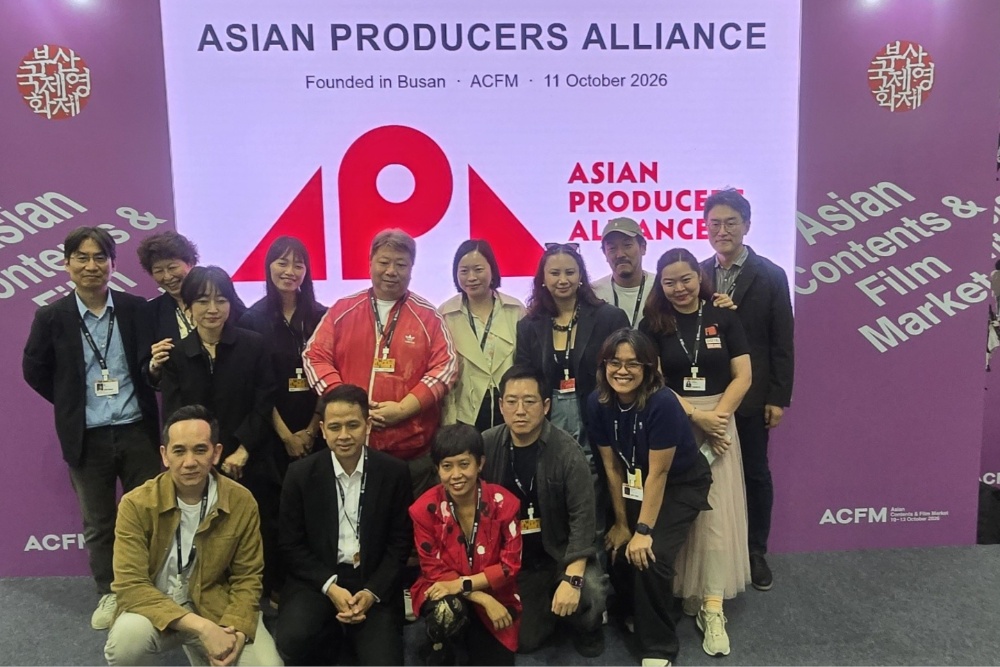
On a sweltering June afternoon, the grand hall of Busan International Film Festival’s Asian Contents & Film Market crackled with anticipation. Kim Ji‑yeon—Korean producer of the global phenomenon “Squid Game”—stood before a sea of industry faces, her voice steady and resonant. With a solemn nod, she read aloud the founding declaration of the Asian Producers Alliance (APA). In that moment, five independent producer communities from Korea, Japan, China, Vietnam, and Thailand signed an oath to collaborate, protect their rights, and reshape the continent’s cinematic landscape.
The ceremony was more than a symbolic gesture. It was a strategic move at the crossroads of a rapidly evolving film market, where streaming platforms and local content regulators intersect. Kim’s declaration served as a rallying cry for creatives who often operate on shoestring budgets, battling opaque financing and limited distribution. It hinted at a future where stories born in Seoul, Tokyo, Beijing, Hanoi, and Bangkok could be co‑produced, shared, and showcased with unprecedented solidarity.
The atmosphere in the hall was electric. Behind the gleaming lights, banners in five languages fluttered, and the scent of freshly brewed coffee mingled with the sharp tang of polished mahogany. Audience members—actors, writers, distributors, and tech innovators—were visibly moved as Kim spoke about “a sanctuary for filmmakers who risk everything to tell stories that defy borders.” Her words echoed the spirit of a decade‑long movement toward cross‑cultural storytelling that began with modest film festivals and grew into high‑profile co‑productions like the 2018 “The Great Wall” (China‑US) and the 2016 “Shin Godzilla” (Japan).
Background & Context
Asian independent cinema has long been a patchwork of regional powerhouses and grassroots initiatives. South Korea’s Producers Guild of Korea (PGK), founded in 1963, pioneered fair labor standards and distribution guidelines, yet many producers still navigate murky funding streams. In Japan, the Japan Film Academy’s Co‑Production Council, established in 2002, encouraged international partnerships but was often limited by domestic censorship laws. Meanwhile, Vietnam’s indie scene burgeoned in the 2010s, propelled by state‑backed film schools but hampered by restrictive copyright enforcement.
These disparate ecosystems shared one core frustration: the difficulty of breaking into foreign markets without losing creative control. The rise of streaming services—Netflix, Amazon Prime Video, and local players like iQIYI—offered a lifeline, but the new distribution model also introduced complex licensing terms that left many independent producers in limbo. Historically, the only way to negotiate favorable terms was through alliances that could leverage collective bargaining power. The APA builds upon that legacy by formalizing a structure that harmonizes legal frameworks across five distinct jurisdictions.
The idea of a pan‑Asian alliance germinated during quiet conversations at regional festivals such as the Shanghai International Film Festival and the Taipei Film Market. Producers discussed the possibility of a platform where a Korean screenwriter could partner with a Thai director, sharing resources while maintaining equitable ownership. This vision matured into the APA, a formal entity that seeks to streamline co‑production agreements, standardize technical specifications, and offer a unified legal defense against intellectual property infringement.
Busan’s Asian Contents & Film Market, a hub for cross‑border collaboration, was the perfect launching pad. The market’s focus on digital content and streaming partnerships aligns with the APA’s mission to navigate new distribution channels while preserving artistic integrity. The venue’s reputation for fostering international projects—most notably the 2019 “Parasite” co‑production with Korean and global investors—provided a historical precedent for success.
What People Are Saying
The hall’s energy was palpable as Kim finished her reading. The applause that followed was not just for her own achievement but for a collective step toward a more equitable industry. Among the audience, long‑time collaborator Park Soo‑yeon, co‑producer of “Squid Game,” expressed admiration for the initiative. “This alliance gives us a platform to retain greater control over our creative output,” she told a journalist, her voice tinged with excitement.
Film scholars and critics took to social media to weigh in. Professor Lee Yong‑seok of Seoul National University compared the APA’s ambitions to the European co‑production treaties of the 1960s. “The APA could mirror the success of the European Union’s cross‑border film initiatives,” he wrote, emphasizing how shared risk and pooled expertise can elevate storytelling quality across the region.
Fans of “Squid Game” and other Asian blockbusters were equally intrigued. Twitter threads and Instagram reels buzzed with speculation about future projects that could emerge from the alliance. Many followers expressed hope that the APA would enable more locally rooted narratives to reach global audiences, sparking a broader conversation about cultural authenticity in mainstream media. Even cautious industry observers noted that a unified stance might challenge the dominance of larger studios, potentially reshaping negotiation dynamics in distribution deals.
The reactions were not merely theoretical. A panel of indie filmmakers in Seoul discussed how the APA’s framework could help them secure co‑financing without ceding creative control. In Tokyo, a small production house expressed excitement about the possibility of collaborating with Korean talent on a horror anthology series. In Beijing, a filmmaker who had struggled to secure foreign distribution highlighted how a cross‑border alliance could reduce legal and bureaucratic hurdles.
What Happens Next
The APA’s first priority is to develop a standardized co‑production treaty that accommodates the legal idiosyncrasies of each member country. A series of workshops will take place over the next month, bringing together legal experts, finance professionals, and creative leads to align technical standards—format specifications, intellectual property laws, and profit‑sharing models. The goal is to produce a flexible yet comprehensive agreement that producers can rely on when negotiating with foreign partners.
Simultaneously, the alliance is already scouting for joint projects. Kim Ji‑yeon hinted at an upcoming Korean thriller–Japanese horror co‑production that would weave cultural aesthetics into a global narrative. The APA plans to launch a pitch competition, offering a platform for emerging writers across member nations to showcase concepts that could secure funding from the alliance’s pooled resources.
Beyond these immediate actions, the APA envisions a self‑sustaining ecosystem where independent producers can routinely collaborate without compromising ownership or creative vision. The alliance will offer robust support—including legal counsel, marketing guidance, and distribution partnerships—to nurture talent across Asia. If successful, the APA could redefine how stories move from the page to the screen, turning cross‑border collaboration from a novelty into a norm.
In a world where stories travel faster than the blink of an eye, Kim Ji‑yeon’s bold move to unite five independent producer communities is a reminder that the most powerful narratives often emerge from collective courage. The Asian Producers Alliance may well be the catalyst that turns a handful of passionate creators into a global force for cinematic innovation.
The Bottom Line
The Asian Producers Alliance is not merely a ceremonial gathering; it is a concrete step toward dismantling the barriers that have long siloed indie filmmakers across Asia. By formalizing a shared legal framework and pooling resources, the APA empowers creators to negotiate on equal footing with global distributors and streaming services. This collective strength translates into richer, more diverse storytelling that resonates with audiences worldwide, while safeguarding the integrity of each project’s cultural context. MyWorldPulse believes that if the APA can successfully roll out its co‑production treaty and pitch competition, it will set a precedent for other regions seeking similar solidarity. The initiative exemplifies how collaboration can thrive even amid competitive pressures, ensuring that the future of Asian cinema is as varied and dynamic as the stories it tells.
—MyWorldPulse Editorial
Reference:
- Official post on Kim Ji‑yeon's verified social media account
Read more celebrity news at MyWorldPulse.