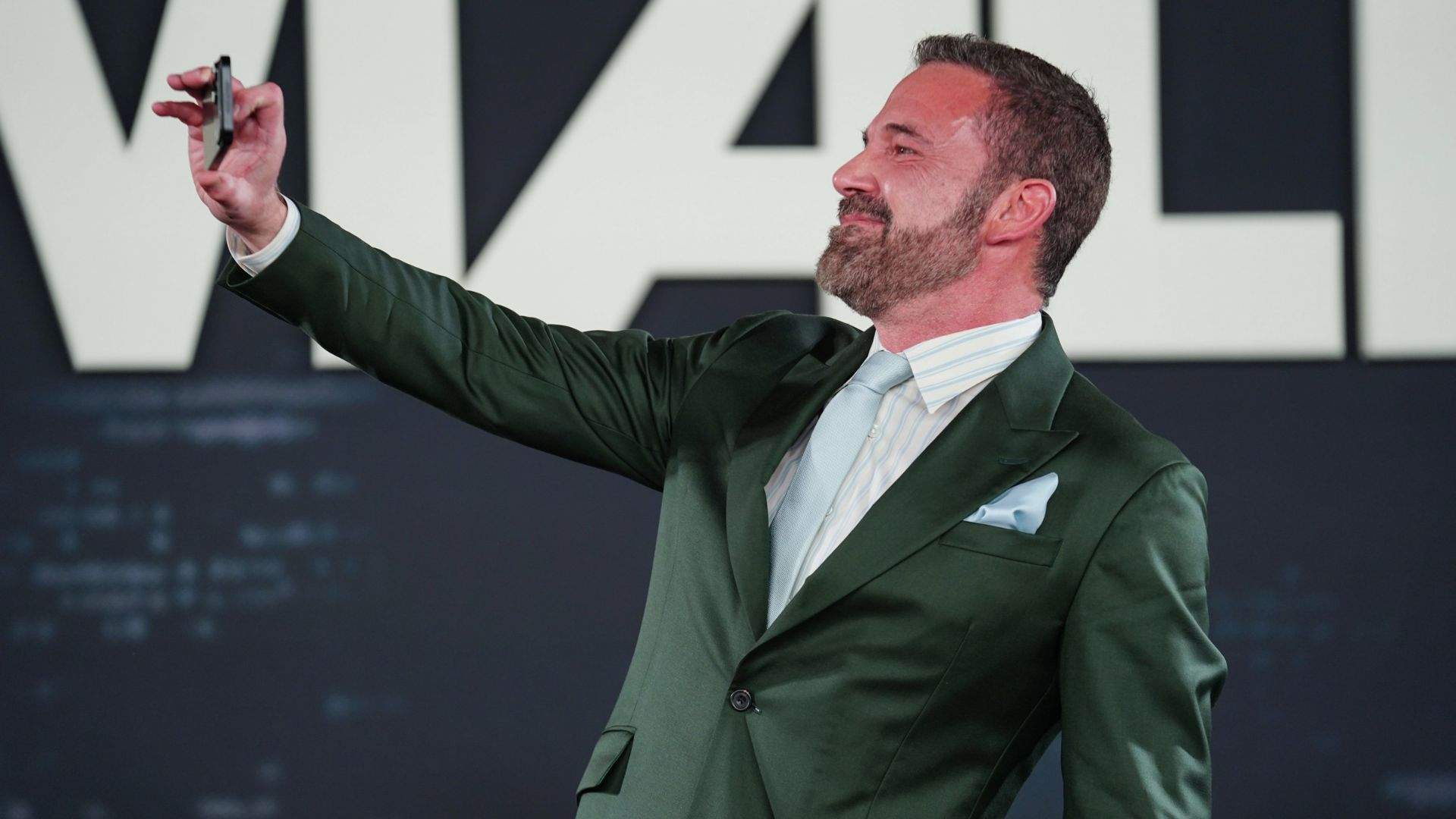
Ben Affleck’s reflection on a summer spent earning eight dollars an hour in a Boston construction yard rings louder than his recent critique of Hollywood’s “big‑swing” blockbusters, and it echoes his admiration for the entrepreneurial spirit of Jennifer Lopez.
His comments arrive at a moment when studios are tightening budgets and leaning on proven formulas, and they signal a growing frustration among veteran creatives who feel the industry is trading risk for sameness. A single interview where Affleck linked his past labor to his filmmaking, paired with a sharp warning that the next big hit could force studios to churn out homogenized fare, paints a picture of a Hollywood at a crossroads. In that same conversation he praised Lopez’s tenacity, noting that her perseverance in a field that often marginalizes women of color demonstrates a model of success that many now feel is absent from the current studio calculus.
The implication is clear: if the industry continues to rely on high‑budget spectacles without the creative gamble that once defined its golden ages, it may lose the very stories that earned it a devoted audience. Affleck’s words are a rallying call for a return to authenticity, collaboration, and an appetite for risk.
Background & Context
Affleck’s journey from an $8‑hour construction worker to an Academy Award‑winning screenwriter and director is a narrative of authenticity that has become almost legendary in Hollywood. When he and long‑time friend Matt Damon first met on a concrete slab in Boston, they were already dreaming of a future beyond the scaffolding. Their hands, scarred from hauling bricks, later held the same tools used to frame a scene in Good Will Hunting that would go on to win them critical acclaim.
In the film, the pivotal confrontation between the characters Chuckie Sullivan and Will Hunting was shot at the very site where the two men once worked for the same contractor. Affleck recalled the difficulty of securing permission to use the construction company’s sign, a small detail that underscores the film’s commitment to authenticity. He also noted that the scene was completed in only a handful of takes, proof of the deep rehearsal and improvisation that defined their partnership. The scene’s rawness, derived from a real working environment, became a cornerstone of a story that would resonate across generations.
This background informs Affleck’s perspective on contemporary cinema. He has consistently championed projects that allow actors to draw from lived experience and that encourage writers to explore personal narratives. In the early 2000s, he helped shape The Town, a gritty thriller that also leaned heavily on real Boston details, and he later produced and directed Gone Girl, a film that maintained narrative complexity while appealing to broad audiences. His career illustrates how a commitment to authentic storytelling can coexist with commercial viability.
What People Are Saying
Affleck’s critique of “big swing” movies stems from a concern that a single commercial success could lock studios into a formula that stifles innovation. He argues that if a blockbuster proves profitable, studios will be tempted to replicate that exact model, leading to a flood of homogenized releases that feel interchangeable. In his own words, this would “result in a bunch of sh***y homogenized movies.” The point is not to reject all high‑budget projects, but to warn against a narrow focus that leaves little room for risk‑taking ventures that might redefine the market.
In the same conversation, Affleck turned to the figure of Jennifer Lopez, praising her as “pretty extraordinary.” He highlighted her relentless work ethic and her willingness to bet on herself, even when the Academy seemed reluctant to acknowledge her achievements. Affleck noted how Lopez has invested her own resources to launch successful ventures, drawing parallels to the entrepreneurial spirit he himself cultivated during his early construction days. By elevating Lopez, he emphasizes the importance of diverse voices and the necessity of creative risk that challenges industry norms.
These remarks resonate with a broader industry conversation. Many filmmakers, producers, and talent agents have voiced concerns that the current market rewards safe, formulaic projects over bold, original stories. Others point to rising independent platforms and streaming services as avenues where risk can be taken without the high cost of theatrical releases. Affleck’s commentary dovetails with these voices, suggesting that a re‑embrace of authentic storytelling, coupled with a willingness to invest in diverse talent, could counter the trend toward homogenization.
What Happens Next
In practical terms, Affleck’s stance may influence how studios plan their release calendars. Executives could begin to diversify their portfolios, balancing blockbuster franchises with smaller, character‑driven films that test new narratives. The renewed focus on authenticity could also encourage more writers and actors to collaborate on projects rooted in personal experience, mirroring the early days of Good Will Hunting.
From a production perspective, the conversation about risk could lead to increased funding for mid‑budget films that allow creative teams to experiment with unconventional storytelling techniques. This shift might also spur the rise of hybrid distribution models, where a film is released simultaneously in theaters and on streaming platforms, offering a safety net for projects that defy mainstream expectations.
For Affleck personally, his advocacy could signal a return to roles that champion new voices. He has hinted at upcoming projects that would bring fresh talent into the spotlight and create stories grounded in real experiences. Whether these projects are greenlit by major studios or produced through independent channels remains to be seen, but his vocal support for authentic, risk‑taking narratives may tilt the industry toward a more balanced approach.
The reverberations of Affleck’s comments will likely be felt for years. If Hollywood listens, the next generation of filmmakers may be given the space to craft stories that reflect the complexity of contemporary society, rather than relying on a narrow set of proven formulas. The result could be a richer cinematic landscape that honors both artistic risk and audience desire.
In a world where box‑office numbers often dictate creative choices, Affleck’s call for a return to real stories reminds us that the most enduring films are those that emerge from genuine human experience. Whether studios heed this message remains to be seen, but the conversation has already begun, and its echoes could shape the industry’s trajectory for a generation.
The Bottom Line
The entertainment world is at a crossroads. Affleck’s own journey from the Boston back‑streets to the silver screen offers a living counter‑argument to the relentless pursuit of blockbuster certainty. Hollywood’s appetite for formulaic risk‑free content is eroding the very stories that once made cinema great. If studios heed Affleck’s warning, they can reclaim a model that rewards authenticity, nurtures emerging talent, and re‑engages audiences who feel alienated by repetitive spectacles. The industry’s future hinges on embracing risk, diversity, and the raw human stories that, like Affleck’s own, begin in unlikely places. The next generation of filmmakers deserves that space—and the audience deserves it.
Reference:
- Official post on the person's verified social media account
Read more celebrity news at MyWorldPulse.