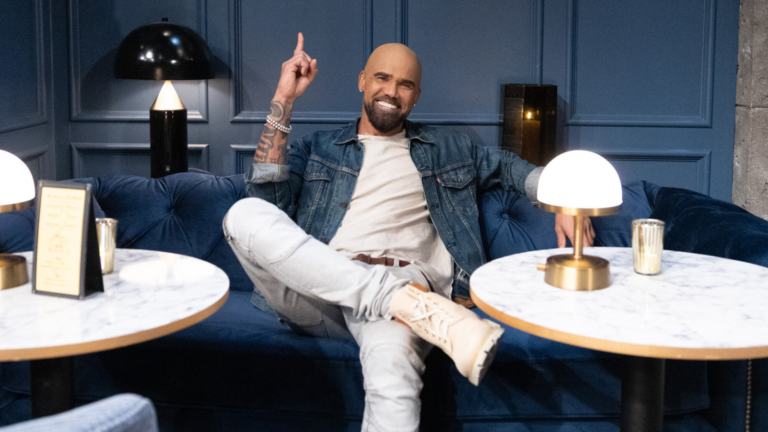
Two decades after his breakout as the lovable, slightly goofy Zack on Disney Channel, 34‑year‑old Dylan Sprouse has spoken his mind about one of the most bizarre chapters in his career: a single residual check that paid a meager five cents for a crossover episode with Hannah Montana. In an interview with former co‑star Phill Lewis on the Wildmen podcast, Sprouse laid bare the stark reality of how the television industry’s financial gears shift for child actors.
Dylan’s revelation jolted fans and industry observers alike. He had starred in almost 190 episodes, yet he says that, beyond that one cross‑promo, no residuals have ever found its way into his mailbox. The disclosure not only underscores the hidden costs of early fame but also invites a broader conversation about how young performers are compensated when their shows become cultural touchstones.
---
Background & Context
The Suite Life of Zack & Cody debuted in 2005, quickly becoming a cornerstone of Disney Channel’s lineup. Sprouse and his twin brother, Cole, played brothers who navigated life in a hotel, creating a mix of teenage angst and slap‑stick humor that resonated with kids and teens across the globe. By the time the show wrapped up in 2008, it had amassed nearly 190 episodes and was broadcast in more than 90 countries, reaching audiences in up to 80 languages. It was a juggernaut, often out‑rating adults‑only dramas like The Sopranos—a fact that the show’s then‑showrunner, Danny Kallis, proudly displayed on a newspaper he’d brought to set.
Unlike many primetime shows that generate revenue through commercials, Disney Channel was an ad‑free environment. The network prided itself on being a safe, family‑friendly channel where children could binge‑watch without advertisements interrupting the flow. This model, however, meant that the revenue streams for which residuals are typically calculated were less straightforward. Disney’s policy treated the channel’s programs as “original content,” and the company retained a significant share of syndication and international licensing profits, leaving little margin for the actors to benefit from reruns.
Dylan recalls the sheer volume of reruns: “We were on four or five times a night,” he tells Lewis, describing how the network would re‑air episodes throughout the day, sometimes interspersed with wrap‑around segments that were essentially bonus content. The cast had to shoot additional scenes over several weeks to accommodate this relentless schedule. Yet despite this nonstop exposure, Sprouse reports that residuals—payments actors receive when their work is rebroadcast—were nearly nonexistent.
The only exception was a crossover episode with Hannah Montana, a crossover that itself was a marketing juggernaut for Disney. Even here, the residual check arrived at a paltry five cents, a fraction of a cent even for a single appearance. “Residuals would have been great,” Sprouse laments, pointing to a system that rewarded the network more than its performers.
---
What People Are Saying
Fans who followed Sprouse’s career from the early days of The Suite Life were stunned to learn that a child star who helped define a generation’s Saturday mornings had been paid so little for a show that still dominates streaming playlists and international syndication. Social media erupted with a mix of disbelief and sympathy. Many commenters referenced the broader trend of child actors being paid flat rates that do not reflect the long‑term value of their work. Others pointed to the industry’s lack of transparency, noting that residuals are often calculated in a way that is opaque to actors and their families.
Phill Lewis, 58, shared insights that echo many actors’ experiences on the network. He highlighted the relentless schedule and the necessity of wrap‑around episodes that added little to the actors’ earnings. “They would do two episodes on a Tuesday, and they'd run them throughout the day, then leapfrog and jump,” Lewis recounts, illustrating how the network's programming strategy left little room for additional compensation. Lewis also stressed that the sheer volume of reruns did not translate into residuals, which underscores a systemic disconnect between the revenue a show generates and the portion that trickles back to its creators.
Industry observers have taken Sprouse’s comments as a case study in how residual structures can be skewed in favor of the distributor. While some argue that contracts signed during a child’s early career often contain clauses that limit future earnings, others point to evolving standards. Recent unions and guilds have begun pushing for clearer residual formulas, especially in the age of streaming where revenue streams have multiplied but remain poorly distributed to original talent.
The reaction also includes a growing conversation among fans and former actors about financial literacy and contractual knowledge. “It’s a wake‑up call,” one fan wrote on a forum, “for kids and their families to understand the long‑term implications of signing a contract that may look good on the paper but is limited when the show becomes a cultural icon.”
---
What Happens Next
Sprouse’s candidness comes at a time when he has been exploring roles that stretch beyond the family‑friendly persona that defined his early career. After a brief hiatus, he returned to the screen in independent films and short‑form content, seeking projects that offer more creative control and potentially better financial terms. In interviews after The Suite Life, he hinted at a desire to transition into more mature roles and to negotiate contracts that reflect the true value of his talent.
Meanwhile, Disney Channel’s residual policies are not standing still. The network, aware of the backlash and the shifting expectations of performers, has begun to re‑evaluate its compensation models. Reports suggest that Disney is in discussions with talent agencies and guild representatives to explore revised residual structures that would be more equitable for child actors. Though no concrete policy changes have yet been announced, the industry is at a crossroads where the long‑term financial interests of actors are increasingly being weighed against the profit margins of networks.
For Sprouse, the experience may serve as a catalyst for advocacy. He has expressed interest in partnering with other former child actors to lobby for clearer residuals and better contractual language. Whether he takes on a public role in this movement remains to be seen, but his willingness to speak openly about his financial experience signals a shift toward greater transparency.
In the broader landscape, the conversation sparked by Sprouse’s disclosure may prompt studios, networks, and streaming services to reconsider how they allocate profits from shows that achieve cult status. As the industry continues to grapple with the realities of streaming royalties, licensing deals, and international syndication, the question of how to fairly compensate the performers who bring characters to life remains at the forefront of discussions about equity and sustainability in entertainment.
---
Sprouse’s story is a stark reminder that a child star’s earnings are not always as shiny as their on‑screen persona suggests. It also invites a collective reflection on the mechanisms that shape the livelihoods of those who once inhabited our living rooms as teens and now, as adults, continue to entertain us from new platforms. The five‑cent residual is more than a tiny paycheck; it is a symbol of the hidden costs of fame and a call for an industry that rewards its talent as richly as its content.
The Bottom Line
— MyWorldPulse
The 5‑cent residual story is not an isolated misstep; it is a symptom of an entertainment economy that still rewards content over creator. When a 34‑year‑old actor can say he earned pennies for an entire franchise that generated billions, we see a stark inequity that must be addressed. Disney’s model, which withheld most of its syndication and international revenue, exemplifies a profit‑first mindset that has left countless child stars in financial limbo. The industry’s reliance on opaque residual formulas not only erodes trust but also hampers talent development. As streaming platforms amplify revenue streams, the need for transparent, equitable compensation becomes even more urgent. MyWorldPulse calls on studios, talent agencies, and guilds to adopt clear residual structures that reflect the true market value of performers. Only then can we honor the creativity that fuels our screens and ensure that future generations of actors are fairly compensated for the cultural icons they help create.
Reference:
- Official post on Dylan Sprouse's verified Instagram
Read more celebrity news at MyWorldPulse.