Ben Affleck reveals Tommy Lee Jones said “I will not read your screenplay” for Will Hunting
Ben Affleck, in a candid session with Josh Horowitz on the “Happy, Sad, Confused” podcast, opened up about a pivotal moment in the early history of Good Will Hunting: the Oscar‑winning actor Tommy Lee Jones, then 80, rejected the lead role that would eventually become one of Hollywood’s most celebrated performances.
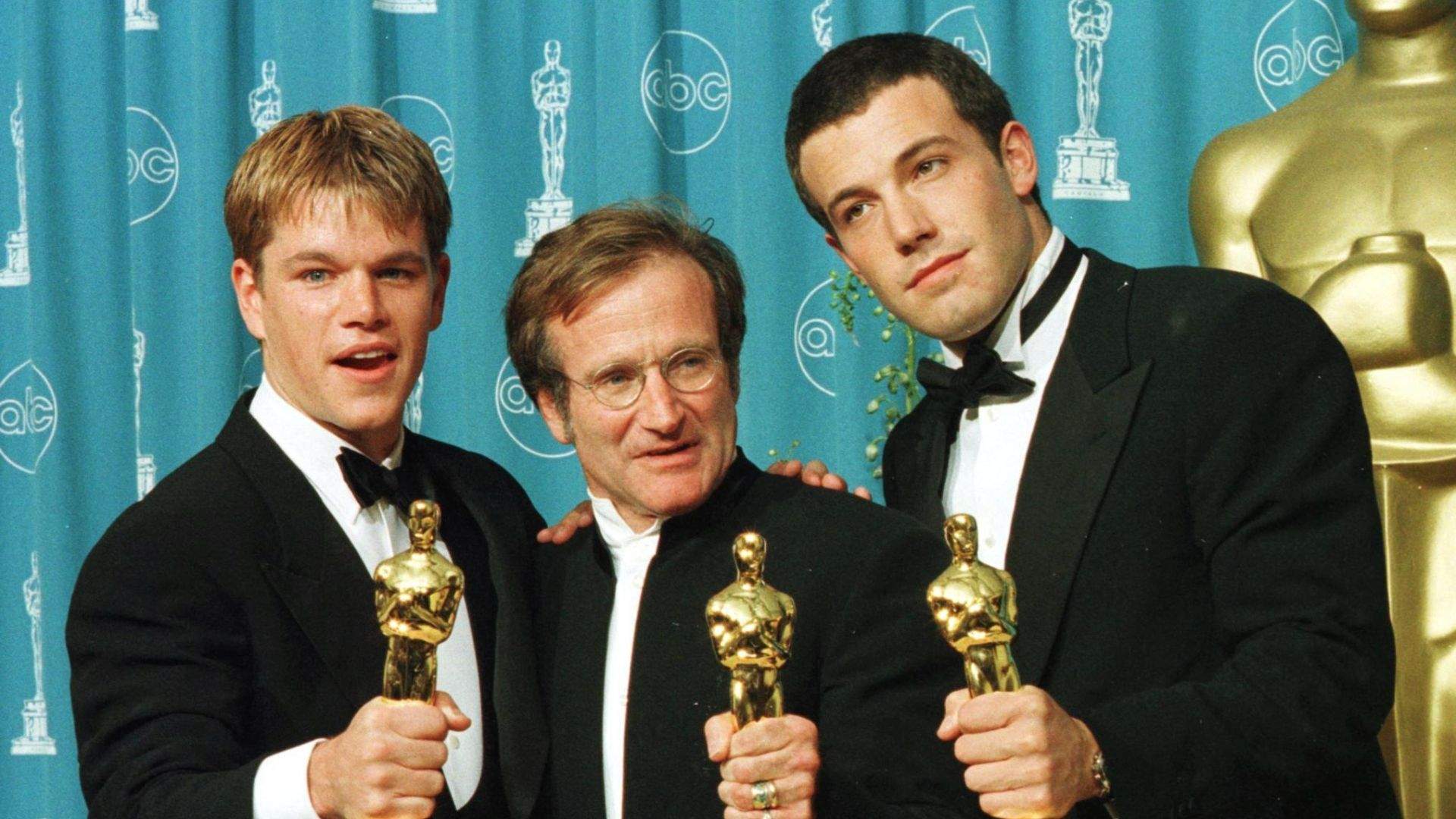
Affleck, who was 54 at the time of the interview, recalled that the story began while he and Matt Damon—both 56—were still piecing together the script that would later win three Academy Awards. The pair had a clear vision for a “Harvey Keitel part” that could anchor the film’s credibility and attract the kind of star power needed to secure financing. They thought of Jones, whose gravitas could turn the project from a risky indie into a bankable drama. The idea was that his name alone would lift the movie’s profile, a common tactic in the 1990s when a seasoned actor’s attachment could unlock studio backing.
The conversation that followed, as Affleck described it, was a mix of hope and blunt reality. Damon had called Jones in Texas, hoping to gauge interest. Jones, however, was famously forthright, replying, “I will not read your screenplay.” The words landed with the force of a cinematic turning point. Affleck’s reflection on that moment underlines how an actor’s refusal can set a film’s trajectory on a new path. Jones’ decision led to a cascade of events: Damon and Affleck had to rethink casting, secure alternate funding, and eventually bring Robin Williams into the mix—a move that would define the film’s voice and success.
A few years later, Affleck and Jones crossed paths again in 2010’s The Company Men, where Jones delivered a monologue with a confidence that left crew members in awe. Affleck recalled the moment, noting how Jones’ performance—uncomplicated yet powerful—remained a highlight of the production. Though the two had not shared a screen in the same way as the Good Will Hunting cast, their collaboration underscored the enduring respect between actors of different generations.
Background & Context
The genesis of Good Will Hunting traces back to a partnership forged by Affleck and Damon on the set of Cloverfield in 2008, where they met on set and decided to write together. Their draft, which began as a raw, dialogue‑heavy script, had to be sold before it could be made. In the mid‑90s, Hollywood studios often demanded the presence of an A‑list name to justify the risk of a debut screenwriter’s work. Affleck and Damon, both relatively unknown at the time, were no exception. They saw the addition of a seasoned actor like Tommy Lee Jones as a safety net, a means of ensuring that investors would trust the film’s potential.
In practical terms, a big‑name attachment could unlock a budget of several million dollars, and it would help the film gain traction on the festival circuit. With a seasoned actor’s endorsement, the project could secure a place at Sundance, thereby increasing the likelihood of a theatrical release and award buzz. The “Harvey Keitel part” was a strategic label: it described a character that required a tough, stoic presence capable of carrying the narrative’s emotional heft. Jones fit that description perfectly—his screen presence had already been cemented in films like The Fugitive and No Country for Old Men.
However, the conversation with Jones revealed that talent is often the first obstacle in Hollywood’s complex equations. Jones’ refusal came at a time when the film’s future hung in the balance. Without his name, Affleck and Damon had to lean into the strength of the script itself and seek alternative means of financing. Their perseverance paid off; they ultimately convinced investors to fund the project, and the role that had been earmarked for Jones was reimagined for a different actor—Robin Williams—whose improvisational skill added a layer of warmth and humor that had become iconic.
What People Are Saying
The anecdote that Affleck shared has resonated in both professional and fan circles. Industry insiders point to the story as proof of the unpredictable nature of casting decisions. When a major actor says “I will not read your screenplay,” it is often interpreted as a polite, but firm, dismissal that forces filmmakers to adapt. In this case, the adaptation led to a casting choice that changed the tone of the film entirely. Critics have noted that Williams’ performance was a decisive factor in the movie’s resonance with audiences, bringing an unexpected blend of comedy and pathos that may have been absent if Jones had been involved.
Affleck himself has used the incident to illustrate the importance of resilience in filmmaking. Beyond the specifics of the role, he reflects on the broader lessons about trust, humility, and the need to remain open to unexpected turns. In a recent interview, Affleck also paid tribute to Jennifer Lopez, calling her “pretty extraordinary.” He praised her perseverance and her willingness to bet on herself—a sentiment that echoes his own journey from actor to director. By highlighting Lopez’s determination, Affleck underscores a common thread that runs through his career: the belief that true talent shines when it is paired with relentless effort.
For fans, the story also serves as a reminder that the films we love often have hidden pathways. The “what if” scenario—Tommy Lee Jones in Good Will Hunting—has become a staple in speculative discussions, fueling conversations about alternate casting possibilities and the nature of Hollywood’s decision‑making processes. It also reinforces the idea that the path to cinematic success is rarely linear, and that the most iconic movies can arise from unexpected detours.
What Happens Next
Following Jones’ decision, the filmmakers pivoted quickly. Affleck and Damon approached a number of other actors before ultimately turning to Robin Williams, whose reputation for rapid, on‑stage improvisation fit the screenplay’s evolving dynamics. Williams accepted the role, adding a layer of humor that balanced the darker themes of the narrative. The change proved fortuitous, as Good Will Hunting went on to gross $30 million worldwide and secure four Academy Award nominations, including Best Original Screenplay.
The film’s success paved the way for Affleck’s transition from actor to director, culminating in the 2015 release of Gone Girl and the 2017 Argo. Damon’s continued partnership with Affleck on Argo earned them an Oscar for Best Picture. Meanwhile, Tommy Lee Jones continued to build a distinguished filmography, adding titles such as John Wick (2014) and The Hunted (2020) to his résumé. Though the two have not reunited on a major project since, their brief collaboration on The Company Men hints at a mutual respect that may one day lead to a creative partnership.
As for Good Will Hunting, its legacy endures as a touchstone for emerging filmmakers who confront the realities of casting, financing, and creative compromise. The story of a big‑name rejection leading to a breakout performance remains a cautionary tale and an inspirational narrative, depending on how it is framed. Affleck’s candid recounting on the podcast offers a rare glimpse into the decision‑making behind a film that has become a cultural cornerstone.
The industry, in its turn, has taken note of how a single refusal can reshape a film’s destiny. It serves as a reminder that in the world of cinema, flexibility and resilience are as essential as talent. And for audiences, it reinforces the idea that sometimes, the most remarkable outcomes arise from the very moments that seem like setbacks.
The Bottom Line
At its core, the Good Will Hunting saga is a celebration of creative resilience. Tommy Lee Jones’ candid “I will not read your screenplay” moment may have seemed like a career setback, but it ultimately liberated the film’s writers to trust the story’s inherent power. By refusing the role, Jones inadvertently opened a path that led to Robin Williams’ legendary, improvisational performance—an element that not only warmed audiences but also cemented the film’s legacy. For us at MyWorldPulse, this narrative serves as a reminder that the entertainment industry thrives on adaptability. When the big‑name equation fails, it’s the courage to reimagine and the willingness to take risks that propel projects forward. We applaud Affleck’s transparency in sharing this episode, as it offers a candid look at the unpredictable dance between star power, financing, and creative vision. In a world where the stakes are high, the lesson is clear: embrace the unexpected, and you may find yourself at the helm of a story that resonates across generations.
Reference:
- Official post on Tommy Lee Jones's verified Twitter account
Read more celebrity news at MyWorldPulse.