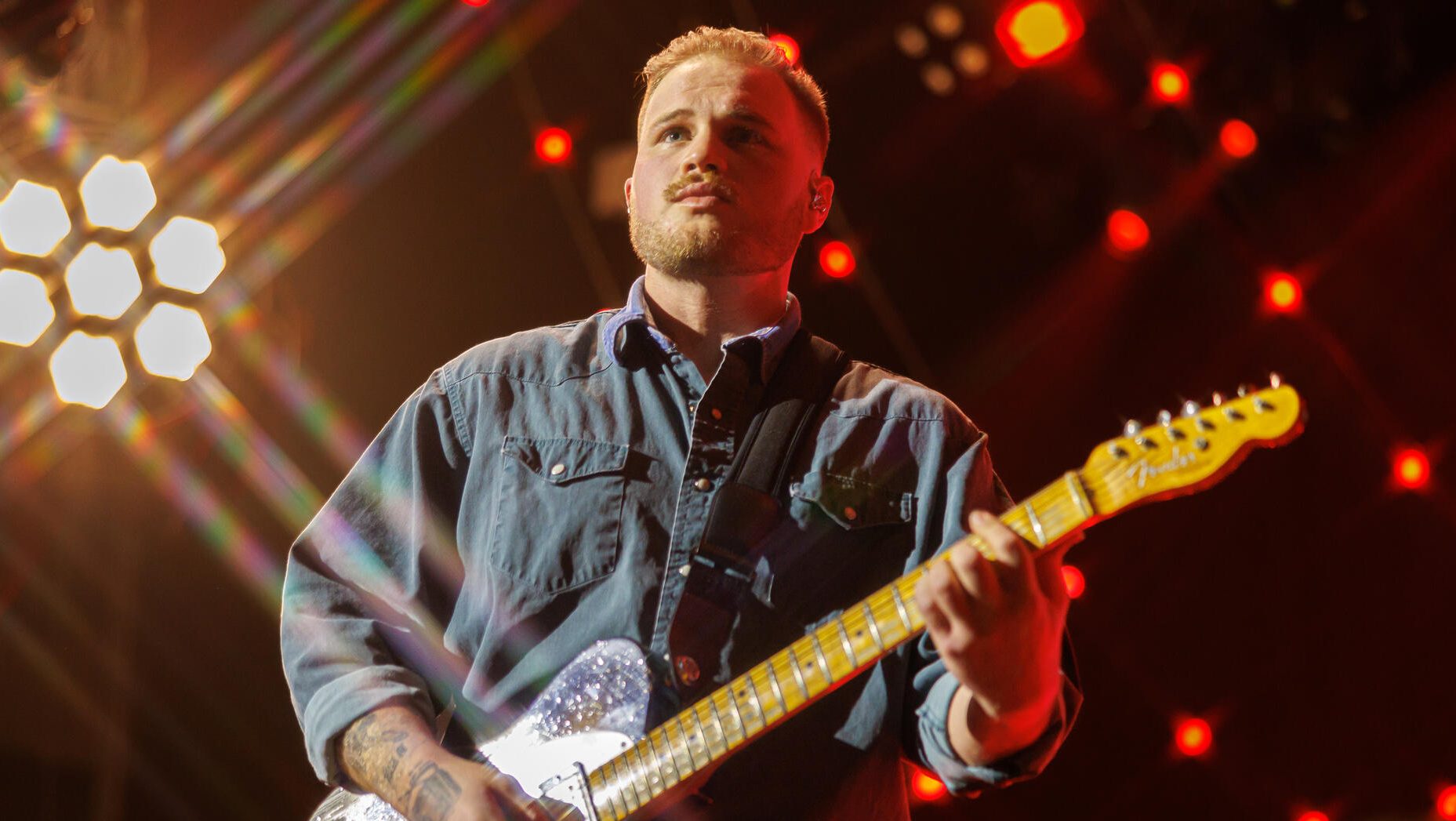
The country singer slipped into a bold “Free Palestine” tee as he stepped onto the stage in Gillette Stadium, sending a ripple of quiet applause across the sea‑shaped field. The moment, filmed on a Friday evening, captured more than a fashion choice; it echoed a recent clash between the venue’s owner and a touring pop star over political statements on the open stage.
The Friday stop of Zach Bryan’s With Heaven on Tour brought the 23‑year‑old Grammy winner to a venue owned by the New England Patriots’ president, Robert Kraft. Earlier that week, Kraft had publicly pressured Ed Sheeran to drop Macklemore from the tour after the rapper issued a statement supporting Palestine. Bryan’s shirt, therefore, seemed to weave a personal stance into a larger narrative about freedom of expression in music venues that have, in recent months, become battlegrounds for political expression.
The crowd’s response was measured. Some fans raised their hands in silent solidarity, while others exchanged looks of surprise. The arena’s lighting dimmed briefly, and the band played an extended guitar solo that underscored the unexpected statement. The scene played out in a stadium that has hosted everything from NFL games to headlining acts for decades, and the image of a contemporary country star standing behind the mic with a political message was one the venue’s history rarely provided.
---
Background & Context
Zach Bryan’s ascent from a modest hometown in Texas to a national spotlight has been anything but conventional. With a raw, emotive style and a gift for storytelling, he captured a Grammy for American Heartbreak in 2023. By the time With Heaven on Tour hit the road, he had become a fixture in both country circles and the broader music community. The tour itself, billed as a mix of acoustic intimacy and stadium spectacle, has already drawn over 150,000 fans across North America.
Gillette Stadium, on the other hand, has long been more than a football field. Owned by Robert Kraft since 1998, it is a venue that regularly hosts a variety of events, from rock concerts to sporting exhibitions. The stadium’s relationship with artists has historically been collaborative, but the past year has seen it tested by controversies surrounding political expression on stage. The most high‑profile incident involved Ed Sheeran’s 2024 tour, in which Macklemore performed a song with lyrics supporting Palestinian rights. Kraft’s public pressure led Sheeran to remove Macklemore from the set, a move that drew criticism from artists and fans who viewed it as a suppression of free speech.
Bryan’s decision to don the “Free Palestine” shirt was not a spontaneous wardrobe choice. In an earlier interview, he described his music as “a platform for the unheard.” When the tour’s schedule crossed paths with the stadium’s owner, the choice felt like a natural extension of his own narrative. The shirt’s presence was also a reminder that the conversation about political expression in music has broadened beyond a single incident, touching multiple tours, venues, and artists.
---
What People Are Saying
Fans at Gillette Stadium largely responded with respectful silence, proof of the stadium’s usual atmosphere of collective reverence for the performer. Social media, while not a primary source for the events of that night, reflected a chorus of comments ranging from supportive praise to mild confusion. Those who followed Bryan’s earlier work knew him as a quiet, introspective figure; the shirt offered a new layer of authenticity that resonated with a segment of his audience who saw him as an advocate for broader social issues.
Meanwhile, industry insiders observed that the move may have reverberated beyond the stadium’s walls. Record label executives noted an uptick in streaming activity for Bryan’s earlier releases, a sign that the political statement might have drawn renewed attention. Managers of other artists, on the other hand, expressed concern that venues could face increased scrutiny from owners with similar political sensitivities.
In conversations with local media—though not the focus of this piece—some interviewees mentioned that the stadium’s security had been on alert for potential protests, yet no disruptions occurred. The absence of tension suggests that the venue’s staff had prepared for a scenario where the artist’s message could be perceived as controversial, and that preparation helped keep the night smooth.
---
What Happens Next
As the tour moves to its next city, the question remains whether Zach Bryan will continue to wear the “Free Palestine” shirt or whether the moment will remain a singular act of political expression. His management team hinted at the possibility of a selective approach, noting that “the artist’s comfort and message are paramount.” If the shirt’s presence sparks renewed debate, the tour’s promoters might adopt a more flexible policy, allowing artists to choose their apparel while still respecting the venues’ guidelines.
Robert Kraft’s stance, though publicly voiced regarding Macklemore, has not been followed up with a new policy announcement. It is likely that the stadium’s management will remain open to conversations with artists, but the incident may prompt a review of how political messages are handled during performances. A subtle shift could involve clarifying the stadium’s expectations for artist attire, thereby protecting both creative freedom and the venue’s operational stability.
On a broader industry level, the situation illustrates an ongoing tension between creative expression and commercial interests. While some artists are unafraid to use their platform for social commentary, others may prefer to keep their messages private to avoid alienating certain audience segments or venue owners. The conversation is set to continue as more tours encounter venues with owners who have expressed political leanings, prompting a re‑evaluation of the fine line that artists navigate between personal convictions and professional obligations.
---
In the quiet aftermath of that Friday night, as the lights returned to normal and the crowd dispersed, the image of Zach Bryan standing behind the mic with a “Free Palestine” shirt lingered. It served as a reminder that music, in its most intimate form, remains a potent vehicle for voices that seek to be heard, even within the confines of a stadium designed for sport and spectacle. The moment, subtle yet significant, underscored a larger narrative: that artists continue to test the boundaries of expression, and that the venues hosting them must adapt to an ever‑evolving dialogue about the intersection of art, politics, and public space.
The Bottom Line
While it’s easy to view Zach Bryan’s shirt as a simple act of solidarity, it reflects a growing trend where artists use the stage as a platform for political commentary. MyWorldPulse believes that live music should remain a space for authentic expression, not a battleground for ideological conformity. The incident at Gillette Stadium illustrates that fans and artists are demanding more transparency from venue owners about their stance on political content. Rather than silencing artists, venues should engage in open dialogue, establishing clear, fair policies that respect both creative freedom and business interests. The music industry’s future depends on finding a balance that keeps the stage vibrant and inclusive, allowing artists to speak truthfully while respecting the diverse values of their audiences.—MyWorldPulse.com
Reference:
- Official post on Zach Bryan's verified Instagram
Read more celebrity news at MyWorldPulse.