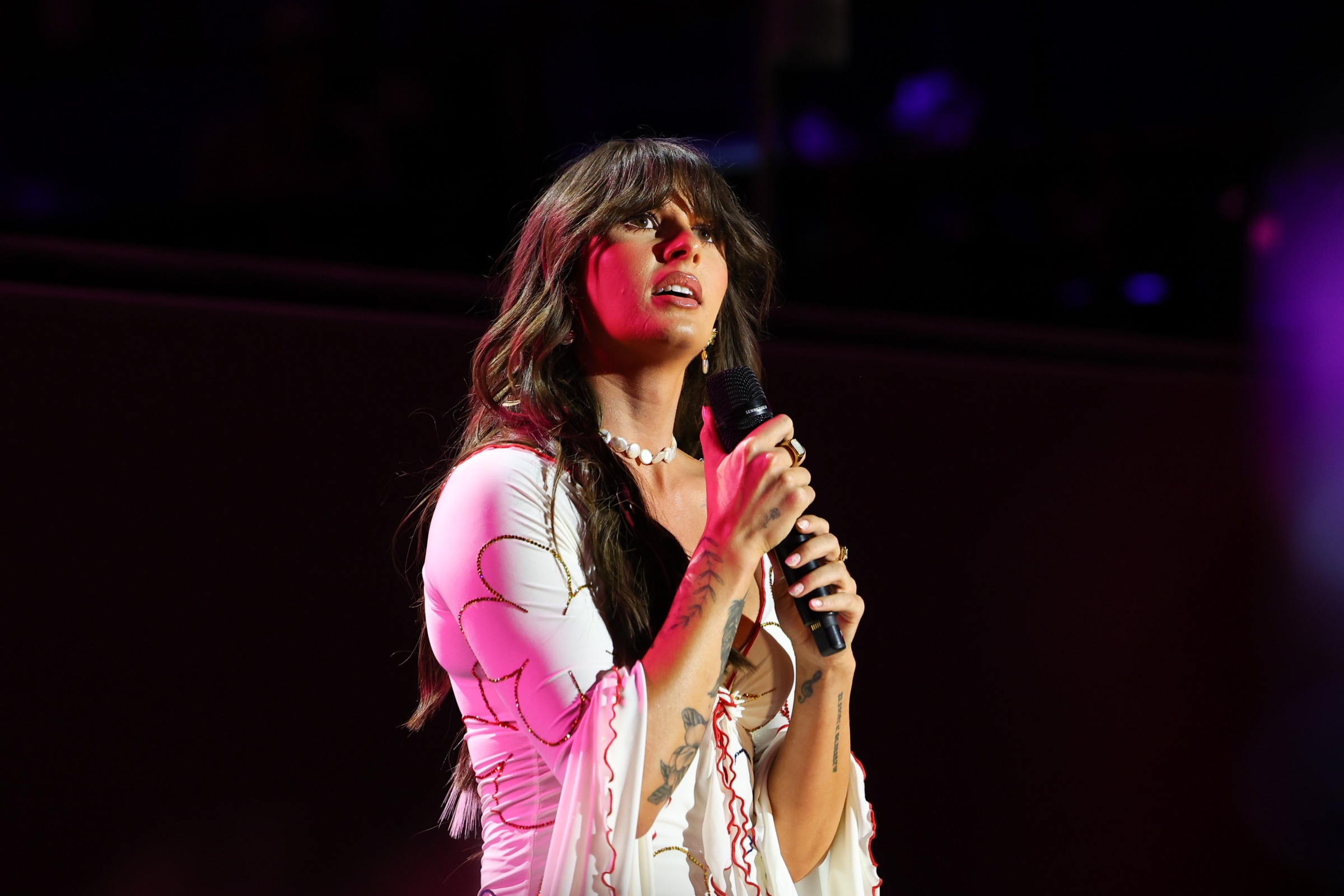
Ella Langley, the rising country star whose single “Choosin’ Texas” has climbed the charts, pulled the plug on her Tulsa stop just hours before the lights were to go up at the BOK Center. The 26‑year‑old announced the abrupt cancellation on social media, citing a “serious security threat” that could jeopardize fans and herself. In a brief post, she wrote, “I refuse to put anyone in harm’s way.” Tulsa Police confirmed the claim, explaining that the threat was serious enough to warrant a full halt to the event.
The sudden decision left a ripple of disappointment across the city. Tulsa’s BOK Center, which can host 17,000 attendees, was slated to welcome Langley’s growing fan base for the Dandelion Tour, a whirlwind series of dates that has already seen the singer perform in front of tens of thousands of concertgoers. Fans had lined up for hours, clutching ticket stubs and hoping to hear the star’s blend of southern storytelling and modern pop‑country flare. When the announcement appeared, a dozen patrons took to social media, voicing their frustration and bewilderment at a show that had seemed set to go on without a hitch.
While Langley’s team released a short statement on the artist’s official platform, the broader narrative surrounding the event is tied to a larger conversation about concert safety in the United States. In recent years, venues across the country have grappled with increasing threats of violence, from armed confrontations to coordinated security breaches. The Tulsa incident serves as a stark reminder that even the most celebrated performers must navigate a complex security landscape that can change in the span of an evening.
Background & Context
Ella Langley first captured national attention with her breakout single “Choosin’ Texas,” a catchy ode to Southern hospitality that resonated with listeners across the country. The song quickly climbed Billboard’s Hot Country Songs chart, establishing her as a rising force in contemporary country music. Following the success of that single, Langley announced her debut album, Dandelion, which showcases a mix of introspective ballads and upbeat anthems that reflect the artist’s Texan roots and modern influences.
In the months leading up to the Tulsa stop, the artist’s schedule was packed. The Dandelion Tour began in late July, sweeping across the Midwest and the South with stops in Houston, Dallas, and Nashville. Tulsa, Oklahoma, was slated as the fifth stop in the series, with the concert scheduled to open at 8:00 p.m. on Saturday night. Tickets had sold out hours before the scheduled start, with many fans arriving early to secure a front‑row spot and capture the energy of a Langley show—a reputation the singer has built on high‑energy performances, tight choreography, and a knack for engaging the crowd.
Security protocols for the BOK Center are comprehensive, covering everything from crowd control to emergency response. The venue has a long history of hosting large‑scale concerts, sporting events, and entertainment shows, and it has maintained a robust partnership with local law enforcement to ensure attendee safety. In the weeks prior, the venue’s security staff had conducted routine checks, reviewed potential threats, and coordinated with the artist’s crew on safety measures. However, just hours before the show, an undisclosed threat emerged that prompted the venue’s chief security officer and Tulsa Police to reassess the risk level.
What People Are Saying
The immediate reaction from fans was one of disbelief and disappointment. Social media erupted with photos of empty ticket stubs, and fans who had made the trip expressed their frustration in real time. One concertgoer wrote on Twitter, “All this time, we’re left in the dark. Where’s the show?” Others voiced concern for the safety of their fellow concertgoers, with one user noting, “If the threat is serious, I understand the cancellation, but it’s sad that we can’t enjoy the show.” Many fans also questioned how quickly the decision was made, with some suggesting that a more gradual announcement could have alleviated the sudden shock.
The artist’s official social media channels posted a brief apology and a statement that emphasized the importance of safety over profit. “I refuse to put anyone in harm’s way,” the caption read. Fans responded with an outpouring of support for the decision, acknowledging the difficult choice the artist had to make. Others, however, criticized the lack of transparency, calling for more information about the nature of the threat and the decision‑making process.
Tulsa Police released a statement to the press confirming that the threat was credible and required the complete suspension of the event. Police officials emphasized that the priority was to safeguard both the audience and the performer, and they assured the public that they were actively investigating the situation. The statement avoided disclosing specifics about the threat, citing ongoing investigations and the need to preserve the integrity of the inquiry.
Music industry observers noted that the incident underscores the fragility of concert logistics in an era where security concerns are increasingly complex. Some analysts pointed out that the incident could prompt venues to reevaluate their threat‑assessment protocols, and that artists may need to balance fan engagement with heightened safety measures. Meanwhile, the concert‑going community remains divided, with some fans feeling protective of the concert experience and others advocating for stricter safety protocols.
What Happens Next
The cancellation has already set off a cascade of administrative actions. Ticket holders were directed to the venue’s box office and the artist’s website for refunds. The BOK Center’s customer service team worked around the clock to process refunds, with most patrons receiving a full return of their ticket price within 48 hours. Some fans expressed frustration with the delay, but most appreciated the swift handling of the issue.
Ella Langley’s management team confirmed that the artist will reschedule the Tulsa show for a later date once a comprehensive risk assessment is completed. The artist’s spokesperson said, “We will keep fans updated on any future shows.” The rescheduled date remains tentative, contingent upon the resolution of the security investigation and the establishment of a new safety plan.
The incident has also prompted an internal review at the BOK Center. Security officials have pledged to conduct a post‑event audit of their protocols and to consult with both the artist’s management and local law enforcement to identify any gaps. The venue’s chief security officer indicated that additional layers of screening and emergency response drills would be implemented moving forward.
For Langley’s fanbase, the cancellation represents a setback, but also a reaffirmation of the artist’s commitment to safety. As the tour continues into the fall, fans can look forward to seeing the artist perform in other cities, with the expectation that lessons learned from Tulsa will translate into a more secure experience for all.
While the sudden halt of the Tulsa show left a palpable void, the underlying message is clear: in a world where the safety of concertgoers cannot be taken for granted, decisions like Langley’s—though difficult—serve as a reminder that protecting the community is paramount. The next chapter of the Dandelion Tour will proceed with caution, but with the same enthusiasm that has drawn millions to Langley’s concerts across the nation.
The Bottom Line
In an age where fans expect instant access to event details and assurances of safety, Ella Langley's decision to cancel the Tulsa show—despite a full house—should be applauded as a principled stand. The artist’s public refusal to risk anyone’s well‑being demonstrates a maturity rare in an industry often driven by profit motives. While the abrupt cancellation was undoubtedly a disappointment, the swift refund policy and transparent communication from both the artist and venue underscore a commitment to fan welfare that should become industry standard. The incident also serves as a catalyst for venues nationwide to scrutinize and bolster their security measures, from threat assessment protocols to emergency response drills. In prioritizing safety over spectacle, Ella Langley sets a powerful precedent: that the integrity of the live music experience depends not on how many tickets are sold, but on ensuring every attendee can enjoy the show without fear. —MyWorldPulse
Read more celebrity news at MyWorldPulse.