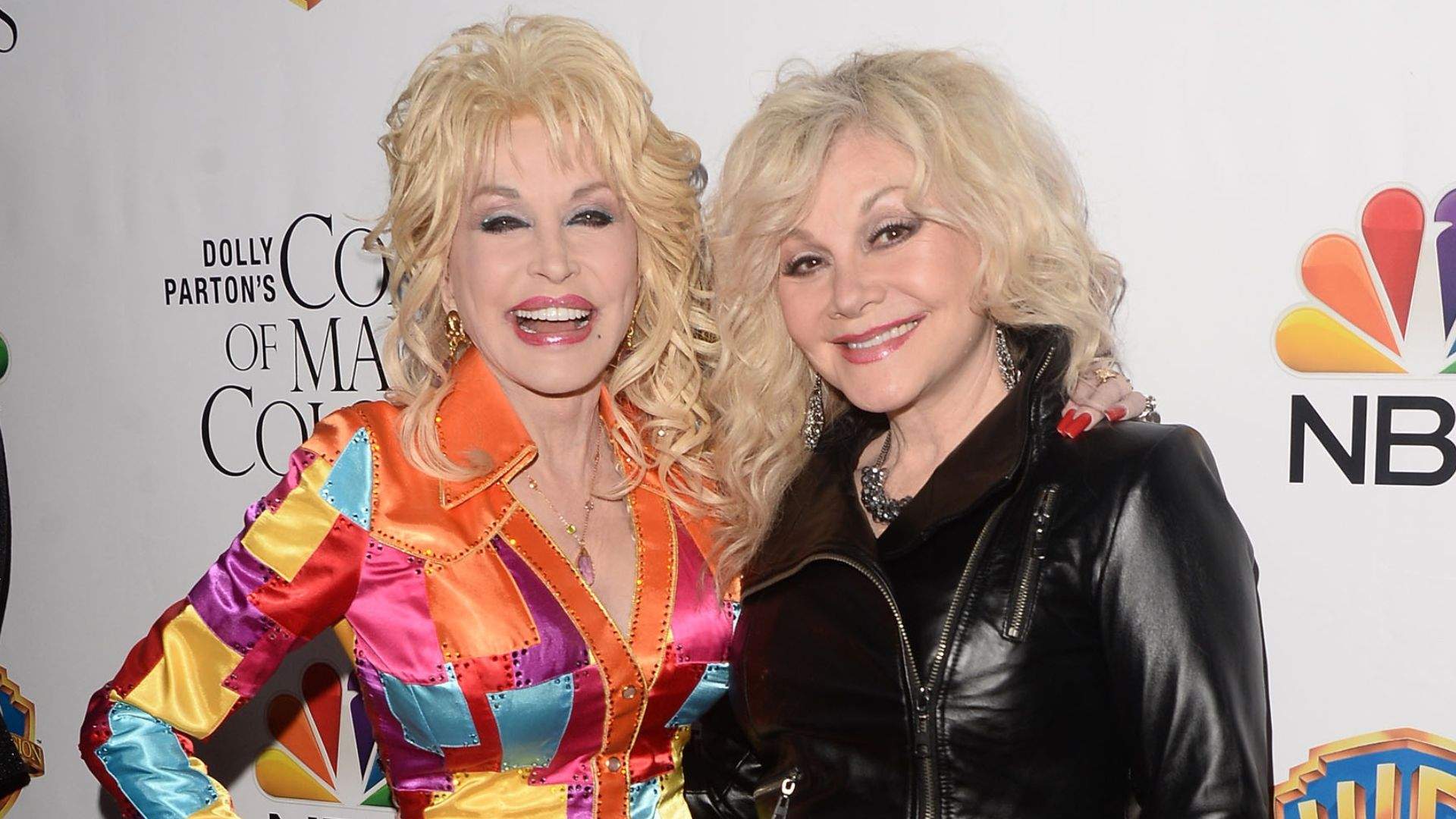
When Stella Parton’s Facebook post popped up on her timeline, a wave of nostalgia crashed over millions of Dolly Parton devotees. The post—an intimate recollection of a secret family practice that turned into a professional recording—revealed that the legendary singer contributed background vocals to a track for her uncle, Billy, when she was only fourteen. Fans flooded the comments with tears, memories, and questions about where to find the elusive rockabilly recording, turning an old family anecdote into a communal moment of celebration.
The story began with a simple line from Stella: “My big sister Dolly and I had our own secret language when we were younger and we taught it to Cassie our little sister, just so we could talk in front of our brothers and daddy and they wouldn’t know what we were saying.” That line set the stage for a tale of childhood conspiracies, sibling bonding, and the accidental entry of Dolly into the studio. The post, which carried the weight of an 80‑year‑old icon’s early years, struck a chord, reminding fans that Dolly’s genius was already bubbling beneath the surface long before her soaring solo career.
Background & Context
Billy Parton, Dolly’s uncle, was known for his raw, energetic rockabilly tracks that carved a niche in the 1960s country scene. The family’s deep-rooted musical heritage meant that even in the modest studios of their hometown, creative collaboration was a daily reality. According to Stella, the siblings—Dolly, 14; Stella, 11; and Cassie, 9—would often sneak into the studio while Uncle Bill was recording. The atmosphere was electric, filled with the clatter of guitars and the hum of analog tape machines, and the three girls brought their own secret language to the mix, a playful code that kept their conversations hidden from the adults who were busy producing.
Their unguarded harmonies, performed at a time when Dolly had yet to become a household name, were proof of the raw, almost instinctive talent that would later define her career. The background vocals they laid on Uncle Bill’s tracks were described by Stella as “perfected harmony blends,” a phrase that belies the depth of musical understanding they shared even at such a young age. The story also recalls the domestic side of the family: a mother who, with a mix of exasperation and love, reminded the girls to “stop with all that gibberish and get your chores done before bedtime!” It paints a picture of a tight-knit household where creativity thrived alongside everyday responsibilities.
In the wider context of Dolly’s career, this anecdote is more than a charming footnote. It illustrates the formative environment that shaped her approach to music. From a young age, Dolly was already experimenting with vocal layering and harmony—skills that would become hallmarks of her sound. The fact that she contributed to a rockabilly recording before her mainstream debut underscores the breadth of her early influences, bridging country roots with the rebellious edge of rockabilly.
What People Are Saying
The post sparked an outpouring of emotional responses that crossed generations. One commenter wrote, “Happy ‘Tedda Tuesday’, to ‘Tedda’, herself! You can still have a private conversation with Dolly! I love you both! By the way- Are Uncle Bill’s recordings still accessible?” The reference to “Tedda Tuesday”—a playful nod to Dolly’s nickname—showed how fans had turned the memory into an inside joke. Another fan reminisced about her own childhood, saying, “My friends and I had a secret language when we were little. It was fun and it made us feel cool to be able to talk in front of others! Have a great day! Buy a new coffee maker! I don’t have patience to wait for good coffee!” These comments illustrate how the story resonated beyond just Dolly’s biography; it echoed the universal experience of secret sibling chats.
Stella’s own words in the post, quoting her mother’s admonition and the siblings’ playful defiance, drew admiration for the family’s warmth and resilience. Fans expressed gratitude for the intimate glimpse into Dolly’s early life, noting that “Dolly would be ‘laughing about it now’ if she could see her retelling the tale.” The sentiment reflected a shared hope that Dolly, even in death, would still enjoy the humor and affection embedded in her past. One fan said, “Thank you for sharing these sister bonding moments. Made me smile with thoughts of my only sister who passed two years ago. Enjoy your day!” The comments collectively painted a picture of community, nostalgia, and respect for an icon who had touched countless lives.
The response also highlighted a broader conversation about the preservation of early, often undocumented, moments in the lives of musical legends. Fans wondered about the accessibility of Uncle Bill’s recordings, hoping for an archival release that could connect them to the raw, formative work that birthed a superstar. This curiosity reflects a growing trend among listeners: a desire to trace the evolutionary path of their favorite artists back to humble beginnings and hidden gems.
What Happens Next
Stella’s revelation has opened a door for the Parton family and fans alike to explore the deeper layers of Dolly’s musical journey. While the post itself is a snapshot of a single studio session, it hints at a potential catalog of early recordings that may yet be released or remastered. The Parton family, known for keeping Dolly’s legacy alive through various projects and tribute events, might consider curating a collection of such hidden tracks, offering listeners an unprecedented look into the formative stages of a legend.
For fans, the story invites a renewed exploration of Dolly’s early influence beyond the mainstream hits. It encourages a deeper appreciation of how the artist’s versatility—rooted in early rockabilly harmonies—shaped her signature style. In the near future, there may be opportunities for interviews, documentaries, or podcasts that dive into these formative moments, perhaps featuring insights from surviving family members or music historians.
On a personal level, Stella’s post may prompt the Parton siblings to revisit their own secret language, now shared with a global audience. The conversation could serve as a bridge between the past and the present, turning a private family tradition into a public celebration of creativity and sisterhood. Fans might even find new inspiration in the idea that talent can emerge in the most ordinary spaces—like a family kitchen, a cramped studio, or a whispered conversation under a stern mother’s gaze.
In the wider music industry, the story underscores the importance of preserving and documenting early creative processes. It reminds producers, archivists, and artists that even the smallest contributions—such as background vocals by a fourteen‑year‑old—can hold significant historical value. As the world continues to celebrate Dolly Parton’s enduring legacy, the revelation of her early studio work stands as proof of her lifelong commitment to music, community, and storytelling.
The Parton family’s recent tribute to Dolly, marked by the bittersweet sharing of this story, will no doubt linger in fans’ hearts. It serves as a gentle reminder that behind every chart‑topping single and platinum record lies a humble beginning, a secret language, and the unwavering support of a close-knit family.
The Bottom Line
At MyWorldPulse, we see Dolly Parton’s early studio cameo as more than a quaint anecdote; it’s a reminder that legends are forged in everyday moments. The fact that a fourteen‑year‑old could seamlessly blend into a rockabilly track speaks volumes about the Parton family’s unbreakable creative bond and the raw talent that Dolly would later magnify on a global stage. This revelation invites us—and our readers—to celebrate the unseen, the whispered harmonies, and the secret languages that nurture tomorrow’s stars. It also challenges the music industry to treat every snippet, every demo, and every family jam as potential cultural treasure. If these hidden tracks are indeed released or remastered, they could offer a fresh, authentic narrative that resonates with both long‑time fans and new listeners seeking genuine artistry. MyWorldPulse will continue to champion stories that honor the humble beginnings of icons, believing that the most powerful stories are those rooted in authenticity and shared human experience.
Reference:
- Stella Parton’s Facebook post revealing Dolly’s early studio work
Read more celebrity news at MyWorldPulse.