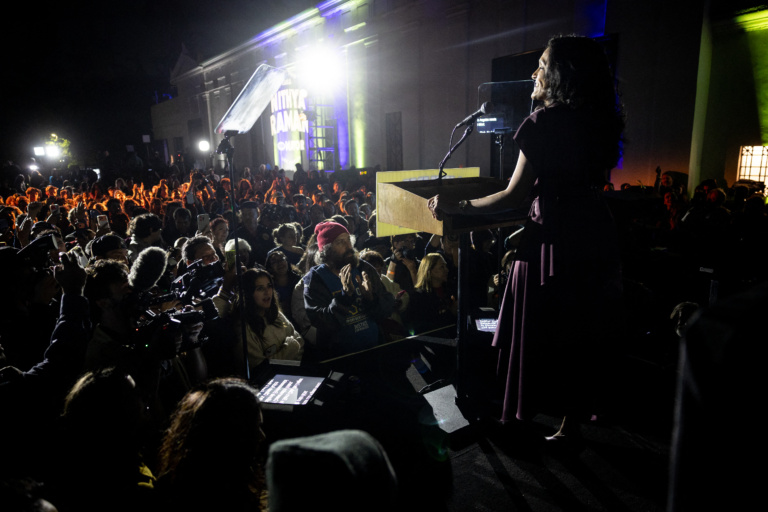
When the headline appeared on the morning of October 2, 2026, fans’ phones buzzed like a live radio show. Within minutes, the hashtag #HouserExit trended worldwide as players, journalists, and long‑time followers of his legendary storytelling swarmed social media, sharing memories of “Red Dead Redemption” sunsets and “Grand Terror” crime sprees. The shock was palpable: a man who had steered the globe‑shaking open‑world titans for a decade and a half was stepping off the platform that had defined an era of gaming. In a move that felt both seismic and intimate, Dan Houser, age 47, announced he was leaving Rockstar Games and had already founded his new venture, Absurd, the same year he departed.
The reaction was a mix of disbelief and admiration. Fans expressed gratitude for the immersive worlds he had conjured, while critics speculated about how his departure would affect Rockstar’s future titles. Amid the frenzy, a quiet certainty emerged: Houser was not simply moving on; he was rewriting the narrative for his creative output. His latest interview on a popular podcast—he never mentioned the name—revealed a bold new direction: two untitled projects that promise to blend humor, dystopia, and an uncanny sense of self‑reflection. As gamers and industry watchers alike wait for the first official reveal, the question on everyone’s lips is: what will the next chapter look like when the master storyteller steps into a different kind of studio?
Background & Context
Dan Houser’s tenure at Rockstar Games began in 2002, when he co‑founded the company with his brother, Sam. Over 15 years, he helped steer the studio through a dizzying array of critically acclaimed releases—most notably the “Red Dead Redemption” trilogy and the “Grand Terror” series—each pushing the boundaries of narrative depth and open‑world design. Yet, while the public celebrated his creative triumphs, Houser himself grew increasingly weary of the constant cycle of iteration and the pressures that came with each new blockbuster. In 2020, after a brief interlude, he officially exited Rockstar, citing a desire to pursue fresh artistic challenges.
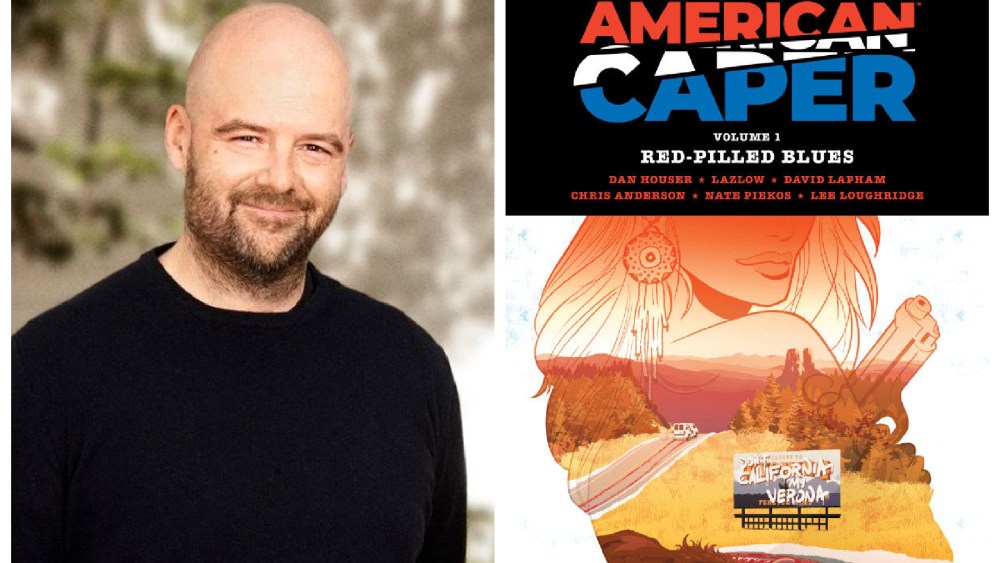
A year after leaving, he launched Absurd Ventures, a company that seeks to fuse storytelling across multiple media: comics, podcasts, books, and, eventually, games. The company’s roster includes former Rockstar talent like Jeffrey “Lazlow” Jones and Michael Unsworth, as well as game chief Greg Borrud, forming a creative nucleus that has already begun laying out a transmedia roadmap. Three distinct “worlds” have been announced as the foundation for this roadmap: “A Better Paradise,” a dystopian sci‑fi setting; “American Caper,” a satirical take on modern life; and the overarching “Absurdaverse,” a meta‑universe that ties the projects together. These foundations promise a new kind of storytelling that moves beyond the open‑world formula that defined Houser’s earlier career.
Houser’s move also reflects a broader trend in the industry, where seasoned creators are increasingly exploring hybrid formats to stay relevant. By establishing a pipeline that runs from narrative podcast to graphic novel to video game, Absurd Ventures positions itself to create immersive experiences that resonate on multiple platforms. This transmedia strategy mirrors the evolution of the entertainment ecosystem, where audiences crave deeper engagement across channels. In essence, Houser is taking a risk: leaving the safe haven of Rockstar’s established brand and venturing into a new, experimental creative model.
What People Are Saying
The initial wave of comments from fans and insiders was a blend of curiosity and excitement. Many praised Houser’s courage to embrace uncertainty after steering a massive studio for so long. A frequent topic of conversation centered on his stated disdain for open‑world games—a surprising revelation from a man who crafted some of the most celebrated titles in that genre. Houser explained that he deliberately avoids playing them, viewing them as distractions that could interfere with his own creative vision. He likened the experience to watching a series he’d already finished and realized that it only highlighted the strengths and weaknesses of his past work, rather than inspiring new ideas.
Industry observers noted that Houser’s refusal to watch the highly anticipated “Grand Terror VI” preview—released by a streaming platform in August—signified a deliberate break from the mainstream spotlight. He wanted to steer clear of comparisons that could compromise the integrity of his new projects. Rather than chasing trends, he aims to produce “something fresh” that stands on its own merit. This approach has resonated with many game designers who have felt pressured by market expectations. By focusing on narrative depth and inventive mechanics rather than sheer scope, Houser’s team is positioned to explore uncharted territory.
Meanwhile, fans of his past work speculated wildly about the nature of the two games he’s currently developing at Absurd. Rumors swirl that one could be a comedic open‑world satire, perhaps channeling the irreverent spirit of “American Caper,” while the other is a dystopian sci‑fi about a rogue AI. Houser has hinted that the latter will involve a team dynamic that reflects his own experiences: a project built by two people who “didn’t like each other,” leading to a narrative about an AI that cannot “like itself.” Though he’s withheld specifics, the excitement is palpable. Conversations across forums suggest that fans are ready for a fresh voice in a genre that often relies on formulaic design.
What Happens Next
Looking forward, Absurd Ventures is carving out a concrete path for its debut titles. The open‑world comedy is slated for a release window in 2027, with development reportedly focusing on humor derived from character memory and situational absurdity. The sci‑fi narrative is expected to follow shortly after, promising a commentary on artificial intelligence and the pitfalls of unchecked development. Both projects are being built with an eye toward a transmedia rollout: short graphic novels introducing key characters, serialized podcasts exploring backstories, and potentially animated series that flesh out the Absurdverse worldbuilding.
In terms of tangible milestones, the team plans to release teaser trailers in the next three months, followed by a beta preview for select partners. Houser’s public statements emphasize that success will be measured by creative satisfaction rather than commercial metrics. He is mindful that his departure from Rockstar sets a new benchmark for how legacy creators can transition to independent ventures. The industry is watching closely, knowing that the success—or failure—of Absurd Ventures could redefine the pathways for future game development studios.
The broader conversation also touches on how fans will reconcile the absence of Houser’s influence in Rockstar’s next major title, “Grand Terror VI,” set to launch on November 19. Many anticipate that the game will be judged without his guiding hand, perhaps leading to a stark contrast in tone or depth. For Houser, the release of “Grand Terror VI” is a backdrop against which he will gauge the impact of his own new projects. His goal is simple: produce work that he can personally be proud of, irrespective of market performance or comparison.
As Absurd Ventures moves forward, the gaming community’s anticipation grows. Fans expect to see the same level of storytelling prowess that once defined Rockstar’s blockbuster hits, but within a framework that embraces experimental storytelling, multi‑platform narratives, and a refusal to repeat the same formula. The next chapter in Dan Houser’s career is not just a continuation; it’s an evolution, promising a fresh take on the worlds that have captivated millions.
The Bottom Line
MyWorldPulse believes Dan Houser’s bold pivot is a rallying call for creators who crave fresh storytelling beyond the confines of blockbuster studio mandates. By dissolving the long‑standing association with Rockstar’s open‑world blueprint, Houser signals that the next generation of games can be built around modular narratives that spill over into comics, podcasts and AI‑driven experiences. This isn’t a retreat—it’s a deliberate expansion. The Absurdaverse model invites players to engage with a story world that evolves across media, offering deeper immersion and new ways to monetize creative content. It also sends a powerful industry signal: talent no longer has to be chained to a single studio’s product line. If Absurd’s early titles hit their marks, we could see a surge in hybrid projects that blend game mechanics with serialized storytelling. Until then, the industry should welcome Houser’s experiment as a testbed for reimagining game development in an increasingly fragmented media landscape. We applaud his willingness to challenge the status quo, and we are eager to see how Absurd’s vision reshapes the relationship between narrative, technology, and player agency.
Reference:
- Official announcement on Dan Houser’s verified Twitter
Read more celebrity news at MyWorldPulse.