The first frame of the new Starz miniseries Tip Toe shows Alan Cumming’s character, Leo Struthers, hanging from a streetlight outside his Manchester home, a brutal cliff‑hanger that left viewers scrambling for answers. That moment, set against the gritty skyline of the city, becomes the story’s opening beat and the spark that ignites a five‑part, 10‑day narrative about a gay bar owner and a homophobic neighbor.
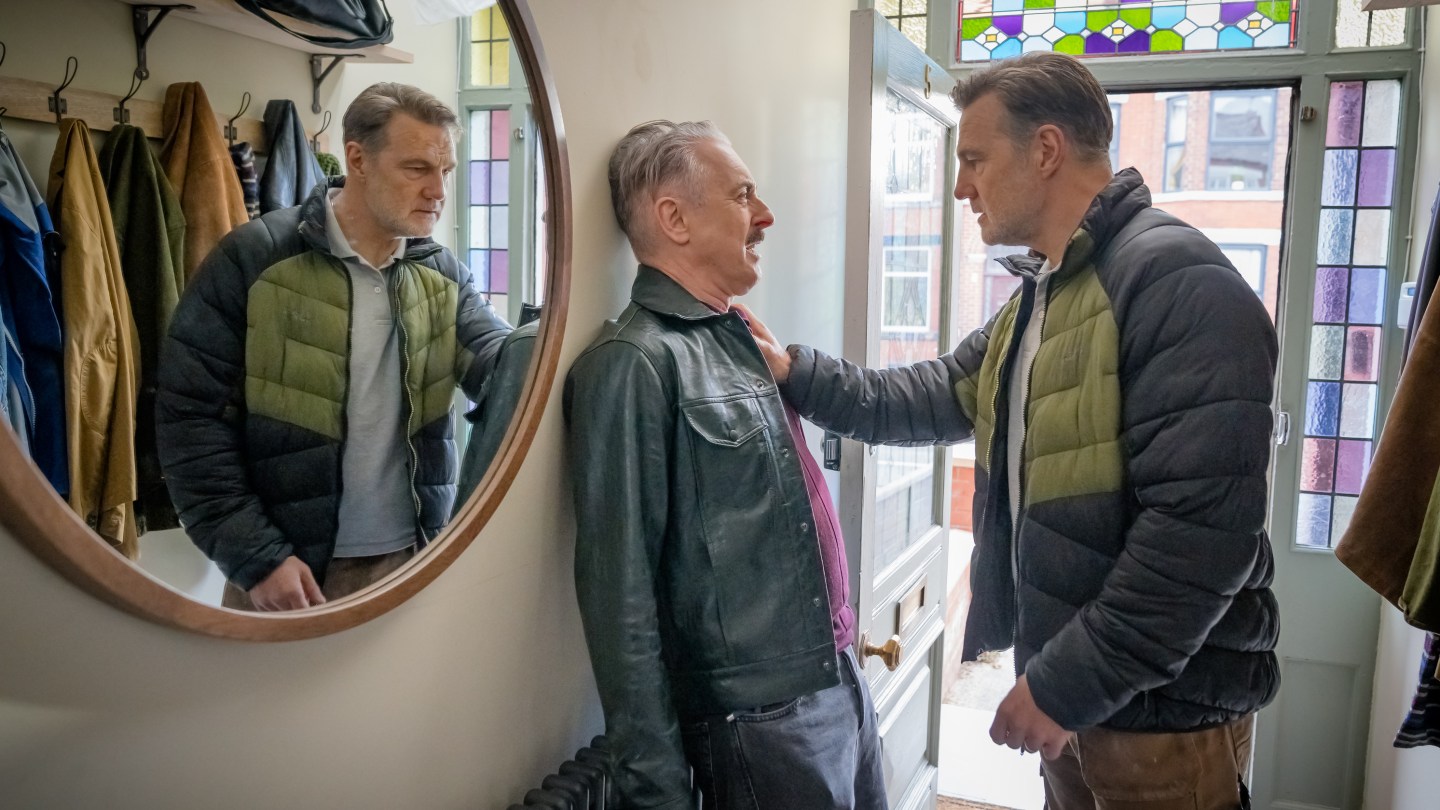
What makes the death of Leo’s life so arresting is the way the series unspools it: the opening is a murder mystery, but it is also the first window into a world where queer‑phobic tensions are no longer a thing of the past but a present‑day reality. In the minutes that follow, the audience is thrown back ten days to the seemingly innocuous scene where Leo, after being locked out of his own door, knocks on the next door. The neighbor, Clive Goss, played by David Morrissey, reluctantly lets him in, setting the stage for a conflict that will grow from small gestures to a life‑ending showdown.
The choice of Manchester, a city steeped in industrial history and known for its vibrant LGBTQ+ scene, gives the drama a raw, authentic backdrop. The bar, Spit & Polish, becomes a microcosm of the community’s resilience and fragility, a place where every character’s story threads together in a tapestry that is as colorful as it is dangerous.
Background & Context
Russell T. Davies, the visionary behind the groundbreaking series It’s a Sin, returns to television with Tip Toe, a story that leans heavily into the cultural climate of the 2010s and the lingering shadows of queerphobia. Davies’ signature mix of humor and heartbreak is evident from the opening line, when a character remarks, “I used to walk into a room and just go, ‘Ta‑da!’” and then adds, “I tiptoe. Just in case.” That line, and the entire series, are a direct response to a recent surge in anti‑LGBTQ+ rhetoric that has left many communities on edge.
The plot’s structure is deliberately disorienting: the audience is first introduced to the violent outcome before seeing the chain of events that led to it. By moving back ten days in the narrative, the show reveals Leo’s daily interactions—a friendly knock on Clive’s door, a casual conversation with his 16‑year‑old son George, a job offer for repairs at the bar—demonstrating the normalcy that suddenly collapses into tragedy. The decision to show Leo as both charismatic and vulnerable underscores a recurring theme: the danger of assuming anyone is “just different.”
Tip Toe also showcases Davies’ ability to craft characters that feel real rather than symbolic. Leo Struthers is a man who, despite living in the ’80s—a time that many remember as a period of limited visibility for queer people—finds himself surrounded by neighbors who are still steeped in homophobic attitudes. The bar’s name, Spit & Polish, evokes both the grit and the shine of the community, hinting at the duality of resilience and the necessity of self‑care amid adversity.
What People Are Saying
When the first episode aired on Starz, the shock of Leo’s death caused a flurry of commentary across social media platforms. Many viewers expressed disbelief, sharing screenshots of the moment with the caption, “This is not what we signed up for.” The rawness of the opening sparked conversations about how queer narratives are being represented on premium cable, with many fans praising the series for its unapologetic look at the everyday realities of queer life in a contemporary city.
Critics highlighted the series’ willingness to tackle a subject that has long been avoided or glossed over in mainstream television. The series was noted for blending humor with stark drama, a technique Davies has perfected in previous works. The nuanced performances—especially Cumming’s portrayal of Leo, who oscillates between charm and intensity—were praised as the heart of the story. Critics argued that the show does not shy away from the harsh truth that queerphobia can manifest in ordinary settings, even in the seemingly safe spaces of a neighborhood.
Beyond the individual episode, Tip Toe has prompted a broader dialogue about the cultural climate in 2024. Many commentators point to the show’s depiction of a bar owner’s murder as a reflection of real‑world incidents that have left many in the LGBTQ+ community feeling unsafe. The series has been cited in academic discussions about queer representation, with some scholars using it as a case study for how media can influence public perception and policy regarding queer rights.
What Happens Next
The next episode dives deeper into Leo’s attempts to mend fences with his neighbor, Clive, who remains skeptical of the bar’s owner’s intentions. In a moment of unexpected generosity, Clive lets Leo into his home, and a conversation ensues that reveals Clive’s fear of change. Leo, ever the optimist, reminds him that attitudes shift over time, but the timeline is not guaranteed. This exchange sets the stage for a series of tense, small‑scale conflicts that build toward the inevitable confrontation.
Meanwhile, Leo’s interactions with George, the 16‑year‑old son of Clive, add a layer of generational complexity. George’s own secret sexuality is introduced subtly, and Leo’s mentorship of the boy hints at a potential ally who could bridge the gap between the two worlds. The series hints that if Leo can foster a relationship with George, perhaps the broader community might start to see beyond the prejudice that has divided them for decades.
The narrative arc points toward an escalating crescendo of violence, with each character forced to confront their own biases. While Leo’s death may have already been foreshadowed, the series will still focus on the emotional fallout and the community’s response. It asks whether a single act of aggression can fracture an entire neighborhood or whether shared humanity can, even if slowly, heal the rift.
The final episode promises to pull the pieces together, resolving the tension between Leo and Clive in a way that is as cathartic as it is devastating. The audience can anticipate a climax that leaves no stone unturned: a final showdown that underscores the stakes, the cost, and the necessity of confronting hate head‑on.
As Tip Toe unfolds, viewers will be challenged to examine how far society has come in addressing queerphobia—and how far it still must go. The series doesn’t offer easy answers, but it delivers a powerful reminder that stories matter, especially when they mirror the hard truth that the fight for equality is far from over.
The Bottom Line
MyWorldPulse sees Tip Toe as a pivotal moment for queer storytelling in mainstream television. The series’ unapologetic blend of sharp wit and grim realism challenges the industry’s complacency toward queer narratives. By foregrounding a gay bar owner’s murder within a tightly focused 10‑day window, the show invites viewers to examine the corrosive effects of homophobia that linger long after the flash of a headline. Its setting in Manchester, paired with nuanced character arcs—Leo Struthers’ charisma, Clive Goss’s resistance, and the teenage George’s hidden sexuality—creates a microcosm of the broader LGBTQ+ experience. The critical response highlights how the series balances humor with tragedy, proving that audiences are ready for content that is both entertaining and socially relevant. For creators, Tip Toe offers a blueprint: integrate a strong, authentic setting, employ non‑linear storytelling, and allow your characters to embody real‑world complexities. For audiences, the series reaffirms that stories matter; they can spark reflection, foster empathy, and, ultimately, push society toward greater understanding and equity. MyWorldPulse applauds the creators’ boldness and urges industry peers to follow suit.
Reference:
- Alan Cumming's Official Twitter
Read more celebrity news at MyWorldPulse.