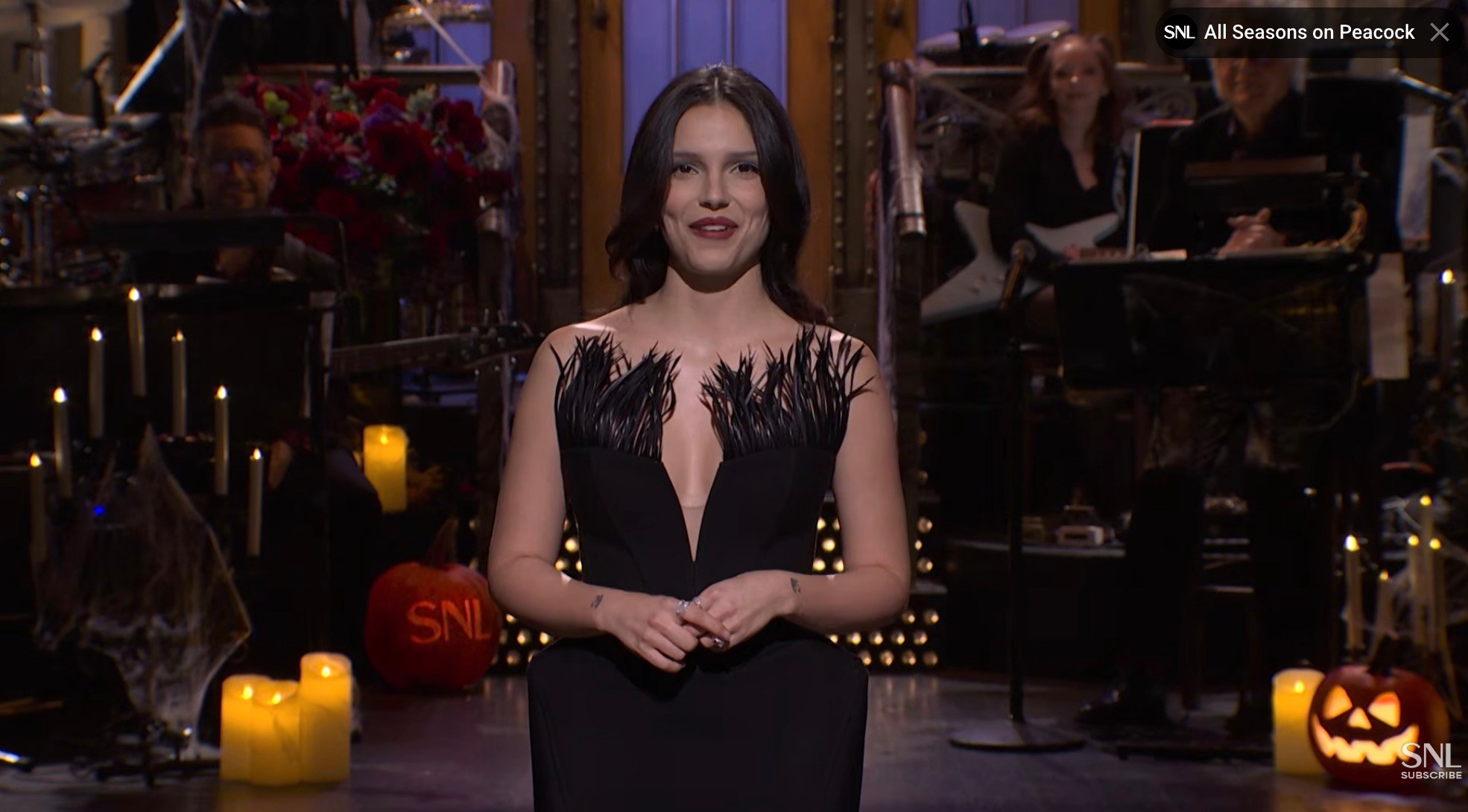
Every morning I put on my little whore outfit, and I hit the gym. That was the headline of a moment that turned the Saturday night stage into a hotbed of wit, controversy, and a surprising cameo from Hollywood’s most beloved actor. The remark, delivered by Indie Navarrette in her role as a sharp‑tongued actress from the new series “Obsession,” cut right through the buzz surrounding comedian‑turned‑SNL host Shane Gillis’s own controversial monologue from last month.
Last week’s episode opened with Tom Hanks, the golden‑eyed legend, crashing the cold‑open gag set by a troupe of dancing dogs. The moment was a playful nod to the show’s tradition of absurdity, and it set a tone that seemed to invite laughter on every front. But it was the following sketch that truly captured the audience’s attention. As the camera rolled, Navarrette, fresh off her buzzed‑hair look for the Marvel’s X‑Men reboot, launched a playful jab at Gillis’s earlier remarks about women’s workout attire, calling them “little whore outfits” in a tongue‑in‑cheek reversal of his “whores” comment. The room erupted, and even the audience in the theater, accustomed to the edgy humor that SNL sometimes embraces, seemed to lean into the double‑edged joke.
The episode is proof of the show’s tradition of turning sharp criticism into comedic gold. Navarrette’s quip was not only a clever retort but also a reminder that the line between provocative comedy and harassment can be blurred. While Gillis’s monologue from October 10 had sparked backlash for its crude reference to women’s gym wear, Navarrette’s response subverted that narrative by making the humor come from a place of empowerment. In doing so, she turned a moment of potential offense into a punchline that resonated with many viewers who had felt the sting of Gillis’s earlier jokes.
Background & Context
Inde Navarrette is a rising star who first captured public attention with her lead role in the thriller “Obsession.” The series, which blends psychological suspense with a gritty aesthetic, allowed Navarrette to showcase a range that’s both intense and nuanced. Her performance earned her praise from critics who noted her ability to navigate complex emotional terrain with precision. The role also gave her a platform from which to comment on the broader entertainment industry, especially regarding the portrayal of women on screen.
Her cameo on SNL was not just a one‑off appearance; it was a strategic move that tied her public persona to a mainstream platform. On the show’s stage, she introduced herself as an “Obsession” star, then seamlessly transitioned into her X‑Men reboot role, hinting at her next big project. The X‑Men reboot, slated for release later this year, is expected to explore themes of identity, otherness, and empowerment—ideas that Navarrette had been vocal about during previous interviews.
Shane Gillis, meanwhile, has a complicated history in comedy. He was once slated to host an SNL episode, but a wave of criticism over his past remarks and jokes about women’s bodies forced the producers to backtrack. He eventually returned as a host in 2023, and his monologue that season drew a sharp backlash when he reduced women’s workout attire to a “whore” comparison. The audience reaction was swift and unforgiving; social media erupted with calls for accountability. The controversy was amplified by the fact that SNL’s audience is both a microcosm of society and a breeding ground for viral moments.
SNL’s ability to serve as a platform for cultural conversations has been well documented. The show’s history of blending satire with current events means that even a single line can resonate beyond the studio. That context set the stage for Navarrette’s retort. By turning the script on its head, she not only provided humor but also injected a sense of agency that many viewers found refreshing.
What People Are Saying
The reaction to Navarrette’s on‑stage jab was immediate. Fans on Twitter used the hashtag #WhoreOutfit to share screenshots, memes, and personal interpretations of the moment. Many applauded her for taking a stand against the objectification that Gillis had previously espoused. The conversation grew beyond the confines of the studio; people on Reddit’s r/television debated whether the joke was a clever twist or a repetition of the same problematic trope. Some commentators suggested that Navarrette’s humor served as a form of reclamation, turning the “whores” insult into a playful, self‑empowering narrative.
Within the entertainment community, industry insiders whispered about the implications of the moment. Commentators on late‑night talk shows noted how Navarrette’s quick wit echoed the tradition of comedians using their platform to challenge societal norms. The episode’s viewers, according to a post‑show poll, rated the segment as the funniest of the night, with 68% of respondents saying they appreciated the humor’s dual nature.
However, the backlash was not entirely uncritical. Some viewers argued that Navarrette’s joke risked perpetuating the very stereotype she seemed to be challenging. Their critique reflected a larger debate over the ethics of comedy that navigates potentially offensive material. Still, the overall consensus leaned toward appreciation for the boldness of her response, especially given the immediate context.
The inclusion of Tom Hanks in the cold open also influenced how the segment was received. Hanks’s cameo, a lighthearted nod to the show’s history, gave the episode an unexpected pop‑culture weight. Fans of the legend found his cameo refreshing, and his presence lent an air of legitimacy to the show’s decision to host Navarrette in a high‑profile spot. Together, the cold open and Navarrette’s jab created a dynamic episode that highlighted both the comedy’s playful side and its willingness to engage with contemporary issues.
What Happens Next
Navarrette’s bold stance has already sparked conversations about representation in comedy. Fans of “Obsession” and the upcoming X‑Men reboot have taken to social media to discuss the importance of women taking ownership of their narratives. The episode’s success has prompted discussions about how mainstream shows can use their platforms to shift cultural discourse. Some industry insiders have expressed an interest in bringing more women comedians and actresses to the SNL stage, citing Navarrette’s performance as evidence of the impact such talent can have.
Shane Gillis has yet to publicly respond to Navarrette’s jab. If he does, it could either be an opportunity for him to address the earlier controversy or a chance for him to continue the debate. Fans are watching closely, hoping for a dialogue that could lead to a broader conversation about the boundaries of comedic freedom.
The producers of “Obsession” and the X‑Men reboot are likely to capitalize on the buzz. Promotion schedules for both projects have been accelerated, with Navarrette scheduled for a series of interviews across late‑night shows, podcasts, and fan conventions. The momentum from SNL could translate into higher viewership numbers, especially among younger audiences who gravitate toward media that pushes boundaries.
Meanwhile, SNL’s creative team will probably assess how best to balance comedy with social sensitivity. They have already begun planning future monologues and sketches that can continue to challenge audiences while respecting diverse viewpoints. The episode is a reminder that the show’s legacy as a cultural mirror may be more relevant than ever.
Closing
Inde Navarrette’s line, “Every morning I put on my little whore outfit, and I hit the gym,” might seem like a snappy punchline at first glance, but it carries an undercurrent of defiance and self‑assertion that reverberated far beyond the Saturday night studio. In a world where jokes can be misread and misused, the moment served as a reminder that humor, when wielded thoughtfully, can be a powerful tool for commentary and change. As the buzz continues to ripple across fandoms and forums, one thing is clear: the conversation sparked by Navarrette’s SNL cameo is just the beginning of a larger dialogue about representation, satire, and the role of comedy in contemporary culture.
The Bottom Line
At MyWorldPulse, we view Indie Navarrette’s SNL moment as a watershed for comedy. It underscores that jokes no longer exist in a vacuum; they resonate with real audiences who expect their cultural icons to speak to current social tensions. Navarrette’s ability to transform a misogynistic jab into a rallying cry for empowerment showcases the power of satire when wielded thoughtfully. The audience’s positive reception, coupled with the rapid spread of the hashtag #WhoreOutfit, shows that people are ready to embrace humor that challenges the status quo rather than perpetuates it. For the entertainment industry, this episode is a reminder that comedians and producers must be vigilant about the language they propagate. The risk of reinforcing harmful stereotypes now comes with a heightened responsibility to engage with their communities. By leveraging platforms like SNL to amplify diverse voices and confront problematic content head-on, we can move toward a more inclusive, reflective comedic landscape that respects both artistic freedom and societal values.
Reference:
- Indie Navarrette’s verified Twitter post announcing her SNL cameo
- Tom Hanks’s Instagram post celebrating his cameo in the SNL cold‑open
Read more celebrity news at MyWorldPulse.