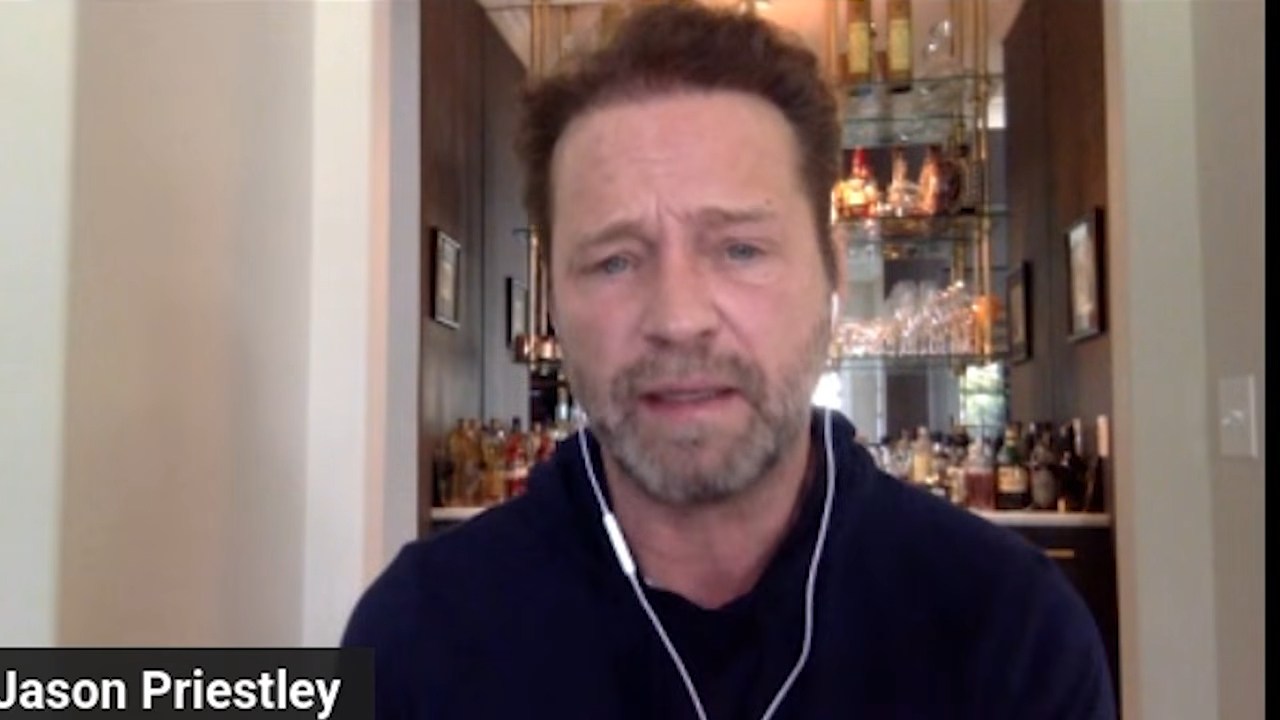
When Jason Priestley, the charismatic former star of Beverly Hills, 90210, opened up about the moments that could have kept Shannen Doherty on the show past its fourth season, the internet erupted. Fans flooded social media with nostalgic clips, old episode screenshots, and memories of their teenage angst, all while speculating on what might have been. The revelations came on a Tuesday when Priestley posted a heartfelt video on his personal platform, his eyes reflecting the bittersweet memories of that era.
Shannen Doherty, who portrayed the feisty twin sister of Priestley’s character, was a breakout star during the early 1990s. The duo’s on-screen chemistry anchored the show’s narrative and drove ratings. Yet, by the end of Season Four, Doherty departed under a cloud of controversy, leaving fans and co‑stars stunned. Priestley’s comments shed new light on what, in his view, could have changed that outcome. For the first time in public discourse, the star who shared a half‑sibling on screen offers a behind‑the‑scenes perspective on the tensions that ultimately led to Doherty’s exit.
---
Background & Context
The launch of Beverly Hills, 90210 in 1990 catapulted a group of young actors into overnight fame. Shannen Doherty’s role as the rebellious twin of Brandon Walsh, played by Priestley, quickly became a fan favorite. The show’s early seasons were marked by bold storylines—teen love, family drama, and the glamour of affluent California—appealing to a generation that craved authenticity and spectacle. By Season Four, the series was at the height of its popularity, boasting viewership numbers in the mid‑30s, a benchmark that many networks had yet to achieve with a teen drama.
However, behind the curtain, the production was a cauldron of creative disputes and contractual negotiations. Doherty, known for her outspoken nature, frequently clashed with producers over storyline direction and salary. The show’s lead, the network, and the actors’ guild were caught in a delicate balancing act that weighed star power against budget constraints. In 1993, Doherty’s contract expired, and negotiations stalled. Reports at the time hinted at a “creative difference” that ultimately culminated in her firing. While the official narrative centered on her refusal to sign the new contract, Priestley suggests that the situation could have been mitigated with better communication.
Priestley’s comments provide context that the network and the writers may have underestimated the importance of nurturing the actors’ relationship with the production. The 1990s were a time when a network’s willingness to accommodate a star’s demands could make or break a show. In Doherty’s case, the show’s future seemed threatened not only by her departure but also by the loss of a key storyline that had drawn in millions. The fact that her exit coincided with the network’s decision to shift focus toward more mature themes only underscores the complexity of the situation.
---
What People Are Saying
Priestley’s candid remarks resonated immediately with a passionate fan base that has followed Beverly Hills, 90210 for decades. On his platform, he recounted moments of camaraderie in the writers’ room, the late‑night rushes, and the camaraderie that made the show feel like a second family. Fans responded with “reminiscences” of their own, sharing how the show shaped their teenage years, how they felt about the abrupt end of Doherty’s arc, and what a different storyline could have looked like.
Social media became a battleground for speculation, with commentators arguing over whether Doherty’s insistence on more character depth was justified or a bargaining tactic. Others pointed out the industry’s power dynamics, noting how a single star’s request could ripple through an entire production. Some fans, nostalgic for the show's original charm, expressed a longing to see a “what‑if” episode that explored the twins’ divergent paths. Others lamented how the show’s shift to grittier storylines felt like a betrayal of its initial promise.
The conversation also touched on broader issues of creative control in television. While the show’s executive producers were focused on ratings and network demands, Priestley emphasized the value of listening to the actors’ creative instincts. Doherty’s departure, as Priestley frames it, was not a punitive action but a missed opportunity to adapt the narrative structure to accommodate both the star’s vision and the show’s long‑term success. For fans, the debate sparked a sense of loss, but also a renewed appreciation for the collaborative artistry that had once defined the series.
---
What Happens Next
The revelations have already set in motion a wave of speculation about possible reunions or retrospectives. Several former cast members have hinted at the possibility of a reunion special, and streaming services are known to revisit nostalgic shows for new audiences. While no official project has been announced, Priestley’s statements have reignited interest among production companies. The idea of a “lost episode” or a documentary series exploring the behind‑the‑scenes drama has begun to circulate in industry circles.
Beyond the immediate fanfare, the conversation has prompted a broader discussion about the importance of creative compromise. Producers and networks are now re‑examining their contractual negotiations to prevent similar situations in the future. This includes more transparent communication channels and a greater emphasis on the actors’ perspective. If the industry takes heed of Priestley’s insights, future shows may find a more balanced approach that preserves both creative vision and the long‑term viability of the series.
In the meantime, fans continue to enjoy Beverly Hills, 90210 on streaming platforms, where the series remains a staple for those who grew up watching it. They revisit the iconic scenes, the memorable monologues, and the chemistry between Brandon and his twin. Priestley’s reflection on what could have saved Shannen Doherty from being fired offers a poignant reminder of how delicate the balance between art and commerce can be—and how crucial it is to honor the voices that bring a show to life.
---
The story of Shannen Doherty’s exit from Beverly Hills, 90210 is more than a nostalgic footnote; it is a lesson in the power of collaboration and the fine line that separates creative ambition from corporate pressure. Jason Priestley’s candid insight gives us a window into a pivotal moment in television history, reminding us that the greatest stories are often the ones we never see unfold.
The Bottom Line
The MyWorldPulse editorial team believes Jason Priestley’s revelations should serve as a wake‑up call for the television industry. A decade after the drama’s finale, we see how contractual friction can fracture on‑screen relationships and fan trust alike. The heart‑felt video reminds us that behind every high‑rating show lies a delicate ecosystem of negotiation and creative partnership. In a landscape where streaming platforms demand fresh content at unprecedented speed, respecting talent and fostering open dialogue becomes not just a moral choice but a strategic imperative. By ensuring that actors’ visions are heard and negotiated fairly, networks can avoid the costly fallout of abrupt exits, preserve narrative continuity, and maintain audience loyalty. This episode also invites us, the audience, to appreciate the collaborative nature of television; we are not passive consumers but active participants who value integrity and transparency. Let Priestley’s story inspire a new standard—where commerce and creativity walk hand in hand, ensuring that iconic shows can thrive both in production rooms and on the hearts of fans.
— The MyWorldPulse Editorial Team
Reference:
- Jason Priestley's personal video on Instagram
Read more celebrity news at MyWorldPulse.