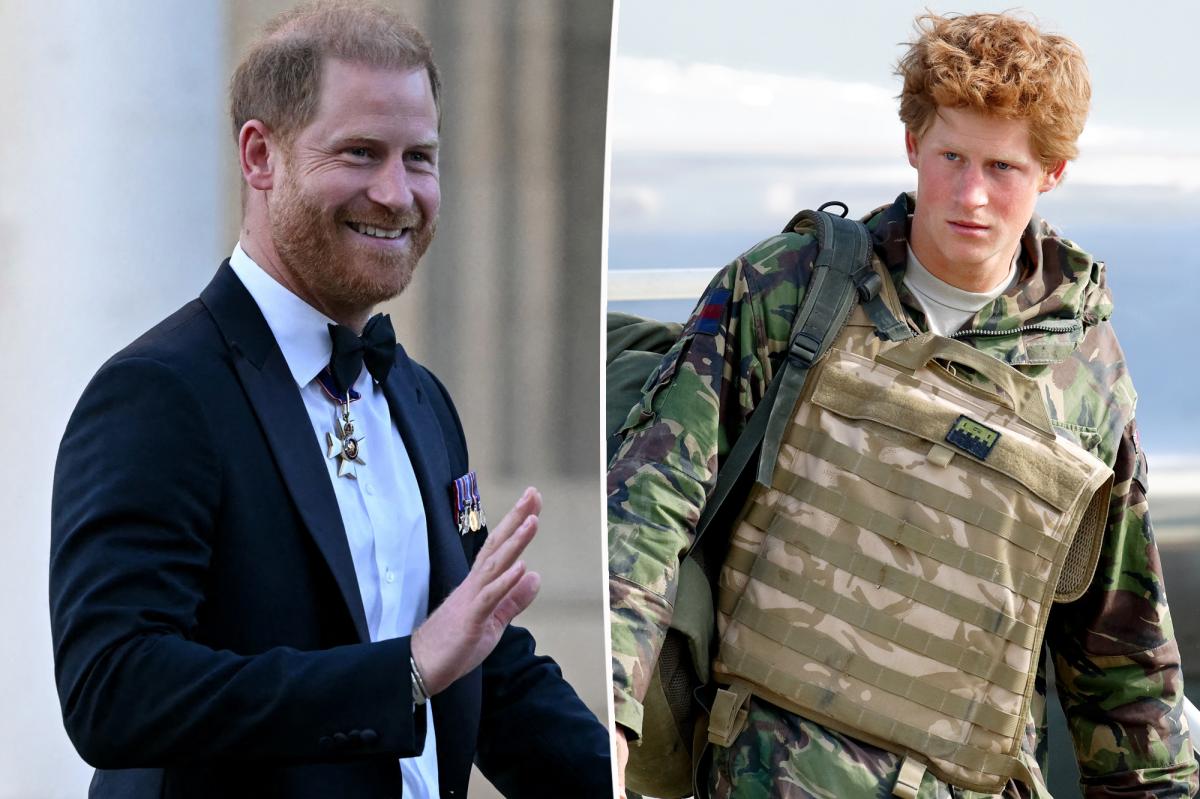
When the Duke of Sussex’s name appeared in bold at the top of his official webpage at 11:02 p.m. on Thursday, fans around the globe paused mid‑scroll. A video link unfolded, showing the 42‑year‑old in a quiet, dimly lit room, speaking with the solemnity that had become his hallmark. Within minutes, the feed was flooded with reactions: from supportive nods in the comments to memes that echoed the sentiment of a man who had “lost part of his purpose and identity.” Social media erupted, and a tide of curiosity rose—what had prompted this unexpected confession?
Harry’s remarks did not stem from a press conference or a scripted interview. They emerged during a surprise virtual address to the NATO Military Committee in Brussels, an event that had drawn attention in October 2024 when he first returned to speak with the alliance. The setting—high‑level diplomats and senior officers—provided a backdrop that contrasted sharply with the intimate tone of his words. He began by acknowledging the committee members, noting that “a great deal has changed since then,” but also that the core common ground between NATO and the Invictus Games remained steadfast. The Duke’s presence there was more than ceremonial; it was a bridge between two worlds—military solidarity and civilian support.
The statement was more than a personal confession; it was a public re‑definition of a life once measured in uniform and ceremony. Harry, who served in the British Army from 2005 to 2015, had become a symbol of resilience through his founding of the Invictus Games, a global sporting event for wounded, injured, and sick service personnel. The Games, first launched in 2014, grew from a small competition into a worldwide movement that now sees athletes from dozens of countries competing in track and field, swimming, and rugby. By framing the Games as “not just a sporting event,” Harry positioned them as a catalyst for broader societal change—rebuilding purpose, confidence, and community for veterans and their families.
Background & Context
Prince Harry’s military career spanned a decade, a period marked by deployments in Afghanistan and significant training roles back in the UK. The decision to leave the army in 2015 was a turning point that the public had followed with fascination, yet the intimate details remained largely private until this appearance. The Duke had previously cited personal and family considerations for his departure, but the new admission underscores a deeper psychological transition. His words suggest that the uniform was more than attire; it was a cornerstone of identity, a framework that guided daily life and decision making.
The Invictus Games, founded during his service, evolved into a platform that extends beyond athletic competition. By bringing together wounded and injured service members, it creates a space where they can share experiences and rebuild networks. The Games have grown into a global phenomenon, with events held in the United Kingdom, United States, and Australia, among other countries. The mission Harry articulates—“rebuild purpose, rebuild confidence, strengthen families and communities”—resonates with a broader conversation about veteran reintegration. In the United States alone, estimates suggest that around 200,000 veterans leave active duty each year, many of whom struggle with the abrupt loss of structure and identity.
Beyond the battlefield, the Invictus ethos aligns with NATO’s overarching goals. NATO, an alliance of 31 sovereign states, is built on collective defense and shared values. Yet as Harry noted, the alliance’s strength ultimately derives from its people—the soldiers who train, deploy, and recover together. The Duke’s remarks highlight an often-overlooked reality: families accompany service members, their sacrifices and resilience forming an invisible pillar of the military community. His focus on these families underscores a holistic view of service, one that extends from individual soldiers to entire national communities.
What People Are Saying
The online backlash was immediate and varied. Some fans applauded Harry’s transparency, seeing the admission as a courageous act that could empower others facing identity crises after career changes. Veteran groups on social media took to the platform, sharing stories of transition challenges and praising the Duke’s acknowledgement that “the uniform was part of their identity.” Others were more critical, questioning whether his new direction might dilute the original purpose of the Invictus Games or create tension with the Royal Family’s public role.
In the world of mental health advocacy, the message resonated strongly. Psychologists and counselors noted that many veterans experience a “loss of purpose” upon leaving the military, a phenomenon that can lead to depression and anxiety. By speaking openly, Harry provided a public narrative that could help reduce stigma around mental health challenges. His emphasis on the “Invictus Spirit”—character built from service and values embedded in blood—echoed the themes of resilience and hope that are central to therapeutic frameworks used with veterans.
Meanwhile, within NATO circles, his address was received with a mix of admiration and pragmatism. Military spokespeople highlighted the alignment between the alliance’s objectives and the Duke’s mission to support wounded, injured, and sick service personnel. The gesture of inviting the Invictus organization to collaborate on recovery and rehabilitation initiatives signaled a potential new partnership model. Though formal agreements were not announced, the tone of the interaction suggested that both sides were keen to explore opportunities for joint programs.
For the general public, the revelation sparked a wave of speculation about what Harry’s next moves might entail. Some pundits suggested that he could expand the Invictus Games into a broader global network, perhaps integrating more humanitarian efforts. Others wondered whether his shift would affect his standing within the Royal Family, given his recent return to the United Kingdom with Meghan Markle. While the Duke’s earlier statement about being “fortunate” to have another way to serve hinted at ongoing commitment, the precise direction remained open to interpretation.
What Happens Next
Following his NATO appearance, Harry was scheduled to attend the United for Freedom Gala at the Imperial War Museum in London. The gala, a black‑tie event honoring military veterans and their families, provided a platform for the Duke to continue his public engagements. Reports indicate that he will speak to attendees about the challenges veterans face in civilian life and the role of community support. His presence at the gala underscores a continued focus on connecting people—whether through sport, community outreach, or strategic alliances.
In the months ahead, the Invictus Games are slated to return to the United Kingdom for the 2027 edition, with a new emphasis on mental health and reintegration programs. The Duke is expected to launch a series of talks at universities across the country, aimed at young adults contemplating careers in the armed forces or civilian life. These engagements could serve to bridge the gap between military service and post-service identity, offering pathways for those who might otherwise feel “lost” after leaving uniformed life.
At NATO, the invitation to collaborate on veteran recovery initiatives could lead to pilot programs that integrate Invictus principles with alliance resources. While concrete agreements have yet to materialize, the Duke’s words laid the groundwork for a potential partnership that could provide structured support to veterans returning from overseas deployments. Such collaboration would likely involve joint workshops on mental health, resilience training, and community reintegration, leveraging both the alliance’s expertise and the Invictus Games’ global reach.
As the Duke of Sussex navigates this new chapter, the ripple effect will be felt across both military and civilian spheres. His candid admission of a lost purpose has opened a dialogue about the hidden costs of career transitions, especially for those whose lives are defined by service. Whether through sport, policy, or personal outreach, the path ahead promises a blend of advocacy, partnership, and continued leadership.
In the end, the story is one of transformation—not just of a single individual, but of an entire ecosystem that supports those who serve. As the world watches, Prince Harry’s next steps will likely redefine how purpose is reclaimed after the uniform is hung up, offering hope to countless others who find themselves on the cusp of new beginnings.
The Bottom Line
The world’s most influential families have long been a source of inspiration—and, increasingly, a source of introspection. Prince Harry’s decision to lay bare the personal loss that accompanies stepping away from the uniform signals a watershed moment for the veteran community. His words resonate beyond the headlines; they echo in the quiet rooms of soldiers’ families, the corridors of rehabilitation centers, and the boardrooms of philanthropic organizations. By transforming the Invictus Games from a mere showcase of athletic prowess into a platform that tackles identity, confidence, and community, Harry is redefining what it means to serve. This shift not only elevates the Games’ mission but also opens doors for new alliances—most notably the emerging collaboration with NATO—that could bring resources, training, and visibility to veterans worldwide. For MyWorldPulse readers, this story is a reminder that the pursuit of purpose doesn’t end when the uniform is hung up—it simply changes form. We stand with Prince Harry in championing this evolution, confident that his next steps will spark tangible change across both military and civilian spheres. —MyWorldPulse Editorial Board
Reference:
- Official post on Prince Harry’s verified Twitter account
Read more celebrity news at MyWorldPulse.