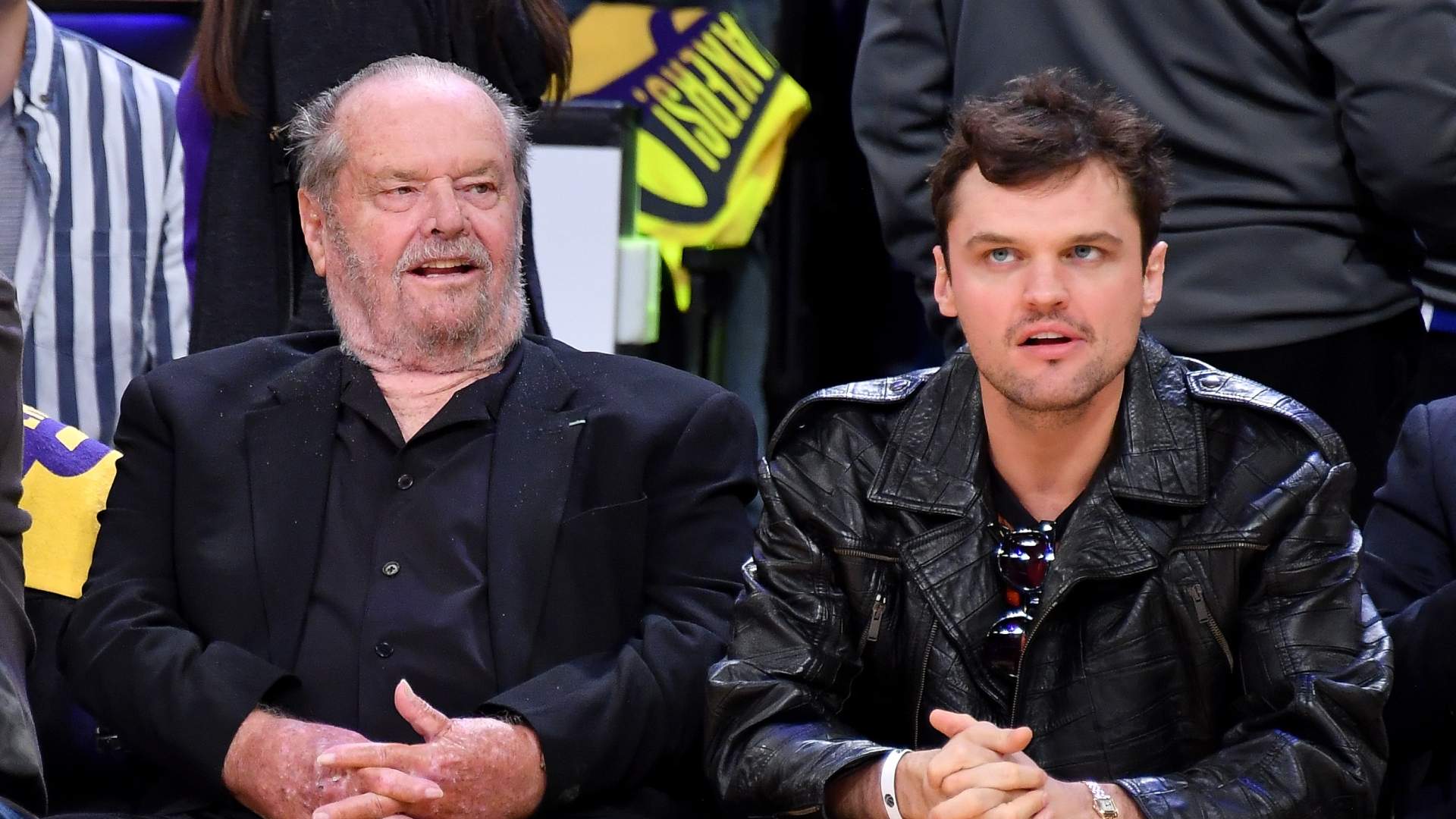
Ray Nicholson, the actor‑director behind the latest film The Mosquito Bowl, opened up about the unique way he and his father, 89‑year‑old Oscar‑winning icon Jack Nicholson, connect. In a candid conversation with his sister Lorraine, the younger Nicholson confessed that their shared love for the Los Angeles Lakers and the sport of basketball forms the foundation of their relationship, revealing a side of the famed actor that few have seen.
The interview coincided with the release of The Mosquito Bowl, currently in theaters and slated for a Netflix premiere on November 25. It was also a moment of reflection for Ray, who has grown up under the long shadow of a Hollywood legend while forging his own path in filmmaking.
Background & Context
Ray was born into a family that would soon become one of the most storied in American entertainment. His father, Jack Nicholson, would go on to win three Oscars and become a household name, while Ray’s mother, actress Rebecca Broussard, added her own artistic touch. Together, Jack and Rebecca raised six children—Ray and his sister Lorraine among them—across five different relationships, a dynamic that brought both richness and complexity to their upbringing.
Growing up, Ray was far from the spotlight. Early on, he considered a future in athletics, dreaming of playing football at Boston College. “I thought I was going to be Jerry Maguire,” he once remarked, a playful nod to his own imagined fame. However, a pivotal decision steered him toward film school at the University of Southern California. It was there that he discovered a passion for storytelling behind the camera. “My education really taught me that dad isn’t god,” Ray said, emphasizing that while Jack’s legacy in cinema was undeniable, he too was carving out his own place within the industry. “He’s not the only thing in this film industry. He’s a beautiful part of it, but a very small part.”
Ray’s early years were marked by challenges that he has openly acknowledged. He was overweight as a child, reportedly weighing the same as he does now at nine years old—a detail that paints a vivid picture of his physical and emotional journey. He recalls a particular moment during his first basketball practice: “At my first basketball practice, we were running around the court as a warm‑up lap, and I was so exhausted, and these kids were effortlessly running ahead of me. I literally tripped over the half court, and I was so ashamed I had to sit out crying the rest of the practice.” Yet, in a heartening twist, the other kids stepped in to support him, offering a lesson in community that would resonate throughout his life. “These guys picked me up, and so much of sports is about family, brotherhood, and lifting someone up,” Ray reflected. “I was a total stranger, and these were all inner‑city kids, and I had never experienced anything like that.”
Through this lens, Ray found a surrogate paternal figure in his coaches, whose guidance felt almost paternal. He has described himself as “very averse to love,” a trait that may have been tempered by the supportive environment of sports and the unrelenting ambition of his father’s career. In early attempts to pursue acting, Ray wrestled with the fear of comparison. “It’s so hard. I think for me the thing is just keeping it really simple,” he said. “When I first started taking acting classes and doing the simplest of Meisner exercises, I was comparing myself to a three‑Oscar‑winning, five‑decade career.”
What People Are Saying
While the conversation with Lorraine was intimate, it struck a chord with a wide audience, many of whom felt the pressure of living in a famous family. Ray’s candid admission that “We can’t talk about a lot” highlights the boundaries he and his father maintain—a mutual respect for privacy wrapped in an unspoken bond forged through a shared passion for the Lakers. The sentiment was echoed by fans who have long admired both father and son, noting the rarity of such openness from a family that has historically kept personal matters under wraps.
The broader film community has taken note of Ray’s journey from a hesitant child with a love for football to a budding filmmaker willing to confront the expectations set by his lineage. Industry insiders appreciate his willingness to discuss the weight of legacy and the necessity of forging one’s own identity. His emphasis on “finding who I am” and “being on the right path” resonates with emerging artists who navigate the often treacherous waters of familial legacy. By highlighting the role that sports played in his development, Ray offers an alternative narrative: that success can be built on discipline, community support, and personal growth, rather than merely talent or lineage.
The conversation also underscores how sports can serve as a universal language of connection, even between worlds as disparate as Hollywood stardom and everyday life. In a society where media often portrays celebrity families as glamorous and perfect, Ray’s remarks present a more grounded perspective—one where shared interests and mutual support help bridge generational and professional gaps. His willingness to admit feelings of shame and inadequacy during childhood, coupled with the eventual triumph over those feelings, has become an inspiring story for many who grapple with self‑doubt in high‑pressure environments.
What Happens Next
With The Mosquito Bowl now in theaters and set for a Netflix release later this month, Ray Nicholson’s visibility is set to rise sharply. The film, which explores themes of friendship, ambition, and the complexities of the American dream, will likely draw further attention to his burgeoning career. As audiences watch the film and reflect on his earlier remarks, Ray’s candidness may inspire other artists to speak more openly about their own journeys and the unique challenges of growing up in the shadows of great predecessors.
Beyond the screen, Ray’s future plans hint at continued growth within the industry. While he has yet to outline specific projects, his recent statements emphasize a desire to "find who I am" and to "make dad proud" without relying on his father's name. This focus on authenticity suggests that he will pursue roles and projects that resonate with his personal values, whether behind the camera or in front of it.
The conversation with his sister also leaves open the possibility of deeper discussions with his father. Though Jack Nicholson remains a private figure, the bond described—anchored in basketball and mutual respect—could lead to collaborative efforts. Whether in the form of a cameo in a future film or an advisory role, the potential for joint creative endeavors remains an intriguing prospect.
In the meantime, fans and industry observers will keep a close eye on Ray’s career trajectory. His openness about the emotional landscape of being a child of a Hollywood icon—highlighting moments of shame, triumph, and the constant need for identity—provides a fresh perspective that challenges the often one‑dimensional narrative surrounding celebrity families.
As The Mosquito Bowl finds its audience, Ray Nicholson’s story stands as a reminder that even in the world of lights and fame, personal growth, vulnerability, and shared passions are the true constants that shape a life and a career.
The Bottom Line
At a time when Hollywood seems to guard family secrets as fiercely as scripts, Ray Nicholson’s decision to share the intimate details of his bond with Jack Nicholson is both refreshing and necessary. It humanizes an otherwise larger-than-life legend, showing that even icons wrestle with identity, comparison, and the desire for genuine connection. By anchoring their relationship in a shared love of the Lakers—a sport that thrives on teamwork and resilience—Ray offers a relatable narrative that speaks to anyone balancing legacy with self‑definition. This transparency not only breaks the myth of the unblemished celebrity family but also sets a new standard for openness in entertainment journalism. It reminds us that authenticity can be a powerful tool in storytelling, making celebrities more accessible and their struggles more resonant. MyWorldPulse believes that stories like Ray’s will encourage a broader cultural shift toward vulnerability and community support in Hollywood, ultimately enriching the stories we tell and the lives we celebrate.
—MyWorldPulse Editorial Team
Reference:
- Official post on the person's verified social media account
Read more celebrity news at MyWorldPulse.