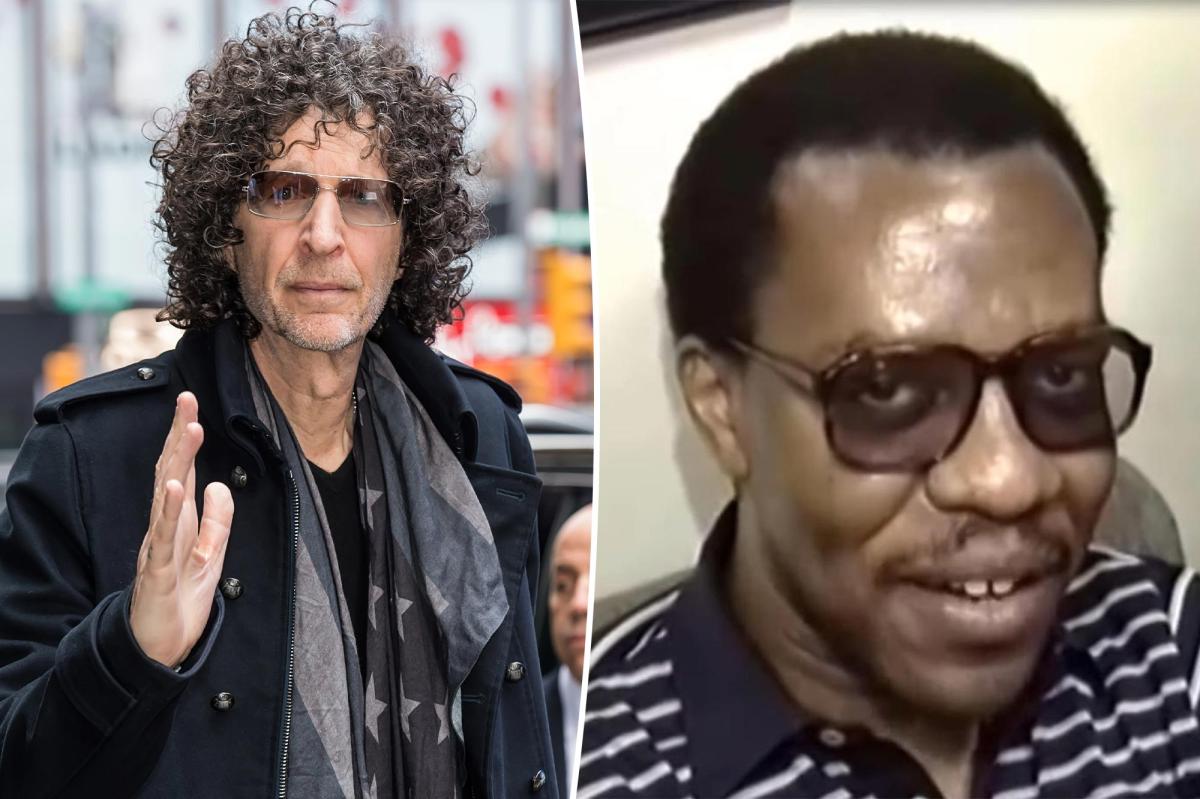
When the word “Big Black” first popped up in the chatter of the Howard Stern fan forums, it was met with a mixture of shock and fondness that only a long‑time Wack Pack member could inspire. The late Ronnie Benjamin, 64, whose on‑air persona was as colorful as his nickname, left a legacy that continues to stir conversations long after the broadcast has ended.
Benjamin’s journey with Stern’s show began in the mid‑1990s, when he would crack into the studio with a raw honesty that cut straight to the heart of the shock‑jock’s audience. A MENSA member with a reputation for bluntness, he was never a regular fixture, yet his occasional, extended interviews became a staple of the program. His most infamous exchanges were with fellow Wack Pack legend Lawrence Coward—known on air as the “King of All Blacks”—a feud that even prompted Stern to create a special segment titled “Black on Black.” The pair’s battles captured listeners’ imaginations, though the show’s run was short‑lived due to a dispute over payment that saw Benjamin walk away from a promised second season.
On October 2, the news of Benjamin’s passing confirmed the silence that had shrouded his private life for years. The New York City Medical Examiner’s Office identified the cause as arteriosclerotic cardiovascular disease, a natural and all‑too‑common condition in which fatty plaque builds up within artery walls, narrowing and hardening them. While the exact circumstances of his death remain undisclosed, the explanation points to a gradual decline rather than a sudden catastrophe.
Background & Context
The Wack Pack, assembled by Howard Stern in 2006, is a roster of eclectic callers who have become as much a part of the show as the host himself. From the high‑pitched tones of Eric to the whimsical banter of Tan Mom, each member brings a distinct flavor, and Ronnie Benjamin—known on the air as “Big Black”—was one of the original personalities that helped cement the pack’s reputation for unpredictability. Before joining the group, Benjamin had already carved out a place in the station’s lore: a MENSA member who could speak candidly about his life’s hardships while still maintaining a sharp wit that never failed to entertain.
His 2011 return after a five‑year hiatus was a moment of both nostalgia and revelation. While in a South Bronx “bunker,” he shared details of his recent unemployment, a stint as a security guard at Yankee Stadium, and an ambitious attempt to break into YouTube as a new platform for self‑promotion. He also revealed a personal truth about losing his virginity during that break, a confession that struck a chord with listeners accustomed to his unfiltered storytelling. The segment rekindled the feud with Coward and eventually led to the short‑lived “Black on Black” spin‑off, a show that, despite its promise, was halted when Benjamin refused to continue after a dispute over compensation.
The dynamics within the Wack Pack illustrate a broader narrative about how unconventional voices find a home in mainstream media. Benjamin’s participation highlighted the delicate balance between entertainment and personal agency—a balance that, in his case, leaned heavily on authenticity. His willingness to expose the raw edges of his existence, whether that involved admitting to a lack of family contact or a bleak future devoid of friendships, resonated with a segment of the audience that felt understood by such transparency.
What People Are Saying
The reaction to Benjamin’s death rippled through the online fan community almost immediately. Threads on dedicated Howard Stern forums erupted with memories of his most memorable calls—those that ranged from fierce, confrontational exchanges to unexpectedly heartfelt moments. Fans shared anecdotes about the “black on black” show, reminiscing about how the program’s humor felt fresh and unfiltered at a time when many other shows seemed more scripted. The suddenness of his passing struck many who had watched him evolve from a peripheral caller into an emblem of resilience and blunt truth.
Social media spaces, especially the more intimate fan groups, have become a virtual memorial. Posts highlight his 2006 induction into the Wack Pack, his 2011 comeback, and the episodes where his fiery interactions with Coward left listeners both amused and astonished. Fans also note his unique blend of MENSA-level intelligence with an unpolished, street‑wise perspective—a combination that kept listeners engaged for years. The narrative that surrounds him is one of a man who, despite a difficult personal life, carved out a space where authenticity was rewarded.
While Howard Stern himself has yet to release a public statement, the tone within the fan community leans toward a desire for tribute. The anticipation that the next episode—scheduled for Monday, October 5—might feature a segment honoring Benjamin reflects the deep respect many listeners have for the late caller. Even without a formal acknowledgment, the sheer volume of tributes posted on social media suggests that his presence will continue to echo in the studio’s soundscape, if only as a memory invoked in the background of an upcoming show.
What Happens Next
The most tangible immediate consequence of Benjamin’s death is the absence of his candid voice from future Wack Pack call‑ins. The show’s schedule will remain unchanged, but the producers and host are likely to incorporate a moment of remembrance into the next broadcast. Whether it takes the form of a brief eulogy, a montage of his most memorable moments, or a quiet pause in the program’s usual tempo, the gesture would signal recognition of the impact he had on the show’s culture.
Beyond the immediate broadcast, the legacy of the “Black on Black” show—though short‑lived—serves as a case study on how creative collaborations can both thrive and falter under contractual and financial pressures. The final episodes, now a closed chapter, will likely become reference points for fans who dissect the dynamics of on‑air personalities and their off‑air negotiations. The fact that Benjamin’s refusal to continue without compensation ended the spin‑off underscores the broader industry tension between creative expression and economic reality.
For the Howard Stern community, Benjamin’s passing is a reminder of the finite nature of the personalities that have defined the program’s identity. It prompts introspection about how the show will evolve without the distinct voices that once sparked its most compelling moments. The audience’s continued engagement will hinge on whether the station can balance honoring past members while inviting new, equally authentic voices to join the lineup.
The story of Ronnie Benjamin, “Big Black,” reminds us that entertainment is not just about laughter or shock; it is also about genuine connection and the willingness to expose one’s rawest truths. In a world where scripted perfection often dominates, his legacy stands as proof of the enduring power of authenticity. As listeners settle into the familiar cadence of the next episode, the memory of Benjamin’s spirited banter will likely linger in the air, a quiet homage to a man who, in his own unique way, made the studio feel like a place where every voice mattered.
The Bottom Line
The death of Ronnie Benjamin is a stark reminder that the entertainment industry’s appetite for shock and raw authenticity can sometimes eclipse the very humans behind the spectacle. While his unapologetic storytelling captivated millions, it also highlighted the lack of a safety net for performers who operate on the margins. Future programming must learn from this by instituting comprehensive health and financial safeguards, allowing voices like Benjamin’s to thrive without risking their wellbeing. As MyWorldPulse, we believe that the industry’s growth hinges on balancing the thrill of authenticity with responsible stewardship. Only then can the voices that once shaped radio’s most unforgettable moments continue to inspire without sacrifice.
—MyWorldPulse Editorial
Reference:
- Official tribute post by Ronnie Benjamin on Instagram
Read more celebrity news at MyWorldPulse.