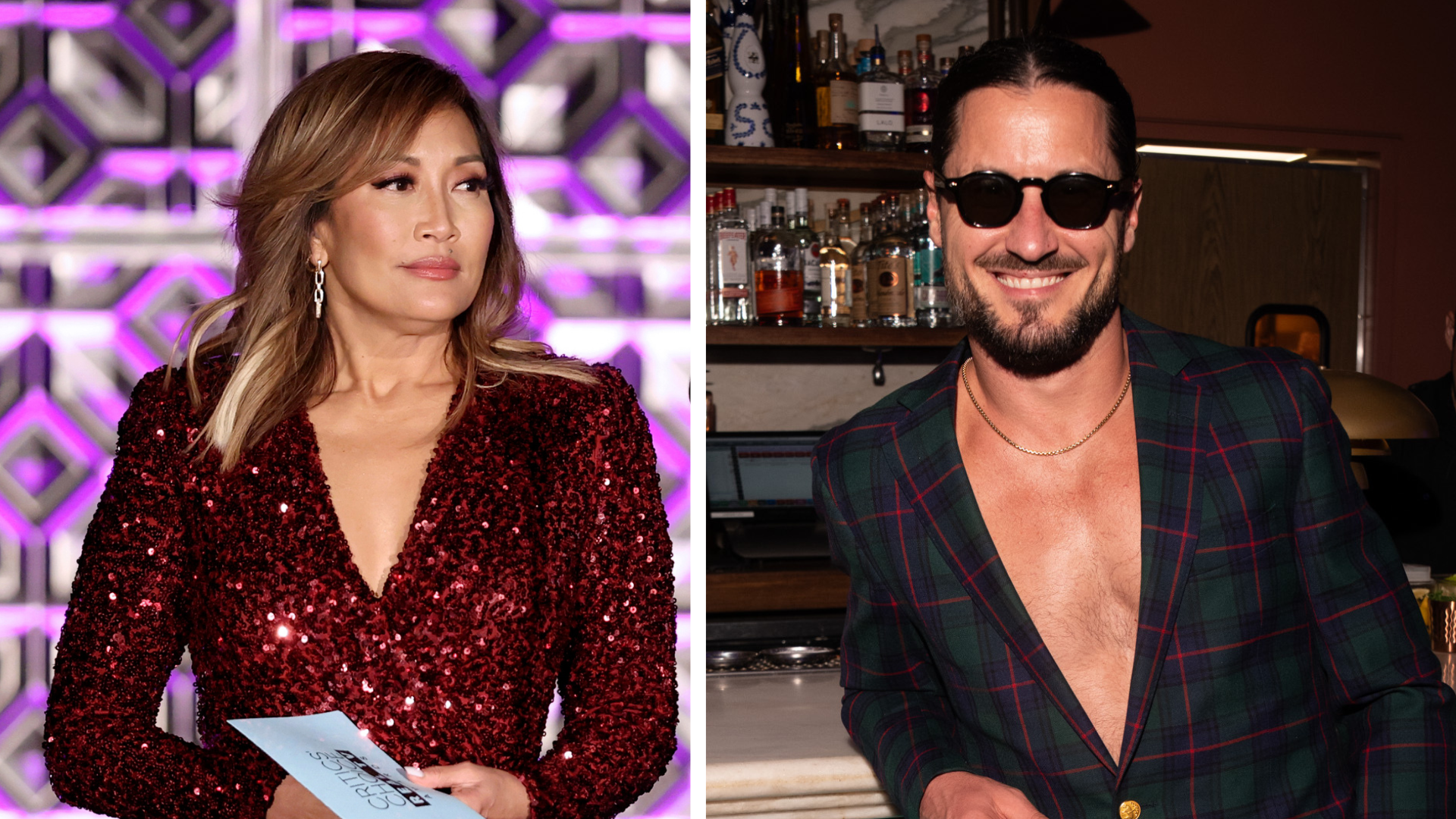
After a sharp exchange on the “Dancing with the Stars” stage, Val Chmerkovskiy’s reflexive TikTok post sent the live‑show audience into a social‑media frenzy. When the judge’s critique of Jenna Johnson and Harry Shum Jr. turned into a public scolding, the pro‑dancer reacted on‑the‑spot with a phrase that many interpreted as a veiled threat. The clip was deleted minutes later, but the ripple it created was already underway. Two days after the incident, Chmerkovskiy addressed the storm in an Instagram story, offering a heartfelt apology and pledging greater mindfulness. The response—ranging from calls for disciplinary action to gestures of forgiveness—has opened a broader conversation about the intersection of performance criticism, personal expression, and digital responsibility.
The episode in question aired on Super Bowl night, a slot that draws record viewership and heightened scrutiny. During a samba set to Usher’s “Yeah!” featuring Lil Jon and Ludacris, Judge Carrie Ann Inaba told the duo that they needed “more content” in their choreography and reminded them that lifts were prohibited in the samba. The comment broke the moment of exhilaration and left Jenna Johnson visibly upset. Meanwhile, Val Chmerkovskiy, who was performing with Jenna Dewan, watched from the sidelines with a frown that translated into a silent protest. The tension between Inaba’s insistence on rule adherence and the dancers’ desire for expressive freedom set the stage for what followed.
Shortly after the broadcast, Chmerkovskiy posted a mirror selfie on TikTok, captioning it “You almost saw Fresh Prince enter the ballroom last night.” That phrase immediately invoked the 2022 Oscars incident in which Will Smith slapped comedian Chris Rock, a moment that had reverberated worldwide and become shorthand for violent retaliation. By all accounts, Chmerkovskiy’s remark was intended as a metaphor for a hypothetical confrontation, but the context made it appear as a direct threat toward a woman—a violation of the network’s community standards. The clip was removed within minutes, yet the damage had already been inflicted.
Inaba responded by posting a brief, stark message on Instagram: “So this is what we are doing now?” The exchange sparked a social‑media storm. Fans and observers quickly divided into camps: some demanded the pro‑dancer’s dismissal, equating his comment with violent conduct; others urged the network to consider context and to issue a measured response. The timing—during a high‑profile episode and amid recent discussions about on‑stage violence—heightened sensitivity among viewers and intensified calls for accountability.
Background & Context
The controversy is part of a broader trend of talent‑judge friction spilling into the public domain. In 2021, a similar incident unfolded when “The Voice” judge Adam Levine called a contestant “stupid” on live television; the backlash highlighted how a single offhand remark could catalyze a larger debate about respectful discourse. Likewise, the “Dancing with the Stars” franchise has long balanced the artistry of dance with strict choreography guidelines, leading to frequent on‑stage conflicts. The show’s producers have introduced “digital‑conduct” guidelines in recent seasons to remind contestants and judges that their public platforms carry weight, yet the policy’s enforcement has remained largely discretionary.
Chmerkovskiy’s reference to “Fresh Prince” taps into an entire subculture of viral memes that re‑contextualize pop‑culture moments. The Will Smith‑Chris Rock episode had become a shorthand for a violent outburst, and many in the dance community were quick to link it to Inaba, who is a woman and a respected judge. The conflation of a public joke with an implied threat triggered a broader conversation about gendered language and the power dynamics between judges—who wield authority over contestants—and the performers themselves. Historically, dance shows have witnessed high‑energy exchanges, but rarely has the fallout extended to such a rapid escalation on social media.
Beyond the show, the dance world has been grappling with the influence of digital platforms. Instagram, TikTok, and other apps have turned dancers into content creators, allowing them to showcase rehearsals, behind‑the‑scenes moments, and personal commentary. However, the very immediacy that makes these platforms valuable also creates a vulnerability: one impulsive post can spark a backlash that eclipses an entire season. In response, some dance schools now integrate social‑media training into their curricula, emphasizing brand protection, professional tone, and crisis‑communication protocols. Chmerkovskiy’s incident has therefore become a case study for both entertainment producers and dance educators.
What People Are Saying
The reaction from the fan base was instantaneous and diverse. On Twitter, users like @DanceDad expressed disappointment, saying, “Still needs to be fired. No tolerance for that type of behavior.” Others, like @TheCleverStep, argued for a more nuanced approach, tweeting, “Val could’ve kept that apology. It was giving ‘I’m not sorry for what I said…I’m sorry for how I said it’.” The divide reflected deeper questions about authenticity and redemption: can a single apology mitigate an offense that many deemed threatening? Some viewers demanded that the network impose disciplinary action, citing a responsibility to protect judges and contestants alike. Meanwhile, others saw the apology as a step in the right direction, arguing that the show should focus on choreography and not allow a single incident to eclipse the artistry.
Instagram threads were peppered with comments from fans who felt the apology was sincere. One user wrote, “I’m glad he reached out and spoke to her. There is 0 reason why we need to take this to the next level.” This sentiment resonated with a segment of the audience that views “Dancing with the Stars” primarily as entertainment—a live spectacle where tensions are expected, and the goal is to enjoy the performances. For them, an apology that acknowledges the mistake and promises future mindfulness was sufficient.
Conversely, a vocal minority remained skeptical. A Facebook user asked, “Is this just a PR stunt? Will we see any real consequences?” This skepticism mirrored concerns within the broader entertainment industry about “performative apologies,” especially when the offender is a high‑profile figure with a large platform. Commentators on dance forums debated whether Chmerkovskiy’s statement represented genuine remorse or simply a calculated move to salvage his public image.
In addition to social‑media chatter, professional dance reviewers in trade publications weighed in. A recent piece in Dance Quarterly highlighted that the incident underscored the necessity of clear communication protocols between judges and dancers. The author suggested that such incidents could erode the trust essential for a safe creative environment. Meanwhile, an article in The Stage called the network’s response “measured but insufficient,” urging producers to consider formal disciplinary measures rather than relying on public apologies alone.
What Happens Next
Following the apology, the network’s production team reportedly convened emergency meetings to assess the situation. While no public disciplinary action was announced, reports indicate that showrunners are reviewing internal policies regarding social‑media conduct. A spokesperson for the network—speaking on condition of anonymity—stated, “We are re‑examining how we guide our talent in navigating digital spaces, especially given the immediacy of online communication.” The focus will likely shift toward proactive education rather than reactive punishment. Proposed measures include mandatory social‑media workshops, clear guidelines on language that could be misconstrued as harassment, and a revised code of conduct that emphasizes respect toward judges and crew.
Industry experts anticipate that the fallout will reverberate beyond “Dancing with the Stars.” Television producers across competition‑based reality shows are already reassessing their talent‑judge dynamics. A representative from a competing dance‑based program noted that they are “looking at ways to strengthen our own guidelines to prevent any miscommunication that could harm relationships or create a hostile environment.” The broader conversation about digital responsibility is poised to influence casting, audition processes, and contractual clauses, with talent agreements increasingly incorporating clauses that address conduct on social media.
Val Chmerkovskiy himself has signaled a personal commitment to change. In his Instagram story, he promised to “pause to think before I post,” a pledge that resonates with the growing movement toward mindful online behavior. His public apology could become a precedent for other performers facing similar backlash. Some dance schools have already begun to incorporate modules on “digital etiquette” into their advanced choreography courses, emphasizing the importance of thoughtful communication.
The judges’ board, too, may consider adjusting their own public statements. A recent editorial in Dance Business Monthly suggested that judges might employ a more collaborative tone when delivering critique, to mitigate potential misinterpretations. This could involve framing comments in a way that encourages growth rather than perceived confrontation. The hope is that a more supportive approach will reduce the likelihood of “retaliatory” posts from contestants or pro‑dancers.
In the immediate aftermath, Chmerkovskiy’s apology has largely quelled the most heated segments of the fan base, though the debate over his future on the show remains open. The network has confirmed that both he and Jenna Dewan will continue competing in the upcoming “Dedication Night” episode. Viewers will watch closely to see whether the incident will influence future performances or the broader narrative arc of the season.
Closing Thoughts
The incident that unfolded on “Dancing with the Stars” highlights a modern dilemma: how do performers and judges balance the spontaneity of live critique with the responsibilities of public communication? Val Chmerkovskiy’s apology—and the reactions it triggered—serve as a microcosm of the entertainment industry’s ongoing reckoning with digital ethics. As audiences grow increasingly vigilant about the language and tone used by those in the spotlight, producers will need to adapt, offering clearer guidance and cultivating a culture of mutual respect. The dance between choreography, criticism, and online conduct may well redefine what it means to perform with grace—both onstage and in the digital arena.
The Bottom Line
At MyWorldPulse, we view this incident as a watershed moment for the reality‑dance genre. The rapid escalation from a judge’s critique to a public threat demonstrates that the digital lives of performers and judges are inseparable from their televised personas. Networks must now treat every tweet, TikTok, and Instagram story as a potential brand risk. While Chmerkovskiy’s apology signals a willingness to learn, it also raises questions about whether a mere statement suffices or if formal disciplinary action is warranted. As audiences grow more vigilant, the entertainment industry must adopt a culture of intentional communication—balancing authentic expression with an understanding of how words can be misinterpreted or weaponized. This episode should compel producers to integrate comprehensive digital‑ethics training into their talent agreements, ensuring that both judges and pros are equipped to navigate the pressures of live critique while maintaining respect and professionalism. Ultimately, it reminds us that the choreography of a dance show must include a choreography of words, and that missteps can be as costly as missteps on the dance floor.
Reference:
- Val Chmerkovskiy’s apology post on Instagram story
- CBS press release on reviewing social‑media conduct policy
Read more celebrity news at MyWorldPulse.