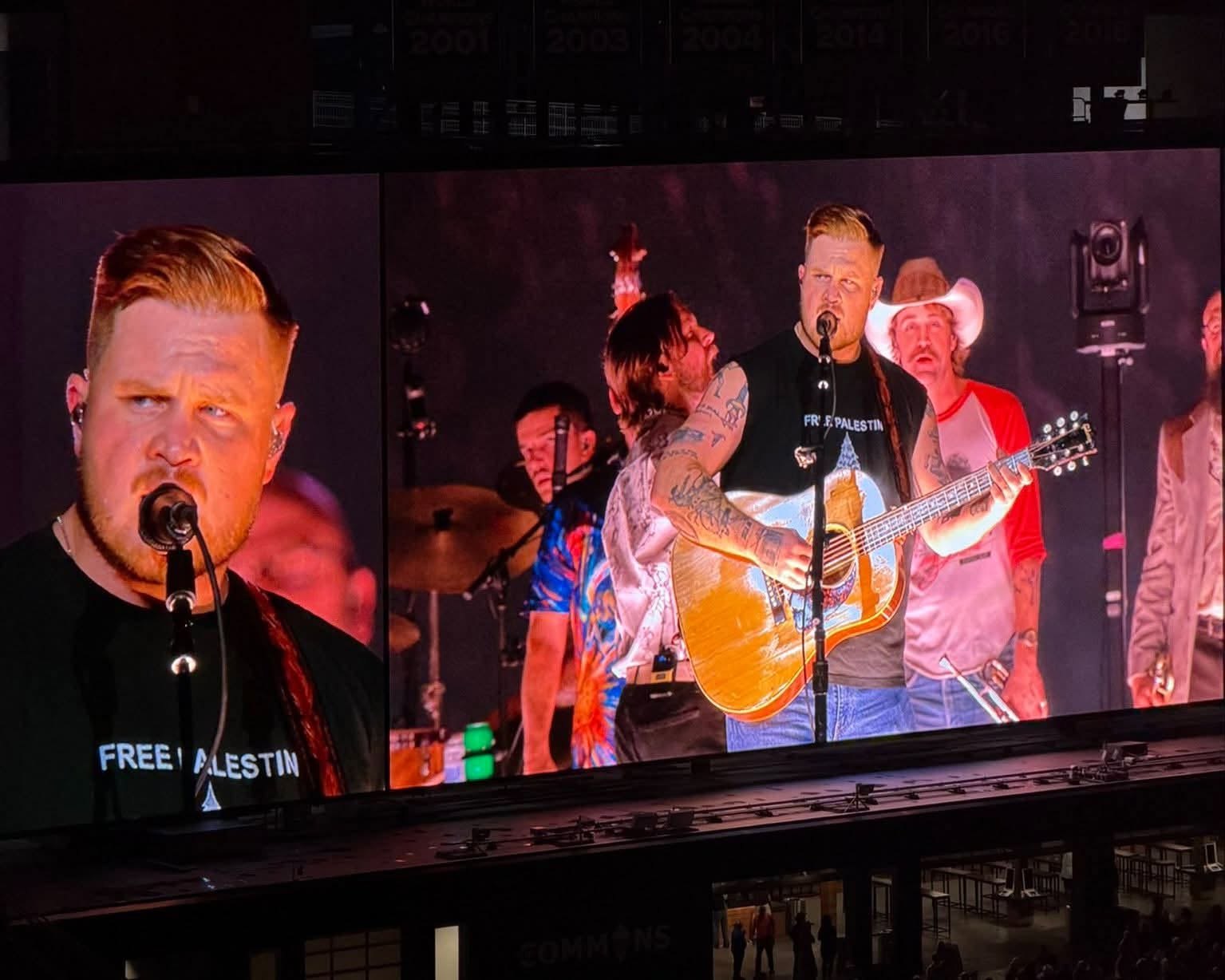
The electric hum that rose from the stands of Gillette Stadium on Saturday was not just a roar for a country singer; it was a roar for a cause, as Zach Bryan took the stage wearing a t‑shirt emblazoned with the words “Free Palestine.” For the second night in a row, the Grammy‑winning artist drew an audience that eclipsed every other event in the stadium’s history, with more than 73,000 people gathered to see him perform.
Bryan, who hails from Austin, Texas, has steadily built a reputation for raw storytelling and a voice that feels like a companion on a long road trip. His “With Heaven on Tour” shows have become a staple for country fans across the nation, and this recent performance marked a pivotal moment in the venue’s timeline. The stadium, owned by New England Patriots owner Robert Kraft, had never before welcomed so many people for a single concert, and the addition of a political statement on stage made the event all the more memorable.
The show followed weeks of controversy that had already put the stadium in the national spotlight. Robert Kraft had pulled Macklemore from Ed Sheeran’s tour after the rapper’s outspoken support for Palestine sparked backlash from Kraft’s network of businesses. That move, widely discussed on social media and in entertainment forums, raised questions about free speech, artistic expression, and the role of business owners in cultural debates. Zach Bryan’s decision to wear the same “Free Palestine” shirt for this night added a layer of nuance to the conversation, showing that artists can use their platforms to spark dialogue while still delivering music that resonates with millions.
Background & Context
Zach Bryan’s rise to prominence began with a series of independently released albums that drew attention from fans of folk, bluegrass, and contemporary country. His songwriting, often confessional and rooted in the everyday struggles of working‑class life, earned him a dedicated following before a record deal with Warner Bros. Records amplified his reach. The 2022 release of “American Heartbreak” and the follow‑up “Elisabeth” cemented his status as a songwriter’s songwriter, while his 2023 album “What If I Go?” propelled him into the mainstream.
Gillette Stadium, built in 2002, is primarily known for hosting the New England Patriots and for occasional high‑profile concerts and sporting events. In recent years, the venue has attempted to diversify its programming, hosting artists ranging from rock legends to hip‑hop icons. Prior to Bryan’s performance, the largest single‑night attendance had been set by the 2019 concert of the rock band U2, which drew a crowd of 70,000. That record stood for nearly a year until Bryan’s appearance pushed the number up by 3,000, establishing a new benchmark for the arena.
The “Free Palestine” shirt, a statement that had been part of Bryan’s wardrobe since the start of his “With Heaven on Tour,” served as both a personal conviction and a rallying point for attendees who shared his stance. The shirt’s inclusion in the performance was not an isolated moment of protest but rather a continuation of a broader movement among artists who are increasingly using their platforms to address geopolitical issues. By making the shirt a visible part of his performance, Bryan invited his audience to engage with a cause that had become central to his public persona.
What People Are Saying
Fans streamed a mix of excitement and introspection across social media, with many praising Bryan’s candidness. The response reflected a broader cultural shift where audiences now expect artists to take a stand on political matters. For many, the combination of high‑energy country music and a clear call for social justice reinforced the idea that music can be a unifying force.
In the days following the show, community forums hosted a lively debate about the impact of celebrities in shaping public opinion. Commenters noted that the attendance record itself was proof of the drawing power of authenticity in the entertainment industry. Others, however, pointed to the controversy surrounding Robert Kraft’s earlier decision to remove Macklemore, suggesting that the stadium’s ownership may be under scrutiny for how it handles artists with politically charged messages.
Within the local New England community, the reaction was particularly nuanced. Many Patriots fans, traditionally seen as conservative, expressed surprise at the large turnout for a country concert featuring a politically charged message. Conversely, a segment of the local population applauded the diversity of viewpoints presented in a shared public space. The event was described by several local newspapers as a microcosm of the national conversation on free speech and the responsibilities of public venues.
Industry insiders noted that the attendance record could influence future booking decisions at large stadiums. The success of a country act, combined with a strong political statement, demonstrates that there is a market for events that blend entertainment with advocacy. This trend may encourage other venues to invite artists who are willing to bring their convictions to the stage, potentially reshaping the profile of concert experiences across the country.
What Happens Next
Zach Bryan’s “With Heaven on Tour” is scheduled to continue across the United States, and the record attendance at Gillette Stadium is expected to boost ticket sales for upcoming dates. The momentum gained from the event may also lead to additional promotional opportunities, such as collaborations with social causes or participation in benefit concerts. Moreover, the public profile of both Bryan and the stadium has been elevated, setting a precedent for future artists seeking to merge activism with mainstream appeal.
On the logistical front, the stadium’s management team is likely to review their policies on artist attire and political statements, especially in light of the recent backlash against Macklemore. The conversation about whether a venue should impose restrictions on performers’ expressions is set to intensify. Robert Kraft, who has long emphasized the importance of maintaining a “family-friendly” environment, may face pressure to clarify his stance on artistic freedom versus brand safety.
From an industry perspective, the success of Bryan’s performance could prompt other record labels to support artists who incorporate socially relevant themes into their branding. Labels may also be prompted to invest in marketing strategies that highlight an artist’s personal convictions, recognizing that authenticity can translate into tangible sales and attendance figures.
In the broader cultural landscape, the event underscores the enduring power of music to galvanize audiences around shared values. As the country music scene evolves, it will likely continue to serve as a platform for discourse on pressing global issues. For fans and critics alike, the record‑breaking night at Gillette Stadium will remain a benchmark of how a single artist can combine heartfelt performance with a message that resonates beyond the stage.
The night closed with the stadium lights dimming, the crowd still humming the last notes, and the lingering echo of a cause that had been amplified by a single shirt and an unforgettable performance. The story of Zach Bryan and Gillette Stadium will likely be cited in future discussions about the intersection of music, activism, and venue policy for years to come.
The Bottom Line
MyWorldPulse believes that Zach Bryan’s Gillette Stadium show is a watershed moment for live music. The record 73,000‑person turnout proves that fans value genuine voices over polished PR. Yet the incident underscores the fragile balance between artistic freedom and commercial interests. As venues wrestle with whether to allow political statements, the industry must ask: are we ready to protect creative expression even when it clashes with corporate sensibilities? The answer lies in clear, transparent policies that respect both artists and audiences. For the first time, the country scene is stepping into the public square, and it demands that venues, promoters, and labels treat activism as a legitimate form of artistry—one that can drive ticket sales, foster community, and ignite meaningful dialogue. The challenge will be to ensure that these opportunities are not stifled by fear of controversy, but rather embraced as integral to the evolving cultural landscape. MyWorldPulse urges stakeholders to champion policies that uphold free expression while safeguarding their brands, because the future of live entertainment depends on the courage to let music speak on behalf of the people.
Reference:
- Official post on Zach Bryan's verified Instagram account
- Official press release from Gillette Stadium announcing the record attendance
Read more celebrity news at MyWorldPulse.