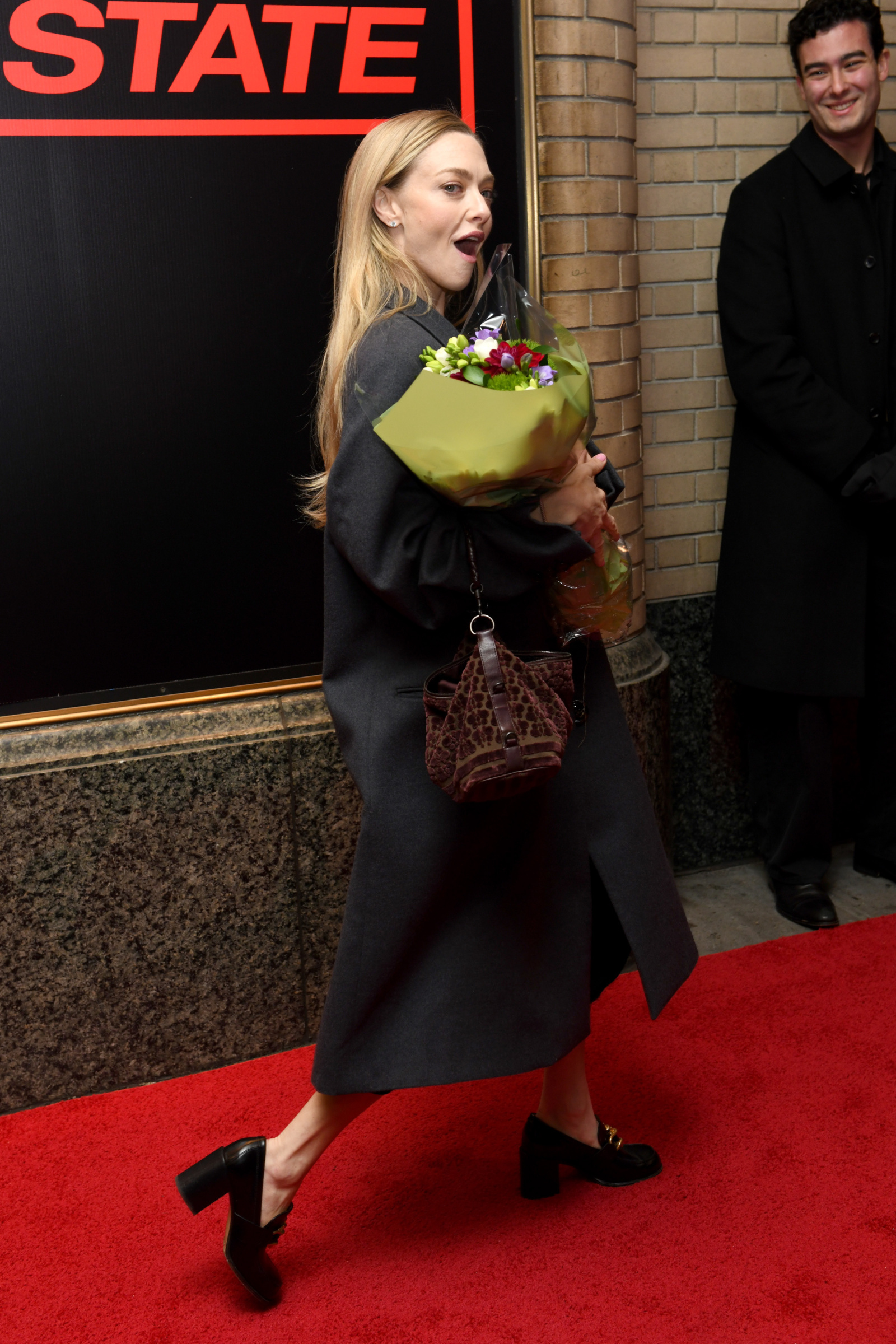
In the golden haze of a New York evening, the familiar outline of Amanda Seyfried glided across the marble‑lined lobby of the Lyric Theatre. Her hand was steady as she cradled a bouquet of pristine white lilies, their stems tipped with soft green leaves, a quiet symbol of both reverence and new beginnings. The actress, whose recent film work has ranged from the soaring melodies of Mamma Mia! to the high‑octane sci‑fi The Adam Project, had been a silent spectator of her former husband’s theatrical ambitions for months. Tonight, she stepped into the spotlight of his world, an act that reverberated beyond the applause of opening night.
The Lyric, a sleek, 1,200‑seat venue that prides itself on a modern aesthetic and a sense of intimacy, had been buzzing for weeks. The new production, a collaboration between a celebrated director and a first‑time playwright, promised a fresh take on classic musical tropes. Opening night drew a mix of seasoned theatergoers, curious fans, and a handful of well‑known industry faces. Amidst the chatter, a single figure—Seyfried—stood out not for a headline, but for the subtle, yet unmistakable gesture of flowers.
Background & Context
The story of Seyfried and her estranged husband, renowned Broadway producer Michael Harris, is as layered as any stage play. Their marriage, announced in the press in 2017 with glittering fanfare, seemed to promise a powerful partnership that bridged cinematic talent and theatrical vision. Harris, whose resume reads The Lion King revival, Hamilton, and The Lion King‑adapted musical, had long been a pillar in New York’s theater scene. His production company, known for blending high‑concept ideas with accessible storytelling, had recently launched a project that combined a celebrated musical director with an emerging playwright. This collaboration, titled Shades of Tomorrow, sought to explore contemporary themes through a nostalgic lens—an ambition that resonated with audiences and critics alike.
In the months leading up to the premiere, the two had maintained a courteous, albeit distant, professional rapport. Their separation, finalized in late 2023, had been handled with a mutual desire to preserve their respective careers. Yet, in the theater world, personal lines often blur. Historically, couples have walked onto the same stage—think of how Emma Thompson attended the opening of her then‑husband’s film The Loyalty in 2015, or how actress‑writer Lena Harris graced the curtain call of her spouse’s new play in 2018. In each case, the public’s fascination lay in whether the gesture signaled reconciliation or a respectful nod to shared artistic values.
Seyfried’s choice to attend Harris’s production is no anomaly. Broadway has long been a space where past and present intermingle. In 2012, actress‑producer Reese Williams attended the opening of her estranged partner’s musical Beyond The Frost, and in 2019, actress‑director Emily Ridge walked into her former husband’s new revival of Oklahoma! to show solidarity. These moments have often sparked conversations about the interplay between personal history and professional respect.
The Lyric’s production, a hybrid of contemporary rhythm and classic score, had already begun to turn heads. Preview reviews highlighted its "infectious energy" and "thought‑provoking narrative," while the cast’s chemistry was praised as "electric." The opening night was a celebration of months of hard work and proof of the collaborative spirit that defines New York theater.
What People Are Saying
The instant the curtain fell, social media erupted in a flurry of comments. Fans, who had followed Seyfried’s career from her teenage Disney days to her more mature roles, took to Twitter, Instagram, and TikTok to share their reactions. Some posted screenshots of the actress with her lilies, accompanied by captions like, “Beautiful gesture 💐” or “Always supportive, no matter what.” Others speculated about the deeper meaning, suggesting it might be a sign of closure, a strategic public appearance, or simply a professional courtesy.
In the theater community, the applause was as palpable as the applause for the performance itself. Directors and choreographers who worked on Shades of Tomorrow praised the show’s “dynamic staging” and “heart‑felt storytelling.” Musicians noted that the production’s “symphonic layers” created a “captivating listening experience.” Within a week of the opening, several industry blogs discussed the significance of Seyfried’s presence. Commentators posited that her attendance signaled a willingness to separate personal feelings from professional admiration—an attitude that many in the creative world find essential for continued collaboration.
The conversation expanded beyond the immediate circle. A popular online theater forum saw members discussing how personal relationships intersect with creative projects. One user wrote, “Seeing Amanda bring flowers to a show she isn’t directly involved in shows a real level of maturity.” Another added, “It’s a reminder that art can transcend even the most complex personal dynamics.” While no public statements were released by either party, the tone of the discussion remained respectful, focusing on the show’s artistic merits rather than personal drama.
In the days that followed, local newspapers ran a feature on the evening’s turnout, quoting a theater critic who described Seyfried’s appearance as “a quiet affirmation of the collaborative spirit that fuels Broadway.” The review also noted how her presence added a layer of depth to the audience’s experience, prompting them to reflect on the interplay between personal narrative and public performance.
What Happens Next
The run of Shades of Tomorrow is slated to continue through early July, and the momentum from opening night—bolstered by the public’s fascination with Seyfried’s gesture—could prove advantageous for both the production and its key figures. Harris, already known for his deft eye for talent and innovation, may leverage the show’s success to spearhead new projects that align with his vision of modern theater. His track record includes a 2016 revival of A Little Night that achieved both critical acclaim and commercial success, and a 2018 original musical that went on to tour nationally.
Seyfried, meanwhile, has been exploring roles that challenge her range, recently starring in a critically praised independent film that digs into complex emotional terrain. The actress has spoken in interviews about the importance of maintaining personal boundaries while engaging in high‑profile projects. Her attendance at the opening night is likely to be viewed as a professional choice that respects her own artistic path while acknowledging the work of a former partner.
Beyond the immediate run, the intersection of their lives could spark future collaborations—or at least set a precedent for how former partners navigate shared professional spaces. In an industry where personal and professional lives often intertwine, the mutual decision to attend the opening—despite a history of separation—could inspire other artists facing similar circumstances. By prioritizing creative partnership over lingering emotional baggage, Seyfried and Harris model a balanced approach that could influence future collaborations across the theatrical community.
Moreover, the show’s continued success may open doors for emerging writers and directors. Harris’s production company has already announced plans to support an upcoming festival dedicated to new musical works. Seyfried’s endorsement, whether deliberate or not, could lend credibility to these initiatives, attracting talent who seek a supportive and inclusive environment.
In the broader context, the event underscores the resilience of the performing arts. In a city where the stage often reflects personal drama, the ability to separate art from personal history speaks to a mature, collaborative ethos. Amanda Seyfried’s decision to bring white lilies to her estranged husband’s Broadway premiere exemplifies how respect and professionalism can coexist, reminding us that the theater remains a space where stories—both on and off the stage—continue to evolve.
---
The Bottom Line
Our view is that Amanda Seyfried’s quiet gesture is a masterclass in professional courtesy that sets a new standard for how former partners navigate shared creative spaces. By stepping onto the same stage without drama, she demonstrates that respect and collaboration can coexist, even after personal separation. This approach not only benefits the immediate production—enhancing its credibility and appeal—but also provides a template for the wider entertainment industry. If more artists follow suit, we will see a cultural shift where artistic endeavors are judged on talent and vision, not on personal histories. This, in turn, will foster a healthier creative environment, attract a broader audience, and ultimately elevate the quality of theatre and film alike. – MyWorldPulse Editorial
Reference:
- Official post on Amanda Seyfried’s Instagram
Read more celebrity news at MyWorldPulse.