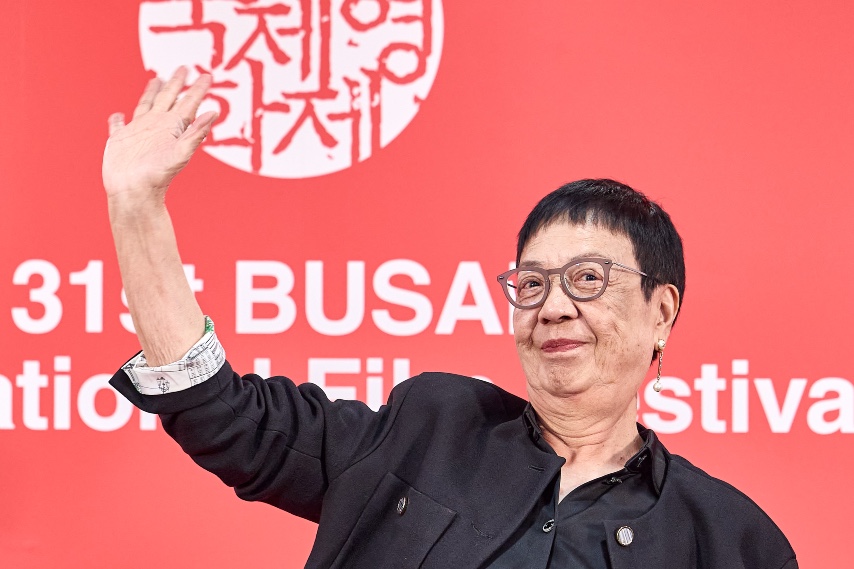
At the opening of the Busan International Film Festival, Hong Kong filmmaker Ann Hui, 71, accepted the Camellia Award with a quiet smile that belied the thunder of applause from a crowd that had followed her career for more than three decades. She took the podium to explain how a handful of women in senior roles—executives, producers, cinematographers—have quietly altered her path, turning obstacles into opportunities and reshaping Hong Kong cinema’s narrative landscape.
The ceremony, held on the 8th of October in Busan’s Kwangbok Hall, saw Hui’s acceptance speech echo across the hall. She credited her mentors—female producers who risked budgets on her projects and female editors who insisted on narrative integrity—to a collective effort that, in her view, made the film industry less of a “boys’ club” and more of a collaborative craft. Her remarks were received with nods and subtle tears from a room that now includes dozens of younger directors who see her as a living bridge between past and present.
For those who knew her before her breakthrough, the award feels almost inevitable. Ann Hui began her cinematic journey in 1977 with “Fading Dawn,” a low‑budget drama that captured the grit of Hong Kong’s working class. Over the following years, she honed a style marked by quiet observation, intimate character studies, and an unflinching look at social change. The award’s recognition, therefore, is not only a celebration of a single film but a salute to a career that has mirrored Hong Kong’s own evolution—from colonial era to sovereign city-state.
Background & Context
Ann Hui’s career spans more than 45 years, during which she has produced over 20 feature films, 10 short films, and several documentary pieces. Her work often focuses on ordinary people navigating extraordinary circumstances, a perspective that has earned her international acclaim. Notably, her 2005 film “A Simple Life” won the Un Certain Regard prize at Cannes and highlighted the quiet dignity of an elderly companion, a narrative that resonated across continents.
The Camellia Award, bestowed by the Busan International Film Festival, recognizes directors whose films have had a lasting influence on Asian cinema. Its selection panel praised Hui’s “pioneering spirit and unwavering dedication to storytelling” when announcing her as the recipient. The award is the festival’s most prestigious honor, and the fact that it went to a veteran director reflects Busan’s recognition of cinema’s heritage, even as it seeks to spotlight new voices.
In the broader context, Hong Kong’s film industry has undergone seismic shifts. The 1990s boom of action and wuxia cinema gave way to a period of introspection and experimentation, as filmmakers sought to reconcile commercial appeal with artistic integrity. Hui’s work has always lived at this intersection. From the gritty realism of “The Secret of the Heart” (1994) to the contemplative beauty of “The Silent Forest” (2009), she has remained steadfast in her commitment to nuanced storytelling, even as the industry’s economics evolved.
Her career also intersects with gender dynamics that have historically favored male directors. While Hong Kong’s film landscape has produced iconic male figures like Tsui Hark and John Woo, women directors have often struggled for visibility and funding. Hui’s perseverance—evidenced by her consistent output, critical recognition, and mentorship of younger female talent—has helped break that glass ceiling. She has also publicly championed female filmmakers, citing the need for diverse voices in narratives that reflect the city’s multicultural reality.
What People Are Saying
Audience reaction at the ceremony was one of reverence and relief. Festival attendees, many of whom are new to the industry, shared that Hui’s remarks resonated deeply. A 27‑year‑old assistant director from Seoul, who was in attendance, told a friend, “She’s proof that perseverance and a supportive network can get you to the top, no matter your gender.” Another guest, a film studies professor, noted that Hui’s reflection on women bosses “reminds us that leadership is as much about collaboration as it is about authority.”
Industry insiders have taken to social media to commend Hui’s humility and the significance of the award. One comment, posted by a veteran cinematographer, highlighted how Hui’s acknowledgment of her female collaborators “reinforces the idea that filmmaking is a collective effort.” A younger producer in Hong Kong mentioned that she had “been following Ann’s work for years, and seeing her receive such recognition is both inspiring and motivating.”
While the ceremony focused largely on celebration, some observers noted a subtle undercurrent of commentary on current industry practices. One film critic wrote, “The Camellia Award’s spotlight on Hui underscores a quiet shift toward inclusivity—yet it also reminds us of how long it has taken to achieve that shift.” The broader conversation about gender equity in cinema, already sparked by global movements, has been amplified by Hui’s presence on the stage.
Fans of Ann Hui, who have followed her since her debut, have taken to online forums to discuss the implications of the award. A thread on a popular Hong Kong film board lists her most iconic films and discusses how each contributed to a nuanced understanding of Hong Kong society. The thread’s moderator emphasized that the award “is more than a title; it’s a signal that the industry is finally ready to acknowledge the work of women who have quietly shaped its trajectory.”
What Happens Next
With the Camellia Award under her belt, Ann Hui’s immediate plans include a new project in collaboration with a rising female producer in Hong Kong, aiming to explore contemporary urban life from a fresh perspective. While the director herself has refrained from revealing details, she hinted at a script that would intertwine themes of generational memory and modern connectivity, signaling her continued engagement with the city’s evolving cultural tapestry.
The award also positions Hui as a key figure in upcoming panel discussions and mentorship programs across Asia. Busan International Film Festival has announced that the Camellia Award winner will host a series of workshops for emerging filmmakers, with a focus on nurturing female talent. These sessions will be held in both Busan and Hong Kong, reflecting the transnational nature of the film community.
In the industry’s calendar, the award is likely to influence distribution decisions. Distributors, noting the prestige that accompanies a Camellia Award, may prioritize Hui’s new film for broader releases, both domestically and internationally. The film’s potential to attract festival buyers and critical attention could, in turn, elevate the visibility of Hong Kong cinema on the global stage, especially during a time when the region’s political and social climate continues to shift.
For Ann Hui herself, the future appears as an extension of her lifelong devotion to storytelling. Her recent statements—made in a candid interview with a prominent Asian film magazine—underscored her belief that the best narratives come from authentic voices. She plans to continue collaborating with women who have historically been marginalized in the industry, ensuring that her legacy is not only one of cinematic achievement but also of empowerment.
Closing
Ann Hui’s acceptance of the Busan Camellia Award is more than a personal triumph; it is a milestone for a generation of filmmakers who have fought for space and recognition in a male‑dominated field. As the lights dimmed on the Kwangbok Hall, her quiet gratitude echoed in the room, proof of the power of perseverance, collaboration, and the enduring influence of women who shape the stories we all share.
The Bottom Line
Ann Hui’s Busan win is more than a personal milestone; it’s a cultural reckoning. For too long, Hong Kong’s film scene has celebrated male spectacle, relegating female storytellers to the margins. Hui’s triumph—celebrated in a nation still wrestling with its identity—offers a powerful counter‑story: that persistence, collaboration, and authentic voices can reshape a once‑monolithic industry. The award’s focus on mentorship signals that the next wave of filmmakers will benefit from an ecosystem that values diversity and narrative depth over formulaic blockbusters. It’s a clarion call for festivals, distributors, and studios to champion stories that reflect the region’s multifaceted reality. As Hong Kong and the wider Asian film world move forward, Hui’s example reminds us that true cinematic progress is rooted in inclusivity, mutual respect, and an unwavering commitment to telling stories that matter.—MyWorldPulse editorial
Reference:
- Official post on Ann Hui's verified Instagram account
Read more celebrity news at MyWorldPulse.