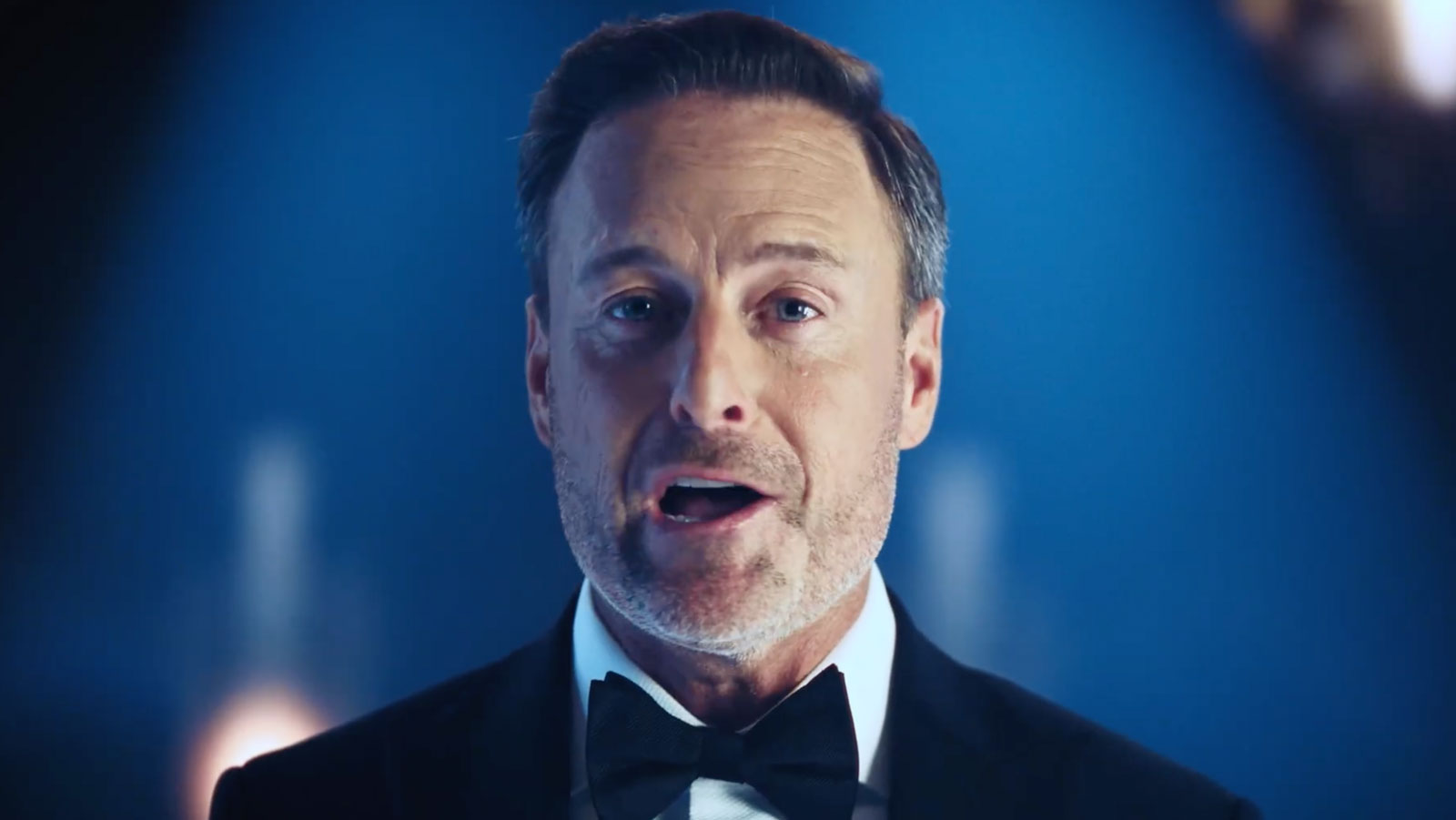
Chris Harrison’s latest teaser left a red rose half‑crushed under his boot, a visual that has set the dating‑show world abuzz and sent a cease‑and‑desist to his former employer, Warner Bros. Television. The single‑shot clip—broadcast from the Fox Nation studio—immediately drew parallels to the very format that made Harrison a household name, raising questions about originality and ownership in an industry that thrives on iteration. The ensuing legal skirmish is more than a dispute over a rose; it signals a broader shift as a veteran star seeks to reclaim his narrative in a saturated market.
The clip, released last month, features Harrison standing in a simple, white set with a single red rose on a pedestal. He approaches, lifts his boot, and with a deliberate stomp, the flower breaks in half. The gesture is unmistakable: a symbolic break from the past and a claim that his new project, “The Vow,” is a fresh take on dating reality television. The show will stream exclusively on Fox Nation, where Harrison also serves as an executive producer. Unlike its predecessor, “The Vow” is designed to avoid elimination ceremonies, opting instead for direct, face‑to‑face breakups when a relationship stalls. The concept, according to Harrison, is rooted in a desire to create a more authentic and intentional experience for contestants, reflecting the rise of faith‑based and spiritually oriented audiences in the digital age.
The reaction from Warner Bros. was swift. A cease‑and‑desist letter, drafted by the studio’s legal team, warned that “The Vow” infringes on the proprietary format of “The Bachelor.” The letter cited specific elements—the rose, the structured competition, the single male host—as key similarities that could confuse audiences and dilute the brand. Warner’s threat was not just about a single episode but a broader claim over the show's intellectual property. The letter also threatened legal action if “The Vow” were aired, effectively putting the entire project on hold.
Harrison’s own response has been candid. He has framed the cease‑and‑desist as a personal attack, suggesting that Warner Bros. is acting out of jealousy. In a recent interview, he implied that the studio’s move was motivated by a desire to keep him sidelined after his departure in 2019. He also pointed out that no other dating show—past or present—has faced such a threat from Warner, reinforcing his belief that the lawsuit is uniquely targeted. Fox Nation’s legal team, in contrast, called the lawsuit “malicious and vindictive,” arguing that the letter is an attempt to stifle competition in a market that encourages new concepts.
Background & Context
Chris Harrison’s tenure as host of “The Bachelor” spanned a staggering 25 seasons, making him one of the longest‑running personalities in reality television history. The show, a staple of prime‑time programming since 2002, built a devoted fan base around its dramatic eliminations, rose ceremonies, and the slow burn romance between a single bachelor and a field of contestants. Harrison’s signature calm demeanor and trademark rose‑handed introductions became cultural touchstones, shaping public expectations of dating reality formats.
After leaving the franchise in 2019, Harrison found himself navigating a landscape that had shifted dramatically. The proliferation of streaming platforms, the rise of niche content, and the growing appetite for “authentic” storytelling created both opportunities and challenges for a veteran figure. Harrison partnered with Fox Nation, a subscription‑based streaming service, to produce “The Vow.” The concept was born from a desire to explore a different facet of human connection—one that emphasizes spiritual and emotional foundations over mere spectacle. Co‑created with his wife, former entertainment correspondent Lauren Zima, the show aims to move beyond the conventional elimination structure, opting instead for direct, in‑person breakups that mirror real‑world relationships.
In interviews, Harrison has highlighted the importance of authenticity. He points to a cultural shift in which younger viewers are turning to faith‑based communities and seeking deeper meaning in their lives. “The Vow” taps into this trend by weaving themes of commitment, intention, and faith into the dating narrative. The show's design reflects a deliberate departure from the rose‑based eliminations that defined “The Bachelor.” By removing that element, Harrison claims he is carving a new path in the crowded reality‑TV marketplace.
What People Are Saying
The cease‑and‑desist has sparked a flurry of speculation among industry insiders and fans alike. Harrison’s comments about jealousy—“Sounds like somebody misses somebody really bad”—have resonated with audiences who feel that the former host was forced into a position where he could no longer control his own story. The language used by Warner Bros., framing the lawsuit as an infringement, appears to align with a broader trend of rights holders protecting their formats in an era of rapid content replication.
Fox Nation’s legal team’s rebuttal was swift and forceful. By labeling the cease‑and‑desist as “malicious and vindictive,” they underscored their confidence that the claim lacks merit and is an attempt to suppress competition. Industry analysts note that while intellectual property rights are a legitimate concern, the specific elements at issue—such as a single rose—are common to many dating shows and may not meet the threshold for infringement. The debate has reignited discussions about how much of a format can be protected before it becomes generic.
Fans of “The Bachelor” have expressed mixed reactions. Some see the lawsuit as a betrayal, arguing that it undermines the creative freedom of a former host. Others, sympathetic to Harrison’s frustrations, view the legal move as a power play by a studio wary of a former star carving out his own space. Meanwhile, viewers who are more interested in the authenticity and spirituality promised by “The Vow” have largely ignored the legal wrangle, focusing instead on the potential for a fresh take on love and partnership.
What Happens Next
Legally, the situation remains unsettled. Fox Nation is likely to challenge Warner Bros. in court, arguing that the similarities between “The Vow” and “The Bachelor” are superficial and that the new show offers distinct narrative elements. The outcome will depend on how the court interprets the scope of intellectual property protection in reality‑TV formats—a question that has precedent in other cases involving show concepts and production design.
From a production standpoint, the cease‑and‑desist has forced the “The Vow” team to accelerate certain processes. Filming schedules may need to shift, and promotional materials might require revision to mitigate potential legal exposure. If the lawsuit proceeds, the show could face delays or even be pulled from the platform entirely, which would represent a significant setback for Fox Nation’s strategy to attract high‑profile talent.
On the air front, the show has yet to air. Fox Nation’s executive team has indicated that the network remains committed to launching “The Vow” in the coming months, pending legal clearance. If the lawsuit is dismissed, the series could premiere as planned, potentially setting a new standard for dating reality programming. However, if Warner Bros. wins a favorable ruling, the show may be forced to reconfigure its format or shelve the project altogether.
Industry observers suggest that regardless of the outcome, the case will influence how future dating shows are conceptualized. Rights holders may become more vigilant in defending proprietary elements, while producers will likely seek to diversify formats to avoid litigation. Harrison’s situation also highlights the challenges that former franchise stars face when attempting to redefine themselves in a market that often resists deviation from proven formulas.
In the weeks ahead, all eyes will be on the legal filings and any statements from both studios. Whether the courtroom will become the new rose ceremony, the result remains uncertain. For now, the story of a single stomped rose continues to echo through the halls of television production, reminding everyone that the battle for creative ownership is as enduring as the quest for love itself.
The Bottom Line
At MyWorldPulse we see this clash as a turning point for reality television. Chris Harrison’s bold gesture—stomping a rose—demonstrates that the industry’s most iconic symbols can be reinterpreted, but not without risk. Warner Bros. is not merely protecting a brand; it’s defending a legal model that has long allowed studios to claim ownership over format elements that are common to many shows. This could chill innovative storytelling, forcing new producers to play it safe or face costly litigation. On the other hand, Harrison’s push for a faith‑based, elimination‑free show speaks to a growing demand for authenticity in an era where audiences crave genuine connection. The legal battle will test whether a single rose can truly be considered a proprietary element or if it is too generic to warrant protection. We believe the outcome will send a powerful message: creators can reimagine beloved tropes, but they must tread carefully in an industry that is increasingly vigilant about protecting its intellectual property. MyWorldPulse remains on standby to report how this case reshapes the future of dating reality shows.
Reference:
- Chris Harrison’s official Instagram post featuring the half‑crushed rose teaser
Read more celebrity news at MyWorldPulse.