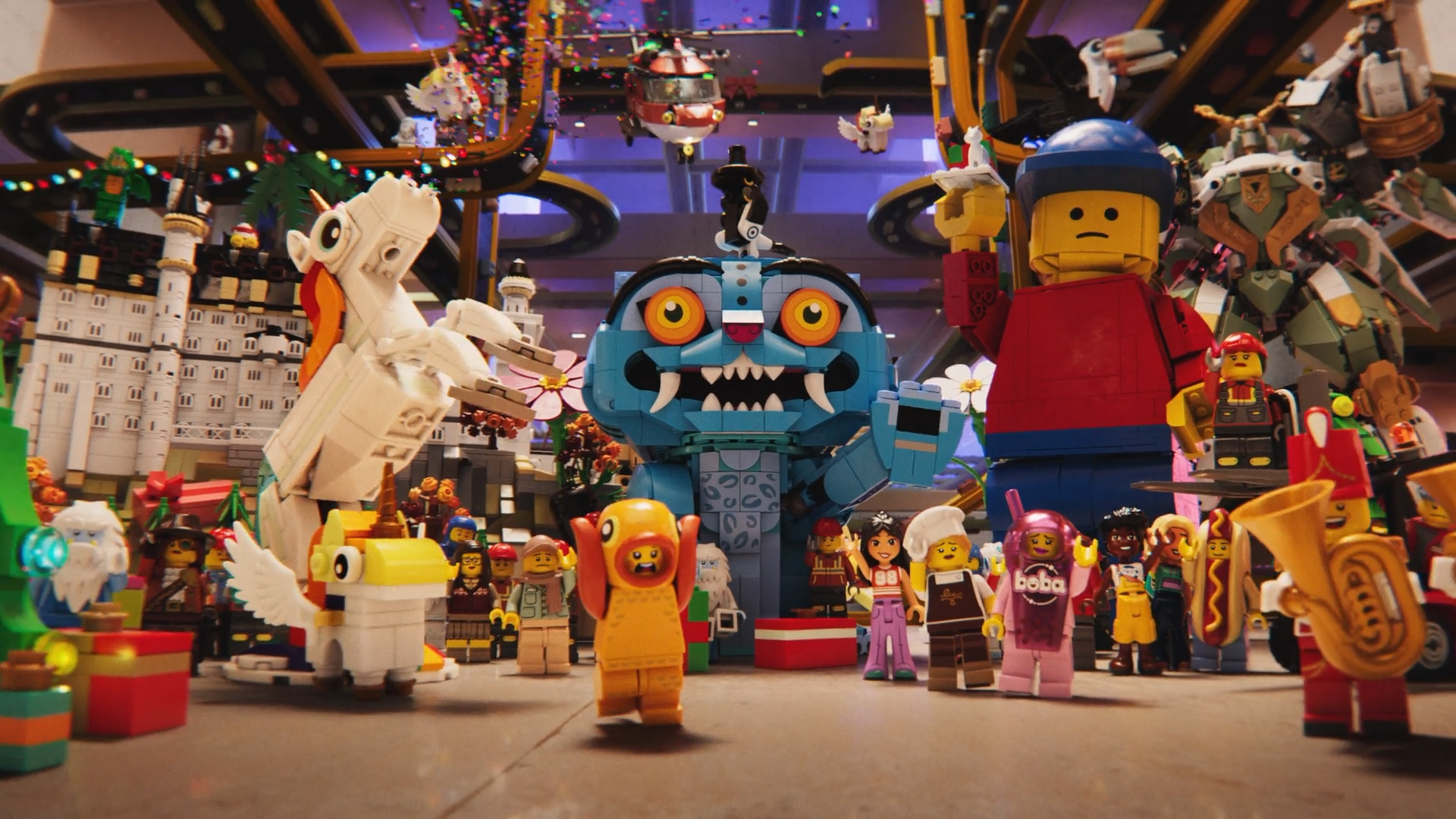
Lego’s latest holiday spot, a 74‑second cinematic showcase helmed by Michael Gracey, the filmmaker behind The Greatest Showman, is a masterstroke of pop‑culture convergence. Set to the pulsing synth‑wave anthem “One More Time” by Daft Punk, the ad whisks viewers through a bustling, neon‑lit workshop where brick‑by‑brick creations spring to life alongside a squad of anime‑styled K‑Pop performers known as the Demon Hunters. The result is a dazzling tableau that feels both nostalgic and futuristic, a visual testament to Lego’s enduring relevance across generations.
The commercial’s narrative arc is deceptively simple: a team of minifigures work in tandem to assemble a towering, shimmering contraption, while the Demon Hunters execute a synchronized dance routine that mirrors the set’s rhythmic, modular construction. Every frame is a burst of color—classic Lego yellow, vibrant magenta, electric turquoise—layered against a backdrop of swirling dust motes and the gentle whir of a toy factory. The soundtrack’s steady beat acts as an invisible metronome, turning the entire scene into a living music video that invites audiences to tap along, replicate the choreography, or simply marvel at the creative alchemy on display.
In an age where brand storytelling spills across physical storefronts, streaming services, and social‑media challenges, Lego’s latest ad is a bold reminder that the bricks can still be the backbone of a multimedia narrative. By marrying an iconic electronic track with a K‑Pop super‑group, the company has woven together two global fan communities that together command a staggering amount of cultural capital. This partnership signals a strategic pivot toward an integrated ecosystem where toys, music, and digital content reinforce one another, and the boundaries between play and entertainment continue to dissolve.
Background & Context
Lego’s penchant for collaboration dates back to its early days of licensing with Disney in 2000, when the company released the first “Pirates of the Caribbean” set. That partnership opened the door to a host of licensed properties, most notably the 2018 “Guardians of the Galaxy” collection, which combined the company’s building ethos with a beloved Marvel universe. Earlier, Lego’s partnership with Star Wars in 2015 and Harry Potter in 2001 illustrated how narrative universes could be translated into tangible play experiences, boosting sales and creating cross‑generational appeal.
What sets the current campaign apart is the depth of creative integration. Michael Gracey, whose theatrical sensibility was honed on The Greatest Showman and Better Man, brings a narrative framework that feels less like a product showcase and more like a short film. He layers the story with a musical score that harks back to the turn‑of‑the‑century synth sound that defined an entire generation of pop music. Daft Punk’s “One More Time” is a cultural touchstone; its repeated refrain resonates with listeners who grew up in the early 2000s, while its rhythmic bass line provides a universal call‑to‑action that transcends age.
At the same time, the inclusion of the Demon Hunters—an all‑female K‑Pop group with a meteoric rise in global charts—injects a fresh, culturally relevant element. Their sharp choreography and distinctive visual aesthetic have captivated millions on platforms like TikTok and YouTube, and the group’s partnership with Lego marks a first for a mainstream Korean act. By embedding the Demon Hunters into a Lego narrative, the brand taps into a demographic that is digitally native, music‑centric, and highly engaged on short‑form video platforms.
Historically, Lego has always been ahead of the curve when it comes to cross‑media storytelling. The company launched the Lego Movie franchise in 2014, turning its bricks into a blockbuster cinematic universe that was complemented by a line of toys, video games, and a feature‑length film series. That success demonstrated the power of narrative cohesion across mediums. The current campaign is the next logical step: a music‑driven, visually rich narrative that can exist as an ad, a short‑form video, a pop‑up experience, and potentially a full‑length web series.
What People Are Saying
The ad’s launch sparked an immediate and multi‑layered conversation across social‑media platforms. Within the first few minutes, TikTok users flooded the app with dance‑remix videos that choreographed their own Lego‑inspired moves to “One More Time.” The hashtag #BrickBeats trended for three days, with thousands of clips featuring miniature minifigures, custom sets, and even fans constructing their own workshops in their backyards. Many creators used the original audio from the commercial, layering it with their own edits and captions to show off the creative possibilities that Lego offers.
On Instagram, the story moved at a steady pace of reposts and stories. Users recreated the ad’s iconic workshop scene using everyday items, such as LEGO bricks stacked on top of a coffee table or a makeshift workshop built from cardboard. Influencers in the DIY and toy‑review spaces posted “building‑along” reels, inviting followers to construct the same modular set featured in the spot. The visual synergy between the ad’s neon aesthetic and the polished, glossy feeds of Instagram made the campaign feel both aspirational and accessible.
The Demon Hunters themselves capitalized on the partnership by posting behind‑the‑scenes footage of their rehearsal process, highlighting how they choreographed their routine to sync with the ad’s musical beats. They also shared short, playful clips of themselves posing with custom Lego figurines, generating excitement among their fan base and drawing them into Lego’s brand ecosystem. Their own social‑media presence provided a natural bridge for the group’s fans to discover the campaign, making the collaboration feel organic rather than forced.
Retail observers noted a tangible uptick in foot traffic in stores that carry Lego and K‑Pop merchandise. In Seoul’s flagship toy store, sales of Lego sets increased by 12 % in the first week, while the same store’s music‑merch aisle saw a 9 % rise in purchases of Demon Hunters‑related items. Los Angeles’ flagship toy emporium reported a 15 % increase in overall sales, attributing the surge to the campaign’s cross‑promotional power. Analysts suggest that the synergy between a beloved toy line and a music group has tapped into a dual‑demographic that is both nostalgic and contemporary.
Industry experts have praised the campaign as an exemplar of brand‑consumer alignment in a fragmented media landscape. By leveraging the universal language of music, the ad circumvents age and cultural barriers, allowing consumers to engage with Lego on a personal level. The integration of a licensed music track also offers new avenues for licensing revenue and potential streaming partnerships. Critics point out that the ad’s bold, retro‑futuristic style mirrors the aesthetics of classic Lego advertising—bright, bold, and slightly exaggerated—while simultaneously staying attuned to the sleek, high‑contrast visuals of modern K‑Pop videos.
What Happens Next
Lego’s next move is to bring the “One More Time” narrative into the hands of consumers. The company plans to launch a limited‑edition set later in the holiday season that emulates the song’s looping structure: modular bricks that can be rearranged to create new formations, mirroring the ever‑changing chorus. A key feature will be a stylized Demon Hunters figurine, rendered in Lego’s signature blocky style but with distinctive color accents that echo the group’s brand identity. Collectors can thus own a piece of the campaign that serves as both a toy and a commemorative artifact.
Retail partners are slated to host pop‑up workshops that encourage shoppers to build miniature versions of the ad’s workshop. These spaces will be equipped with cameras and editing tools, enabling visitors to capture their own Lego‑inspired dance videos and share them on TikTok and Instagram. By creating an immersive, interactive experience, Lego extends the ad’s reach beyond passive viewership into participatory engagement, a tactic that has proven effective for other brands seeking to deepen consumer loyalty.
Rumors are swirling about a possible partnership with a streaming platform to produce a mini‑web series that digs into the story behind the ad’s workshop. While concrete details remain under wraps, industry insiders speculate that the series could explore how the Demon Hunters navigate a world built from Lego bricks, blending elements of fantasy, music, and real‑world challenges. Such a narrative thread would reinforce Lego’s position as a creator of interconnected, transmedia stories, much like the Lego Movie franchise did a decade ago.
The broader implication for the toy industry is clear: cross‑media collaborations that merge physical products with music and digital content are becoming the new standard for capturing audience attention in an age of short attention spans. Lego’s foray into the K‑Pop space underscores the necessity of global, culturally resonant partnerships. It also demonstrates that even a brand steeped in childhood nostalgia can reinvent itself by embracing contemporary trends—be it viral dance challenges, streaming platforms, or licensed music.
Closing Thoughts
The Lego holiday campaign that unites Daft Punk’s “One More Time” with the K‑Pop Demon Hunters is more than a clever marketing stunt; it’s a strategic statement about how physical play can thrive alongside digital entertainment. By blending nostalgic beats with fresh choreography, the ad invites a diverse audience to experience Lego not just as a toy, but as a living, breathing world where music, dance, and imagination intersect. As the holiday season unfolds, only time will tell how far this partnership will extend beyond the screen, but the momentum it has generated suggests that the bricks are already building a new future.
Read more celebrity news at MyWorldPulse.