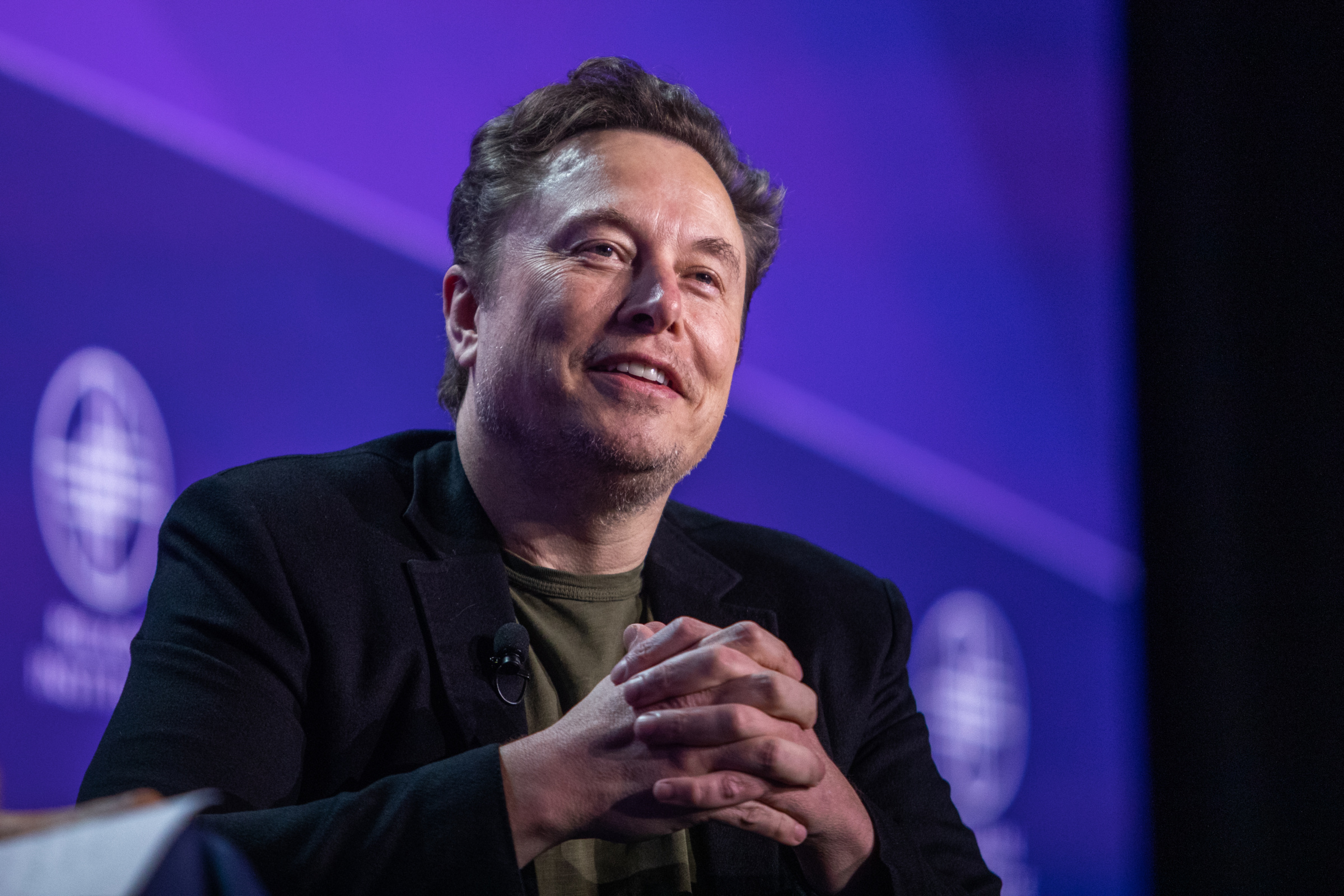
Elon Musk’s candid admission after the 2026 midterm elections shocked the internet and prompted a flurry of debate about the limits of wealth‑driven political influence. “I feel pretty foolish having spent so much money and not seeing much for it,” the billionaire said in a post‑election interview, a moment that reverberated through every trending thread. The statement came as the Republican Party suffered a sweeping defeat, handing both the House and Senate back to the Democrats after a near‑half‑billion‑dollar campaign spend that had largely favored GOP candidates, including a $200 million effort to unseat Senator‑elect James Talarico in Texas.
Musk’s gambit intersected with another headline‑making story of the week: Disney’s parent company revealed that ESPN and its sister channel ESPN 2 now serve 54 million U.S. pay‑TV subscribers—roughly half of the 100 million‑strong peak in 2011. The decline in linear viewership underscores how the media landscape is shifting, revealing a reality in which a billionaire’s financial firepower can no longer guarantee a political outcome or a captive audience.
Background & Context
Musk’s entry into the political arena began almost as a marketing stunt. He first appeared on Twitter in early 2024 with a bold declaration that the Republican Party had become “stuck” in a particular ideological corner, hinting at an impending overhaul. The comments sparked both curiosity and skepticism, especially as the billionaire's name was already associated with radical technological visions and high‑profile controversies.
The move quickly evolved into a concerted campaign‑finance effort that dwarfed conventional donor activity. By the end of the election cycle, Musk’s contributions totaled close to $500 million—an amount that eclipsed any single candidate’s fundraising totals and far exceeded the largest single private donation in recent history. For comparison, the 2024 national election cycle saw the top individual donors contribute a combined $1.2 billion, yet no single individual approached the $500 million figure Musk poured into the 2026 midterms.
The bulk of the money went to Republican candidates across the country, but the most significant allocation was directed toward Texas’s Senate race. In an unprecedented $200 million effort, Musk sought to unseat newly elected Democratic Senator James Talarico—who had made headlines by flipping a traditionally conservative seat. Despite the monumental financial push, Talarico held his ground, securing a decisive victory that kept the seat in Democratic hands.
The political fallout was swift. As the final tallies came in, the Republicans lost control of both chambers, handing a supermajority to the Democrats. Musk’s public confession arrived at a moment when the political narrative was already pivoting. It served as a stark admission that even a near‑$500 million investment could not override the complex forces of voter sentiment, party loyalty, and grassroots organization that ultimately decide elections.
The concurrent announcement from Disney’s parent company about declining ESPN viewership highlights a parallel trend: the erosion of linear television as a primary medium for political messaging. In a world where audiences increasingly turn to streaming platforms and social media for news, the effectiveness of traditional TV advertising—and by extension, the ability of a wealthy donor to reach voters through conventional channels—has been called into question.
What People Are Saying
Social media erupted into a chorus of reactions. On Twitter, hashtags such as #MuskFails and #PoliticalMishap trended, with users offering a mix of bemused humor and sharp criticism. One commentator remarked, “When Elon Musk admits he’s ‘pretty foolish,’ you know he’s truly humbled—because usually he’s the one who says the world is his playground.” The public’s response underscored how rare it is for a figure who projects unshakable confidence to admit defeat.
Within political circles, analysts drew parallels to past campaign finance spectacles. In the 2004 election cycle, billionaire donors like Robert Mercer and Sheldon Adelson poured billions into the GOP, yet the party still lost to President George W. Bush in 2004 and later to Hillary Clinton in 2016. Similarly, the 2010 midterms saw a surge of money directed at Republican candidates, yet the Democrats captured the House. These historical anecdotes reinforce the idea that financial clout is not a silver bullet.
Commentators also noted that Musk’s attempt to sway the Texas race highlighted the difficulty of flipping seats in a state that has historically leaned Republican, even in the face of massive financial backing. Texas’ voting patterns have shifted in recent years, but the electorate remains deeply entrenched in a partisan identity that is difficult to override with advertising alone.
The ESPN subscriber story further colored the conversation. Analysts pointed out that the decline in linear television viewership mirrors a generational shift in media consumption—an environment where political messages increasingly need to be disseminated through digital and streaming platforms rather than traditional broadcast channels. In that sense, Musk’s campaign strategy, which relied heavily on conventional advertising and high‑cost TV slots, may have been out of sync with the current media climate.
What Happens Next
Musk’s public admission opens a new chapter in his public persona—one that acknowledges the limits of financial influence in a complex political ecosystem. Whether he will continue to pour money into campaigns remains to be seen. The billionaire’s future actions could signal a recalibration, perhaps redirecting resources toward initiatives that are more aligned with the shifting media consumption habits of the electorate.
The decline in ESPN’s subscriber base underscores the broader challenge facing media outlets that rely on traditional advertising revenue streams. If the trend continues, more channels may pivot toward streaming or digital‑first strategies, which could alter the ways in which political messaging reaches audiences. This shift may create new opportunities for high‑profile individuals to experiment with alternative platforms for political engagement.
In the immediate term, Musk is likely to focus on business ventures and the public’s perception of his philanthropic and political commitments. His candid admission has already generated a wave of public debate about the efficacy of wealth‑driven political influence, a debate that will continue as the 2028 election cycle approaches.
The story of Elon Musk’s midterm gamble serves as a stark reminder that the power of money in politics, while significant, is neither absolute nor infallible. As the political and media landscapes evolve, the lessons from this episode will resonate with donors, voters, and anyone who believes that influence can be bought—and with the realization that the most lasting impact often comes from more than just a bank balance.
The Bottom Line
MyWorldPulse.com believes that Elon Musk’s failed $500 million bid is a stark reminder that money is a tool, not a guarantee. In an era where audiences increasingly turn to streaming, social, and niche digital channels, traditional TV ads and high‑cost slots lose their luster. The lesson for donors is clear: invest not just capital but also strategic media literacy and grassroots engagement. For voters, it reaffirms that public discourse cannot be bought—only heard. As the 2028 cycle looms, the industry must adapt to a reality where influence is earned through relevance, not rent. The time for financial bravado alone is over; meaningful impact demands a holistic, platform‑savvy approach.
Reference:
- Official post on Elon Musk’s verified Twitter
- Post‑election interview with Elon Musk on CNBC
Read more celebrity news at MyWorldPulse.