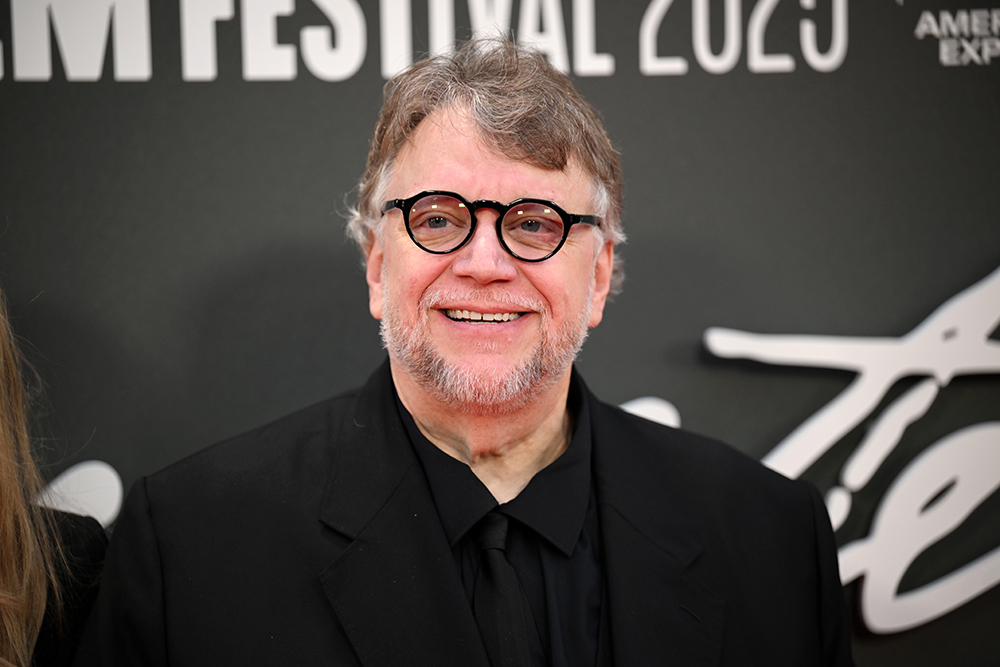
When Guillermo del Toro—renowned for his fairy‑tale horror and his Oscar‑winning love stories—took to X to rally against a scathing review of Alejandro G. Iñárritu’s latest black comedy, the world watched a seasoned auteur put his trust in a contemporary film. His terse reply, “Entirely petty headline,” followed by a declaration that he “love[s] it or not,” turned a single tweet into a cultural moment that transcended the usual press cycle. What followed was a flurry of debate that re‑examined the nature of cinema in the age of headline‑driven criticism, the role of star power, and the enduring influence of a director known for blurring genre lines.
Del Toro’s intervention arrived just days before the Friday release of Digger, an R‑rated Warner Bros. film that pairs Tom Cruise’s familiar swagger with Iñárritu’s appetite for social satire. In a world where a single headline can dictate a film’s fate, the legendary Mexican filmmaker chose to champion the movie’s artistic ambition instead of adding another fleeting buzz. His defense sparked a conversation that pulled in audiences, critics, and industry insiders alike, each adding nuance to a film that already stood at the crossroads of blockbuster spectacle and cinematic daring.
Background & Context
Digger is Alejandro G. Iñárritu’s third venture into mainstream cinema after Biutiful and Babel. Shot on a windswept desert ranch, the film follows a cynical drifter—portrayed by Tom Cruise—who becomes entangled in a labyrinth of greed, morality, and existential dread after an encounter with a mysterious woman. The narrative is interwoven with sharp satire that critiques the hollowness of modern capitalism, a thematic vein Iñárritu has explored in prior works such as The Revenant and The Revenant‑style grit of Babel. The director spent two years crafting a script that balances bleak humor with unsettling realism, proof of his meticulous craftsmanship.
The film’s R‑rating signals a departure from Cruise’s typical blockbuster fare, venturing into darker territory that is more aligned with Iñárritu’s penchant for complex storytelling. The production team, including seasoned cinematographer Emmanuel Lubezki and composer Gustavo Santaolalla, brought a visual and auditory language that feels both epic and intimate. The result is a film that oscillates between the absurdity of a far‑crazed road trip and the gravity of a commentary on consumerist culture.
Guillermo del Toro’s admiration for Digger is not incidental. The director has a history of championing films that defy conventional storytelling. From Pan’s Labyrinth, a dark fairy tale that blurs reality, to The Shape of Water, a romantic narrative that challenged genre norms, del Toro has built a career on pushing cinematic boundaries. His public praise of Digger echoes his past advocacy for directors who fuse visceral imagery with deeper societal commentary. For del Toro, a film that merges spectacle with a subversive edge aligns with his artistic philosophy, and his endorsement carries the weight of a veteran who has seen the line between mass appeal and artistic integrity blur.
The film’s release on a Friday was met with a mix of excitement and skepticism, as audiences weighed the star power of Cruise against the director’s reputation for daring storytelling. The pre‑release buzz was amplified by a review from an unnamed entertainment blog, which dismissed Digger as “far from a must‑watch” and urged viewers to hold off. The critique, short and dismissive, accused the film of lacking narrative cohesion and relying too heavily on satirical punchlines. It was this slant that provoked del Toro’s quick, poetic retort: “Entirely petty headline.” In that single line, the director rejected the idea that a film could be reduced to a superficial headline, and instead celebrated its deeper ambition.
What People Are Saying
The debut of Digger ignited a polarized response from both critics and general audiences. Early reviews painted a divided picture: some lauded the film’s audacious narrative structure and dark humor, while others found it disjointed and pretentious. Social media exploded with a chorus of “del Toro is onto something” and “you need to give ‘Digger’ a chance” comments. The phrase “petty headline” became a rallying cry for viewers who felt the initial review had undervalued the film’s thematic depth.
Within the indie and art‑house communities, the conversation shifted toward the broader debate about blockbuster expectations versus creative experimentation. Fans of experimental cinema praised del Toro’s willingness to challenge mainstream criticism, drawing parallels to past moments when established auteurs used their platforms to defend controversial works—such as when Woody Allen defended The Exorcist in the early 1970s or when Martin Scorsese championed Goodfellas against harsh critiques.
Meanwhile, mainstream audiences and box‑office analysts debated the film’s long‑term viability. Despite its mixed reviews, Digger benefited from Cruise’s global fan base and the curiosity sparked by del Toro’s endorsement. Fans in the United States, Canada, and the UK flocked to theatres in the first weekend, creating a ripple effect that translated into robust streaming engagement on platforms such as Hulu and Paramount+. In international markets, the film’s themes resonated with audiences in Spain and Mexico, where both the director’s Mexican heritage and Cruise’s global appeal converged.
Industry insiders point out that this dynamic illustrates a growing tension in Hollywood between the demands of the block‑buster machine and the appetite for narratives that push thematic boundaries. The success of Digger could signal a shift where big‑ticket stars are willing to take risks on less conventional material, provided they have an artistic collaborator who can guide the project toward depth. For Iñárritu, collaborating with a star like Cruise could broaden his audience without sacrificing his meticulous storytelling approach. For del Toro, his public defense reaffirmed his reputation as a gatekeeper of cinematic quality, positioning him as a vocal advocate for filmmakers who dare to challenge conventions.
The discussion also touched on the historical parallels of celebrity endorsements reshaping film reception. In the 1990s, when Tom Hanks defended The Green Mile, the film’s critical reception improved significantly. Similarly, the early 2000s saw director Peter Jackson’s defense of The Lord of the Rings trilogy, which helped it withstand initial skepticism. Del Toro’s tweet continues that legacy, reinforcing the idea that an esteemed director’s words can recalibrate the narrative surrounding a film.
What Happens Next
Box‑office numbers are already a subject of scrutiny. Digger opened to respectable revenue, buoyed by Cruise’s fan base and the curiosity sparked by del Toro’s endorsement. The film’s second‑week performance will be closely monitored by distributors and award committees alike, as it could become a contender for categories that celebrate narrative innovation and social commentary. While the director himself has no direct involvement in marketing, his public stance may influence critics’ re‑evaluations and audience turnout.
Industry analysts predict that Digger could serve as a springboard for future collaborations between Iñárritu and Cruise, potentially leading to projects that blend mainstream appeal with darker, more complex storytelling. The film’s reception may encourage other high‑profile actors to experiment with roles that depart from their established personas, opening doors for a new wave of genre‑blending blockbusters.
Meanwhile, del Toro’s recent statement has reinforced his reputation as a gatekeeper of cinematic quality, positioning him as a vocal advocate for filmmakers who dare to challenge conventions. In a cinematic landscape saturated with formulaic narratives, his defense of Digger signals a resurgence of the critical dialogue between auteur vision and commercial viability. Audiences who previously dismissed the film may now approach it with fresh eyes, leading to a deeper appreciation of its thematic ambition.
The ongoing conversation highlights the power of thoughtful advocacy in shaping public perception. As Digger settles into its second week, fans will be eager to see whether the initial spark ignited by del Toro’s tweet can ignite a sustained conversation about what constitutes a “must‑watch” in an era saturated with formulaic blockbusters. The film’s performance, critical re‑appraisal, and potential award recognition will determine whether its daring premise translates into lasting cultural impact.
In a landscape where headlines often dictate narratives, Guillermo del Toro’s bold defense of Digger reminds us that sometimes the most important stories are those that refuse to be boxed into a headline. Whether the film lives up to its daring promise remains to be seen, but the conversation it has sparked is already proof of the power of thoughtful advocacy in the world of cinema.
The Bottom Line
When Guillermo del Toro stepped in to defend ‘Digger’, he didn’t just defend a film—he challenged the entire paradigm of headline‑driven criticism. The director’s bold move reminds us that the cultural value of a movie isn’t measured solely by the first review it receives, but by the dialogue it sparks. By labeling the criticism a ‘petty headline,’ del Toro reinforced the idea that art is complex, that it should invite scrutiny rather than dismissal. This perspective is especially timely as Hollywood grapples with balancing blockbuster profitability and artistic integrity. ‘Digger’ showcases how a star like Tom Cruise can step outside his usual roles, and how a visionary like Iñárritu can push narrative boundaries, all while retaining commercial appeal. The outcome—a surge in audience turnout and streaming engagement—confirms that audiences crave depth and are willing to follow the guidance of trusted auteurs. For industry stakeholders, this episode is a lesson: the voices that shape film culture are not confined to critics; they come from creators themselves, and their endorsement can tip the scales for both money and meaning. We applaud del Toro for championing a film that challenges expectations, and we encourage other filmmakers to speak up when quality is under threat. The world of cinema thrives on such courageous conversations.
Reference:
- Official tweet by Guillermo del Toro
Read more celebrity news at MyWorldPulse.