The quiet roar of a shutter button in Tokyo, followed by a hushed gasp on the red‑carpeted set of a Hollywood studio, signals a seismic shift for filmmakers and audiences alike. When veteran Japanese director Ishikawa Hiroshi pulls back the curtain on his long‑awaited feature, The Blue We Touch, while HBO rolls out a fresh take on Poison Ivy that deliberately sidesteps Matt Reeves’ Batman universe, the global entertainment map redraws itself in bold, unexpected strokes.
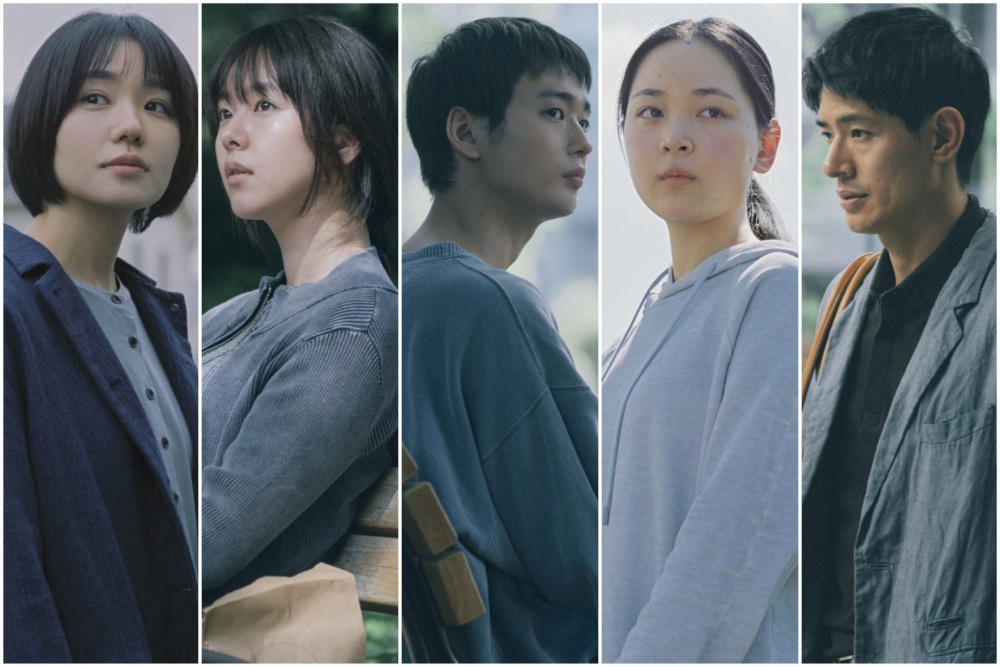
Ishikawa’s comeback arrives after a thirteen‑year interlude that left fans staring at the blank spaces between his signature works—Tokyo.sora, Su‑ki‑da., and the visually lush Petal Dance. The new film, titled The Blue We Touch (original Japanese: Awo no Jo), is currently in post‑production, with Bitters End announcing its 2027 release ahead of Tokyo’s premiere season. Meanwhile, Lauren LeFranc is steering a brand‑new Poison Ivy television series for HBO, a project that is firmly separate from the current Batman narrative, signaling a diversification of superhero storytelling that honors legacy characters while carving fresh, standalone territory.
These twin announcements underscore a broader trend: the entertainment industry’s pivot toward re‑introducing seasoned auteurs while simultaneously investing in fresh, niche content that can stand apart from blockbuster franchises. As streaming giants and traditional studios alike seek to diversify their rosters, both Ishikawa’s return and LeFranc’s Poison Ivy pilot point toward an era where storytelling is less about following the latest trend and more about honoring artistic vision and genre evolution.
Background & Context
Ishikawa Hiroshi’s name has long carried a reputation for meticulous craftsmanship and an uncanny ability to weave intimate human dramas into the broader tapestry of Japanese society. His filmography, spanning over two decades, includes the introspective Tokyo.sora, the genre‑bending Su‑ki‑da., and the visually striking Petal Dance, each of which carved out its niche in both domestic and international markets. Yet, after Petal Dance, a thirteen‑year silence left the industry curious: had he stepped away entirely, or was he quietly gestating his next masterpiece? The revelation that he is actively working on The Blue We Touch—a title that already hints at a lyrical, perhaps even melancholic narrative—has reignited speculation about the themes and styles he might explore.
The timing of the release is equally significant. With 2027 falling on the cusp of a new wave of cinematic technology, Ishikawa’s film is poised to benefit from advances in high‑resolution imaging, immersive sound, and AI‑enhanced post‑production tools. Bitters End’s decision to back the project indicates confidence in its marketability beyond Japan’s borders, as the company has a history of championing auteur-driven works that resonate with international arthouse audiences. The pre‑announcement ahead of Tokyo’s festival season suggests that the film will likely debut at a major event—perhaps the Venice Film Festival or the Cannes Classics section—before hitting a wider theatrical rollout.
Parallel to this resurgence of Japanese auteur cinema, HBO’s initiative to develop a Poison Ivy series reflects a strategic move to broaden its content repertoire. The network, historically known for its prestige dramas, has increasingly turned toward comic‑book adaptations that can exist outside the prevailing Marvel and DC universes. By explicitly stating that the new series does not tie into Matt Reeves’ Batman universe, the network signals a desire to explore Poison Ivy’s complex character in a fresh, potentially more psychological or ecological light. This approach allows for narrative freedom, attracting audiences who crave nuanced, character‑driven stories rather than high‑budget action spectacles.
The convergence of these two projects—one a return to classic cinematic form, the other a bold re‑imagining of superhero lore—illustrates the entertainment industry’s growing appetite for diverse, mature storytelling. Audiences are increasingly looking for depth and originality, and studios are responding by greenlighting projects that respect their roots while pushing creative boundaries.
What People Are Saying
Word of Ishikawa’s new venture has already set social media abuzz, with cinephiles and film scholars alike debating the possible directions the director might take. Some fans are eager to see whether his signature visual style—known for its sweeping camera movements and quiet, almost meditative pacing—will manifest in The Blue We Touch. Others speculate that the film could serve as a commentary on contemporary Japanese society, perhaps weaving in themes of environmental fragility or intergenerational conflict, given the evocative title.
Critics are cautious but optimistic. A recent article in a respected film journal praised Ishikawa’s past work for its “poetic realism” and hinted that his new film might offer a similar blend of emotional nuance and visual elegance. Meanwhile, industry insiders are keenly watching Bitters End’s handling of the project’s distribution, wondering whether they will lean toward a limited theatrical release followed by a streaming window—an increasingly common strategy for art‑film houses aiming to maximize reach while preserving the cinematic experience.
On the HBO front, Lauren LeFranc’s involvement has drawn praise from fans of the Poison Ivy character, many of whom feel the current mainstream treatments of the villain have been shallow or one‑dimensional. LeFranc’s track record, especially in producing complex, character‑centric narratives, raises expectations that the new series will dig into Ivy’s psyche, perhaps exploring her motivations beyond mere villainy. This approach could resonate with viewers who appreciate nuanced, morally ambiguous storytelling—a trend that’s evident in recent successful series like True Detective and The Crown.
The anticipation is palpable. Streaming platform viewership numbers for original superhero series have spiked in recent years, with shows that offer fresh takes on established characters outperforming those that merely rehash familiar tropes. HBO’s gamble on Poison Ivy could pay off if it captures the same hunger for depth that audiences showed toward The Handmaid’s Tale and Succession—proof of the platform’s confidence in the potential of genre storytelling to evolve beyond spectacle.
What Happens Next
The road ahead for both projects is clear yet packed with strategic decisions. Ishikawa’s The Blue We Touch is slated to enter the festival circuit in 2026, with a projected premiere at a major international film festival. Successful reception there could secure a wider theatrical release in 2027, followed by a domestic streaming rollout on Bitters End’s platform, and potentially a partnership with a global streaming giant for international distribution. The film’s post‑production phase is reportedly in its final months, with sound design and color grading expected to conclude by early 2026, setting the stage for the festival debut.
Meanwhile, the Poison Ivy series is entering pre‑production, with LeFranc assembling a writing team that has previously tackled complex character studies. The first season is projected to be a self‑contained narrative arc, with potential for expansion into a multi‑season arc depending on audience reception. HBO’s production schedule suggests that the pilot could be shot by mid‑2025, with full series filming slated for late 2025 into early 2026. An anticipated release window in late 2026 or early 2027 would align neatly with the burgeoning appetite for original, high‑quality content on premium cable.
These timelines also reflect broader industry patterns. The window between festival premiere and wide release has narrowed for many auteurs, as streaming platforms aim to capitalize on the initial buzz before the hype fades. For the Poison Ivy series, early access to fan communities via social media teasers and behind‑the‑scenes content will likely be essential in building a dedicated viewership ahead of the premiere. Both projects showcase a delicate balancing act between maintaining artistic integrity and navigating the commercial realities of modern media consumption.
As the curtain rises on Ishikawa’s return and the debut of HBO’s Poison Ivy series, the entertainment world stands at a crossroads. These stories—rooted in tradition yet daring to innovate—embody the evolving relationship between creators and audiences in an age where genre boundaries blur, platforms proliferate, and the appetite for meaningful narrative deepens. Whether through a quiet, evocative film that tugs at the heartstrings of Tokyo’s streets or a superhero series that peels back the layers of a once‑clichéd villain, the next chapter of cinematic and televisual storytelling promises to be anything but ordinary.
Read more celebrity news at MyWorldPulse.