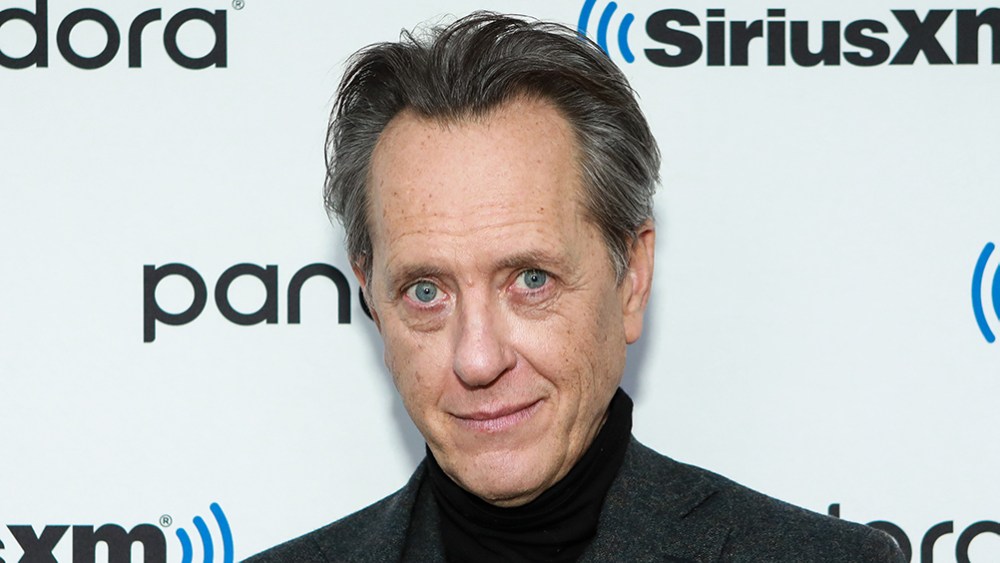
Richard E. Grant’s first live moment on the new U.K. reality series Celebrity Traitors turned into a confession‑style mishap that could cost him his chance to stay in the game, as the seasoned actor admitted he had “blown his chances” and called the slip “the biggest mistake I’ve made in my life.”
The episode began with a dramatic unveiling of the show’s two inaugural Traitors, the men and women who will secretly sabotage the other contestants while the rest try to unmask them. Alongside Love Island host Maya Jama, Richard E. Grant, 71, was announced as the second Traitor. His appearance on the premiere was meant to be calculated and calculated; instead, his off‑hand remark in the post‑shoot interview spilled the beans, announcing his treachery before the audience had even been given a chance to process the tension. The revelation sparked a flurry of reactions, both online and within the show's buzzing studio.
For a performer whose career spans decades—from early work on the stage in the 1970s to a film debut in 1976 and a long‑running presence in television—this candid moment feels like a sudden, unexpected shift. A show built on deception, where the audience is meant to guess the identities of the hidden saboteurs, is suddenly skewed by a live confession. That, for Grant, turned into what he calls his “biggest mistake I’ve made in my life,” a statement that rings true given the stakes of the competition.
---
Background & Context
Celebrity Traitors follows a format borrowed from the original Italian series, placing a group of well‑known personalities in a luxurious villa, where they must navigate challenges, share secrets, and vote each week to eliminate the perceived threat. The twist: a small handful of the contestants are secretly assigned the role of Traitors, whose goal is to eliminate the other housemates without being discovered. The game’s success hinges on subtlety, misdirection, and the ability to read one’s fellow players. The show debuted on Channel 4 and was immediately noted for its high‑profile cast and intense drama.
Richard E. Grant, an actor celebrated for his roles in films such as The Lady Vanishes and High Fidelity, brings a gravitas to the set that fans had been eager to see. His reputation for portraying complex characters, coupled with his seasoned presence, made him a natural fit for a Traitor role—an individual capable of blending in while plotting. Maya Jama’s inclusion as a co‑Traitor balanced the dynamic, bringing a youthful, energetic perspective to the shadowy duo.
The production team meticulously rehearsed the first episode, with the expectation that both Traitors would maintain the illusion of innocence until the finale. Yet, the live confession disrupted the intended flow, revealing the character’s true nature in a way that undermined the suspense. The show’s creators had clearly invested time in crafting a narrative where viewers could speculate, engage in theory‑bending discussions, and feel the thrill of discovery. Grant’s slip not only altered the immediate tension but also sent ripples through the broader audience.
---
What People Are Saying
Social media erupted within minutes of the revelation. Thousands of tweets and posts, memes, and screenshots captured the moment Grant inadvertently blew the game’s secrets. Some viewers expressed disappointment, noting that the surprise element—the cornerstone of the show—was compromised. Others, however, appreciated the raw honesty, praising Grant’s ability to turn a potential misstep into a point of discussion about authenticity in reality TV.
Fan forums and discussion boards quickly became a battleground for speculation. Some argue that Grant’s admission could backfire, allowing his fellow contestants to suspect his motives and treat him with heightened suspicion. Others see it as a strategic advantage: by openly declaring his role, he may lower the defense mechanisms of the other housemates, making them more vulnerable to subtle sabotage. The debate touches on a broader theme in reality competitions: the line between performance and genuine human reaction.
Industry insiders have also weighed in. Producers of similar formats have highlighted that the risk of accidental disclosures is a constant challenge in live reality television. The balance between scripted elements and unscripted moments is delicate, and a single slip can shift the viewer experience dramatically. In this instance, the show’s creators might have to reassess how they handle introductions and transitions to preserve the integrity of the game.
Celebrity watchers also noted the emotional weight that this confession carries for Grant. As a veteran of the industry, he has seen many moments of vulnerability on screen, but this one was particularly personal. The phrase “the biggest mistake I’ve made in my life” carries a certain gravitas that resonates with audiences who understand the long‑term impact a single televised moment can have on a career. It underscores the high stakes of participation in such competitive reality formats.
---
What Happens Next
Looking ahead, the show’s producers will likely adjust the structure of the competition to account for the exposed identity. While the core premise remains—Traitors versus Loyalists—granting an early disclosure forces a recalibration of the power dynamics. Future episodes may feature new twists, such as additional Traitor roles or a revised voting system to re‑introduce uncertainty for the audience.
For Grant, the path forward involves navigating a game that now knows his true allegiance. It may force him to be more overt in his sabotage, risking the trust of his fellow contestants. Alternatively, he could employ a counter‑intuitive strategy, presenting himself as a loyalist to lull competitors into a false sense of security before launching surprise attacks. The show’s writers may craft specific challenges that force the Traitors to operate within their compromised positions, ensuring the tension remains high.
Audience reaction will also play a crucial role. If viewers embrace the transparency and engage with the new narrative angle, the show could experience a surge in viewership, as fans are drawn to the unfolding drama. Conversely, if the audience feels betrayed by the loss of suspense, viewership could wane. The producers will monitor ratings and engagement metrics closely, possibly introducing supplementary content—such as behind‑the‑scenes clips or exclusive interviews—to keep the narrative fresh.
In the long term, this incident may influence how future reality shows handle live introductions. Producers might incorporate built‑in safeguards, such as controlled environments or rehearsal segments that ensure key plot points remain confidential until the right moment. For participants, the episode serves as a reminder that in the realm of televised competition, every word carries weight, and the line between strategy and authenticity is razor‑thin.
---
As the villa’s lights dim and the contestants retreat into their private quarters, the air is thick with speculation. Richard E. Grant’s accidental confession has carved a new chapter in Celebrity Traitors—one that blends the allure of calculated deception with the raw, unfiltered honesty that makes reality television endlessly unpredictable. Only time will reveal whether his “biggest mistake” becomes a masterstroke of strategy or a cautionary tale for the next generation of stars.
The Bottom Line
MyWorldPulse believes that Grant’s inadvertent confession, while damaging to his game plan, offers a pivotal lesson for reality‑TV producers: the line between performance and authenticity is not just blurred—it’s a battleground that can dictate a show’s success. In live formats, a single unscripted moment can upend narratives, shift audience trust, and force on‑the‑spot changes in structure and strategy. Rather than penalizing Grant, the industry should view this as a cautionary tale that underscores the necessity of rigorous rehearsal and controlled introductions for key plot twists. For viewers, the episode is a reminder that reality shows thrive on the tension between what we’re told and what we witness. If producers can harness this tension—blending genuine spontaneity with carefully plotted intrigue—they’ll create more compelling, unpredictable entertainment. MyWorldPulse stands with creators who prioritize integrity and innovation, believing that the genre’s future lies in embracing the human element while safeguarding the suspense that keeps audiences glued to their screens.
Reference:
- Official post on Richard E. Grant’s verified Twitter account
Read more celebrity news at MyWorldPulse.