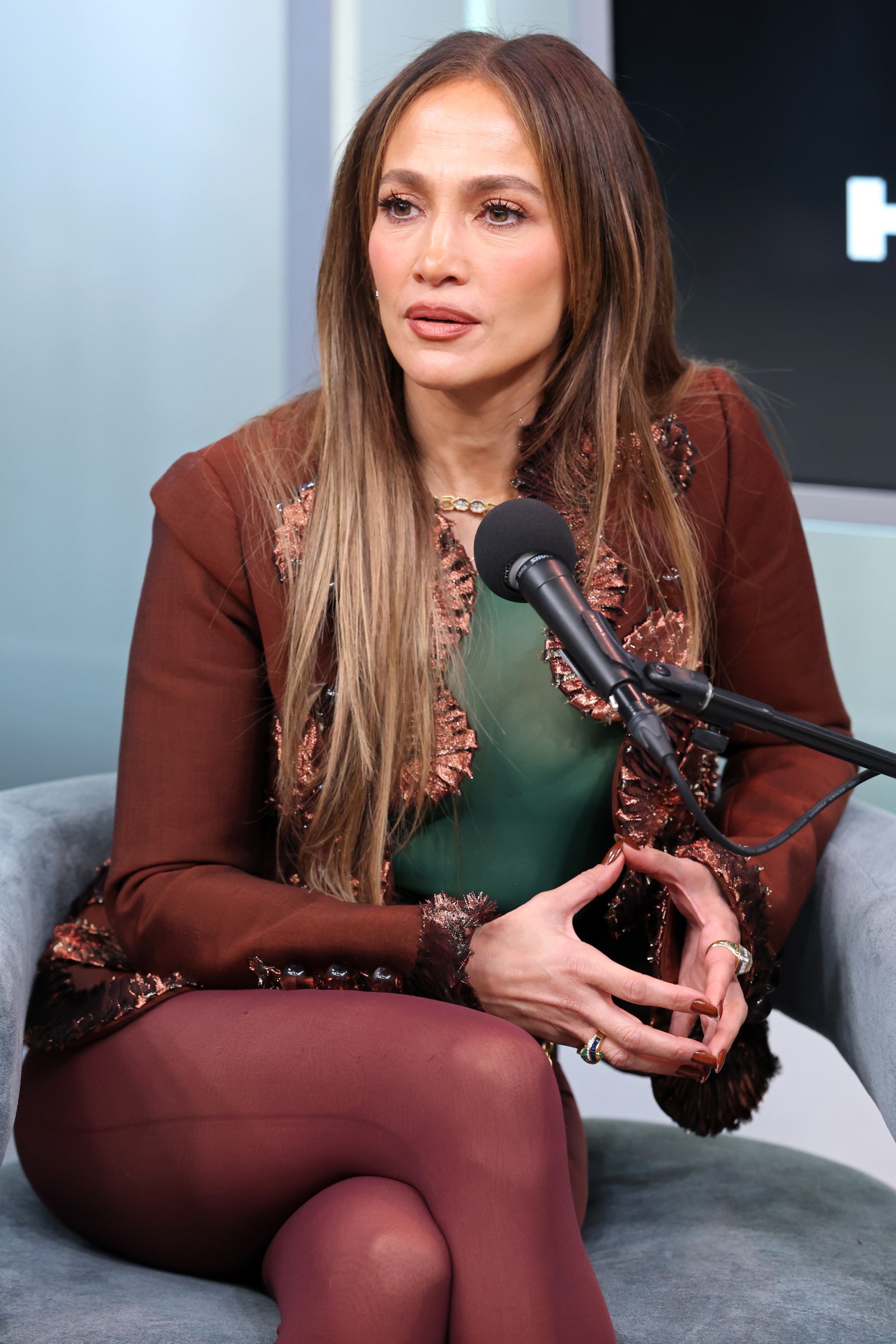
The spotlight shifted from the stage to a sharp social media storm when Jennifer Lopez, the global pop‑singer‑turned‑actress, revealed that her “non‑white” identity had repeatedly barred her from Hollywood roles, despite a portfolio that boasts 44 feature films.
For a star whose glittering career spans over three decades, the admission was more than a footnote; it struck at the heart of an industry still wrestling with representation and typecasting. The comments, first aired in a candid interview with the New York Times, sparked a wave of criticism that swept across fan forums, professional guilds, and the press, forcing the conversation about systemic barriers to the forefront of pop culture discourse.
While the revelation was unexpected, it is not a lone incident. Lopez’s name has long been associated with moments that blur the lines between triumph and controversy—her daring fashion choices, high‑profile collaborations, and the occasional misstep on public stages. Yet, even as she has been lauded for her versatility on screen, from “Selena” to “The Wedding Planner,” the new narrative uncovers a different kind of obstacle: a persistent industry bias that, according to her, has kept many roles off her résumé.
Background & Context
Jennifer Lopez launched her acting career in the early 1990s with a role in Mermaids, but it was her portrayal of the titular character in Selena (1997) that cemented her status as a cultural icon. The biopic earned her an Academy Award nomination for Best Actress and became a milestone in Latino representation on screen. Over the years, she amassed an impressive filmography, crossing genres from romantic comedies to action thrillers. Despite this breadth, Lopez’s statement highlighted a paradox: a prolific body of work that nevertheless contains a glaring absence of mainstream blockbusters that might have defined a superstar’s legacy in the Hollywood canon.
Historically, Hollywood has been criticized for its limited roles for actors of color. Industry studies show that while minority actors may secure roles in independent or niche projects, they are often sidelined from high‑budget productions where the financial stakes—and the visibility—are highest. Lopez’s candid reflection aligns with these broader patterns, suggesting that her experience is not isolated but indicative of a larger structural issue.
Moreover, the conversation extends beyond just the roles themselves. It touches on the narratives that are told, the casting decisions that shape them, and the perception that actors who are not white must fit a particular mold or be seen as “exotic.” Lopez’s remark about being “not a white actress” underscores the double standard that has persisted for decades: the expectation that white actors can seamlessly fit any role, while actors of color are often confined to specific character types or genres.
What People Are Saying
The backlash erupted almost immediately after Lopez’s interview aired. Social media platforms exploded with a mix of support, criticism, and speculation. On Twitter, hashtags like #LopezSpeak and #HollywoodBias trended as fans, industry insiders, and other actors weighed in. Many applauded Lopez for her courage in speaking out, seeing her words as a call for greater accountability within Hollywood’s casting practices. A chorus of fellow actors echoed similar sentiments, recalling their own experiences with typecasting or being overlooked for certain roles based on ethnicity.
Conversely, a vocal segment of the public expressed skepticism, arguing that Lopez’s claim was “overblown” and that her success—quantified by 44 films, multiple box‑office hits, and a sustained global brand—contradicted the notion that race had hindered her career. Critics from the business side pointed out that the entertainment industry operates on audience metrics and market viability, suggesting that factors like box‑office appeal and star power often outweigh racial considerations.
The industry itself has shown a mixed reaction. Some executives emphasized the necessity of diversity initiatives and acknowledged the need for systemic change, while others remained defensive, citing the business model’s reliance on proven talent. Film guild representatives seized the moment to reinforce ongoing discussions about equitable hiring practices, though they cautioned against oversimplifying the complex dynamics of casting decisions.
Meanwhile, fans of Lopez’s music and film work engaged in spirited debates over whether her statement diminished her achievements. Many defended her legacy, noting that her career longevity is proof of her talent and adaptability. Others pointed to the persistent underrepresentation of Latina women in leading roles as evidence that Lopez’s experience is part of a larger pattern of marginalization.
What Happens Next
In the immediate aftermath, the ripple effects were felt across several fronts. Studios that had previously approached Lopez for projects began reevaluating their casting choices, acknowledging the need for more inclusive representation. Industry analysts predict that her candidness may accelerate the adoption of more rigorous diversity policies, including the implementation of “color‑blind” casting techniques and increased opportunities for actors of color in high‑profile roles.
For Lopez, the path forward may involve both leveraging her influence and navigating the potential for typecasting. She has hinted at a desire to return to more substantial, dramatic roles, suggesting that the conversation could open new doors in projects that emphasize character depth over marketable stereotypes. Her upcoming ventures—announced at the time of the interview—include a television series slated for a streaming platform, which critics anticipate will be a departure from her traditional romantic‑comedy persona.
Moreover, the backlash may prompt a broader industry introspection. Casting directors and producers are expected to engage in workshops and training sessions focused on implicit bias, while talent agencies may revisit their representation models to ensure clients of all backgrounds receive equitable consideration. The entertainment community’s collective response will likely shape the next wave of policy adjustments, potentially affecting how films are greenlit and marketed.
Beyond the immediate professional sphere, Lopez’s revelation could influence public perception of Hollywood’s commitment to diversity. As audiences increasingly demand authenticity, studios may feel pressure to align their content with societal expectations, leading to a more balanced depiction of race and ethnicity on screen.
In the long term, the industry’s evolution will hinge on sustained dialogue and measurable progress. If the conversations sparked by Lopez’s candid admission translate into concrete action—such as expanded budgets for projects featuring diverse leads and a shift in how audiences engage with cinema—then the spotlight she drew may become a catalyst for lasting change.
Closing
Jennifer Lopez’s recent testimony has ignited a conversation that touches the very core of Hollywood’s identity. By placing her experience at the center of the debate, she has amplified the call for a more inclusive and equitable entertainment landscape, one where talent is recognized beyond the confines of race. Whether this spark will kindle a lasting transformation remains to be seen, but the industry now faces an undeniable truth: the stories we tell and the people who tell them must reflect the diverse world in which we all live.
The Bottom Line
Lopez’s admission is a wake‑up call that Hollywood still has a long way to go. The fact that a global superstar with 44 films still reports being blocked because of her race is proof that bias is not a relic of the past but a present reality. Yet, it is not enough to name the problem—action is required. Studios must commit to color‑blind casting and allocate resources for projects led by actors of color, ensuring these roles are not merely tokenistic but substantive. Audiences are increasingly aware of and critical about representation, and the industry’s future hinges on listening to this shift. If Hollywood wants to maintain relevance and profitability, it must move beyond surface‑level diversity initiatives and embrace genuine structural change. MyWorldPulse urges studios, producers, and talent agencies to treat Lopez’s testimony as a turning point—an opportunity to rebuild trust and cultivate a more inclusive cinematic landscape. —MyWorldPulse
Reference:
- Official post on Jennifer Lopez’s verified Instagram
Read more celebrity news at MyWorldPulse.