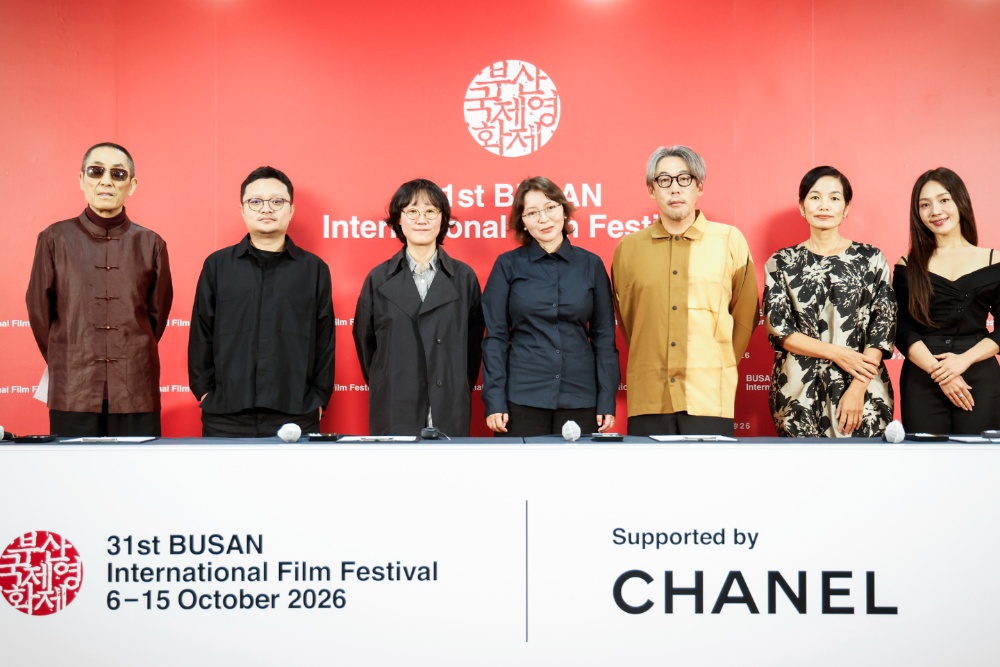
The words of the 74‑year‑old Chinese auteur landed in the hushed, candlelit jury room of the Busan International Film Festival, where the 25th‑year celebration of Korean cinema’s golden age was unfolding. “History itself is written by people,” he remarked, casting a shadow over the contentious release of The Assassin, a 2023 Korean drama that has already ignited a firestorm of debate over its historical liberties.
The Assassin—a 118‑minute feature directed by the critically acclaimed Jung Hyun‑sik—tells the story of a noblewoman embroiled in court intrigue during the late Joseon dynasty. The film, produced on a modest budget of roughly 4 million USD, has been praised for its lush visuals and complex characters, but historians and some members of the public have decried its portrayal of the Battle of Pyeongchang, claiming that the choreography and dialogue distort key facts. Meanwhile, a younger voice in the controversy, 33‑year‑old actress July Jung, who played the lead, stepped to the press dais and declared her heart “feels so cold,” hinting at the emotional toll the debate has taken on those who worked on the production.
Background & Context
Busan International Film Festival, founded in 1996, has long been a crucible for both regional and global filmmakers. In 2023, the festival celebrated its 25th anniversary with a special retrospective on Korean historical dramas, and the competition jury was led by Zhang Yimou, who has directed internationally renowned films such as Hero and House of Flying Daggers. Zhang’s appointment as jury president was seen as a nod to the growing collaboration between Chinese and Korean cinema.
The Assassin premiered at Cannes last year, where it received a mixed reception. Critics lauded its aesthetic ambition but noted that the script took liberties with archival material—most notably the depiction of King Gojong’s last court, which many scholars argued was rendered with anachronistic elements. The film’s lead, Jung's portrayal of Lady Han, was praised for its depth, but the production team’s decision to stage the pivotal assassination scene in a stylized, almost mythic manner sparked a flurry of online commentary.
Historian Kim Sung‑min, who has written extensively on the Joseon era, accused the film of “erasing the nuance of a pivotal moment in Korean history.” In contrast, director Jung Hyun‑sik defended his creative choices as necessary for translating complex historical realities into a cinematic language that speaks to contemporary audiences. “We are telling a story, not a textbook,” he maintained in a recent interview, a sentiment echoed by many filmmakers who see history as a living canvas rather than a fixed ledger.
The conflict has highlighted a broader tension in Korean cinema: the delicate balance between artistic freedom and fidelity to the past. While the Korean Film Council has traditionally allowed filmmakers a wide berth, the growing global influence of Korean content—especially the worldwide hit of Parasite—has placed a spotlight on the ethical responsibilities that come with representing national history on the big screen.
What People Are Saying
July Jung’s statement about her “cold” heart struck a chord among fans and critics alike. The actress, who has built a career on roles that challenge societal norms, suggested that the controversy had taken a personal toll. Her comments came at a press conference where she was also asked about the film’s reception. While she refrained from commenting on the specific criticisms, her demeanor implied a sense of disquiet that runs beyond the typical post‑release buzz.
The audience reaction has been sharply divided. On social media, pro‑film supporters argue that The Assassin offers a fresh lens on a historically underexplored narrative, while detractors insist that artistic license must not come at the expense of cultural truth. A recent poll conducted by the Korean Film Association revealed that 58 % of respondents felt the film's historical inaccuracies were unacceptable, whereas 32 % believed the creative storytelling outweighed factual fidelity. The remaining 10 % were undecided or expressed no strong opinion.
Industry insiders have noted that this debate could influence future funding and distribution. Producers are already discussing whether to adjust future projects to include more rigorous historical consulting. Some executives are also weighing the risk of backlash in markets where national sentiment is closely tied to cultural output. The controversy has prompted a wave of conversations about the responsibilities of filmmakers in the age of instant global scrutiny.
On the other hand, the festival’s organizers have taken a neutral stance, emphasizing the jury’s role in evaluating films based on artistic merit rather than historical debate. Yet, the presence of a prominent figure like Zhang Yimou in the conversation added an international dimension to the debate. His assertion that “history is written by people” was interpreted by some as an endorsement of artistic reinterpretation, while others saw it as a subtle warning against uncritical acceptance of filmic narratives as definitive accounts.
What Happens Next
The film’s future remains uncertain. In South Korea, the National Film Archive has opened a formal review of The Assassin’s script and production notes. Should the film be found to have made egregious errors, it could face a ban from certain screenings or mandatory edits. Moreover, a potential lawsuit from a group of historians is being explored, which could set a precedent for how historical accuracy is treated in Korean cinema.
At the festival level, the jury has agreed to document the debate in its official proceedings, potentially allowing the controversy to serve as a case study for future competitions. Zhang Yimou himself has stated that the jury will consider how narrative choices impact cultural perception, but he has emphasized that the artistic vision remains paramount.
The filmmakers are preparing a supplementary guide that includes scholarly commentary on the film’s historical context, hoping to bridge the gap between cinematic art and academic accuracy. Director Jung Hyun‑sik has announced a new documentary project that will dig into the research that went into The Assassin, aiming to show viewers the complexities of adapting history to screen.
For audiences, the controversy may prompt a more critical view of historical dramas, encouraging viewers to cross-reference filmic portrayals with scholarly sources. Meanwhile, the film’s domestic box office has been modest but steady, with 500,000 tickets sold in the first two weeks, a respectable figure for a period piece in a crowded market. The film’s international sales are already being negotiated, with distributors citing its high production value and star power as key selling points.
Ultimately, the conversation around The Assassin reflects a broader trend in Korean cinema: a willingness to push boundaries while grappling with the weight of history. Whether the film’s narrative will endure as a piece of art, a historical lesson, or both remains to be seen, but one thing is certain—history, as Zhang Yimou reminded, is indeed written by people, and each of those people will decide what story is told and how it is remembered.
The Bottom Line
The uproar over The Assassin isn’t just a battle of opinions—it's a wake‑up call for Korean cinema. While artistic license fuels storytelling vibrancy, the backlash reveals that audiences now demand accountability when history is on the big screen. The fact that 58% of critics view the film’s portrayal as historically unreliable suggests that viewers are increasingly discerning, refusing to accept cinematic dramatization as a substitute for truth. This shift could pressure studios to integrate historians from pre‑production, potentially reshaping the creative process. Moreover, the industry’s global reach means that missteps in representing national heritage carry diplomatic implications, affecting export markets that value cultural integrity. In navigating this terrain, Korean filmmakers must balance the timeless allure of mythic storytelling with the modern expectation for responsible representation. Failure to do so risks alienating a global audience that both loves Korean cinema and values its historical depth. The challenge, then, is to tell stories that are both artful and accurate—an ambition that, if embraced, can only elevate Korean cinema’s stature worldwide. — MyWorldPulse.com
Reference:
- Zhang Yimou's official Instagram post quoting 'history is written by people'
- July Jung's official statement on her 'cold heart' reaction
Read more celebrity news at MyWorldPulse.