Brian Albert Plans 2029 Oscars on YouTube, Blending Creators with Data
The first time Brian Albert watched the Academy Awards stream on a small, flickering laptop in a cramped Brooklyn studio, the experience felt like a secret. That night, he swore that no one should have to sit in a dim room to witness a cultural milestone. Now, as managing director of media partnerships and creative works at YouTube, he is charting a path to bring the 2029 Oscars to the platform that already dominates the attention economy for the next generation of viewers.
Albert’s mission is as audacious as it is precise. He must marshal the full spectrum of YouTube’s assets—massive global reach, creator‑centric authenticity, and granular data—to convince brands that a live, high‑stakes broadcast can be delivered in a format that feels native to the platform. In the same breath, he has to keep the traditional stakeholders in the loop: network partners, advertisers who still prize the reach of broadcast, and the Academy itself, which has long guarded its ceremony’s exclusivity.
Behind this strategic pivot sits a clear narrative about the evolving nature of advertising. For Albert, the line between ad and content has blurred. The platform’s creators, who once posted short clips and vlogs, now co‑create entire campaigns, bringing a depth of engagement that no traditional media can match. In a world where attention is fragmented across dozens of screens, Albert believes that “authenticity and trust that YouTube creators bring to campaigns are huge differentiators for brands looking to break through the noise.” That conviction informs every pitch, every partnership, and every measurement model that he builds.
Background & Context
The Madison Avenue ecosystem, long celebrated for its ability to merge artistry with analytics, has entered an era where data demands as much respect as imagination. The last decade has seen a seismic shift: audiences have moved from scheduled TV to on‑demand streams, and marketers have had to learn how to measure effectiveness across these new channels. In this climate, executives like Albert and his counterpart, Askinasi, now chief revenue officer at Paramount Skydance, must navigate a landscape that values both the cultural weight of broadcast and the precision of streaming.
Albert’s early days at YouTube were shaped by the platform’s transition from a “video repository” to a “social network.” He witnessed the rise of algorithmic recommendation systems that prioritize engagement over monetization, which in turn reshaped how brands approached the platform. “Our clients’ audiences are on YouTube, and when they lean into multi‑format campaigns across connected TV and mobile, that’s the most effective way for them to reach the right customer at the right moment,” he says. That statement underscores a fundamental truth: the future of advertising lies in a seamless, integrated experience that merges the immediacy of social media with the gravitas of live broadcast.
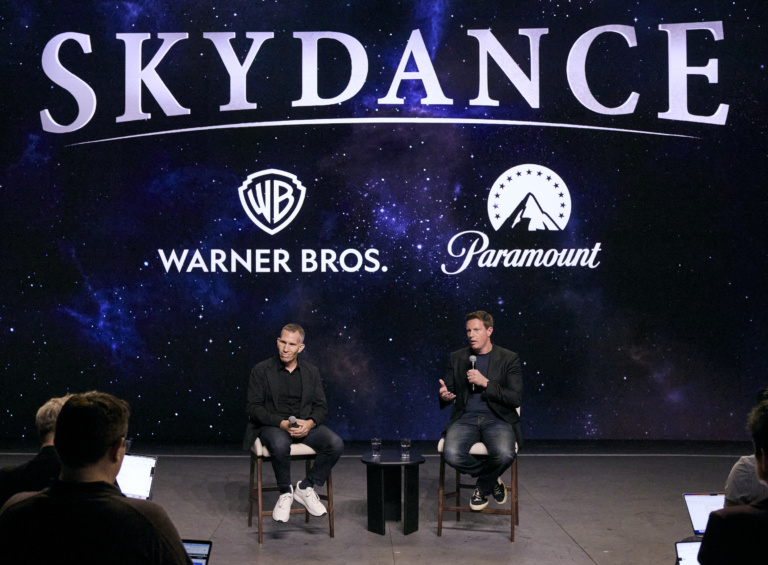
At Paramount Skydance, Askinasi has taken a parallel approach. He recognizes that a single network cannot command the full spectrum of consumer attention without leveraging the power of its streaming library and theatrical releases. “Traditional television delivers mass reach and shared cultural impact, while streaming adds greater precision, personalization and accountability,” he notes. He’s actively dismantling the silos that once separated broadcast, cable, and streaming, and he is positioning the studio to offer advertisers a unique cross‑platform solution that capitalizes on its diverse IP and creative talent.
Together, these leaders illustrate the tension at the heart of Madison Avenue: the need to honor the legacy of big‑screen storytelling while embracing the disintermediated, data‑rich environment that younger audiences now expect. Their stories are not just about technology or numbers; they are about crafting narratives that resonate deeply while delivering measurable outcomes.
What People Are Saying
Industry insiders who have witnessed Albert’s campaigns say that he treats the platform as a living ecosystem rather than a passive distribution channel. One partner, who asked not to be named, described a recent brand collaboration: “They didn’t just buy a spot. They bought a creator, a story, and a data pipeline that told us, in real time, what was happening.” The collaboration leveraged an influencer’s deep knowledge of a niche music genre, turning a conventional ad into a viral moment that spilled into YouTube’s algorithmic feed and the creator’s subscriber list. The result was a spike in brand recall that, according to internal metrics, exceeded traditional TV by 40 percent in the first week.
Across the board, marketers are increasingly looking to the same mix of creativity and data that Albert champions. “Creativity no longer exists in isolation,” says a senior brand strategist at a major consumer packaged goods company. “We need the creative to be anchored by data so that the message lands at the right place, at the right time, for the right audience.” The data Albert collects—from watch time to interaction depth—feeds back into the creative process, allowing creators to tweak messaging on the fly.
However, the shift is not without its skeptics. Some broadcast veterans caution that the spontaneity of live events can be unpredictable when coupled with algorithmic curation. “YouTube’s recommendation system is powerful, but it’s also opaque,” notes an analyst who has studied streaming patterns for years. “Brands need to understand how their content might be surfaced or buried in a user’s feed, especially during a live event that relies on a precise narrative arc.”
Askinasi’s perspective provides a counterpoint. He has seen firsthand how the convergence of linear and on‑demand content can broaden reach while offering deeper measurement. “We’re the only major media company to offer both pay and free ad‑supported streaming alongside a leading theatrical studio, cable and broadcast portfolio,” he says. “We’re leveraging these assets across the Paramount ecosystem to deliver the outcomes that matter most to brands.” His approach underscores a growing acceptance that brands can achieve both reach and precision if they are willing to invest in cross‑platform storytelling.
What Happens Next
The road to the 2029 Oscars on YouTube is paved with both logistical and cultural hurdles. Albert is already in talks with the Academy’s senior programming staff to negotiate broadcast rights and to align the ceremony’s pacing with YouTube’s live‑streaming capabilities. One key challenge is ensuring that the live feed retains the grandeur of a theater while providing the interactivity that platform users demand. Pilot experiments this year have tested real‑time polls, audience shout‑outs, and influencer commentary, all woven into the ceremony’s fabric.
Meanwhile, the data infrastructure is expanding. Albert’s team is collaborating with Google’s data science division to refine attribution models that capture cross‑device engagement. “Traditional advertising metrics don’t translate cleanly to the digital sphere,” he acknowledges. “We’re building new frameworks that account for the multiple touchpoints a consumer might experience—watching a pre‑event teaser on mobile, engaging with a creator’s post‑event discussion, and then sharing the content on social media.” These models aim to provide advertisers with a clearer picture of the return on investment in a live, algorithmically mediated environment.
At Paramount Skydance, Askinasi is rolling out a new suite of ad products that combine broadcast placements with streaming overlays. The company plans to launch a pilot in 2027 that lets advertisers place dynamic, interactive elements in streaming content that sync with live events. The hope is that such synergy will blur the line between scheduled programming and on‑demand viewing, creating a cohesive audience experience that feels both personal and communal.
In the coming months, both executives will need to balance creative ambition with pragmatic partnerships. Albert’s next steps involve securing advertiser commitments that can support the substantial production and distribution costs associated with a high‑profile live event. Askinasi, meanwhile, will focus on integrating the studio’s vast IP catalog into the cross‑platform advertising framework, ensuring that each brand touchpoint feels authentic and engaging.
Industry watchers will keep a keen eye on how these efforts unfold. The success of the 2029 Oscars on YouTube could redefine the parameters of live broadcasting, cementing YouTube’s role as a primary venue for cultural events and reshaping how brands think about reach and relevance in an age of fragmented attention.
In a world where every scroll is a potential distraction, the story of Brian Albert’s ambition—and the collective push from Madison Avenue’s power players—reminds us that even the most entrenched traditions can evolve. Their work showcases a bold new chapter in advertising, where creativity, data, and cultural resonance intersect to deliver experiences that matter.
The Bottom Line
The decision to host the Oscars on YouTube is a bold gamble that, if successful, could upend how we experience live cultural events. By marrying Hollywood’s gravitas with YouTube’s interactive, data‑driven platform, Brian Albert is not just re‑imagining the ceremony; he is redefining the very metrics that measure success in entertainment. For advertisers, this presents an unprecedented opportunity: the ability to reach a massive, engaged audience while simultaneously accessing real‑time insights that can be translated into precise, measurable outcomes. Yet the experiment also carries significant risks—algorithmic unpredictability, the challenge of maintaining the Oscars’ dignity in a platform known for short‑form content, and the high cost of producing a live, multi‑platform broadcast. Nevertheless, if this venture proves viable, it could signal the end of linear broadcast dominance and herald a new era where cultural events are streamed, personalized, and monetized in ways that align with the digital habits of modern audiences. —MyWorldPulse Editorial
Reference:
- Brian Albert’s tweet announcing 2029 Oscars on YouTube
- YouTube’s 2029 Oscars live broadcast press release
Read more celebrity news at MyWorldPulse.