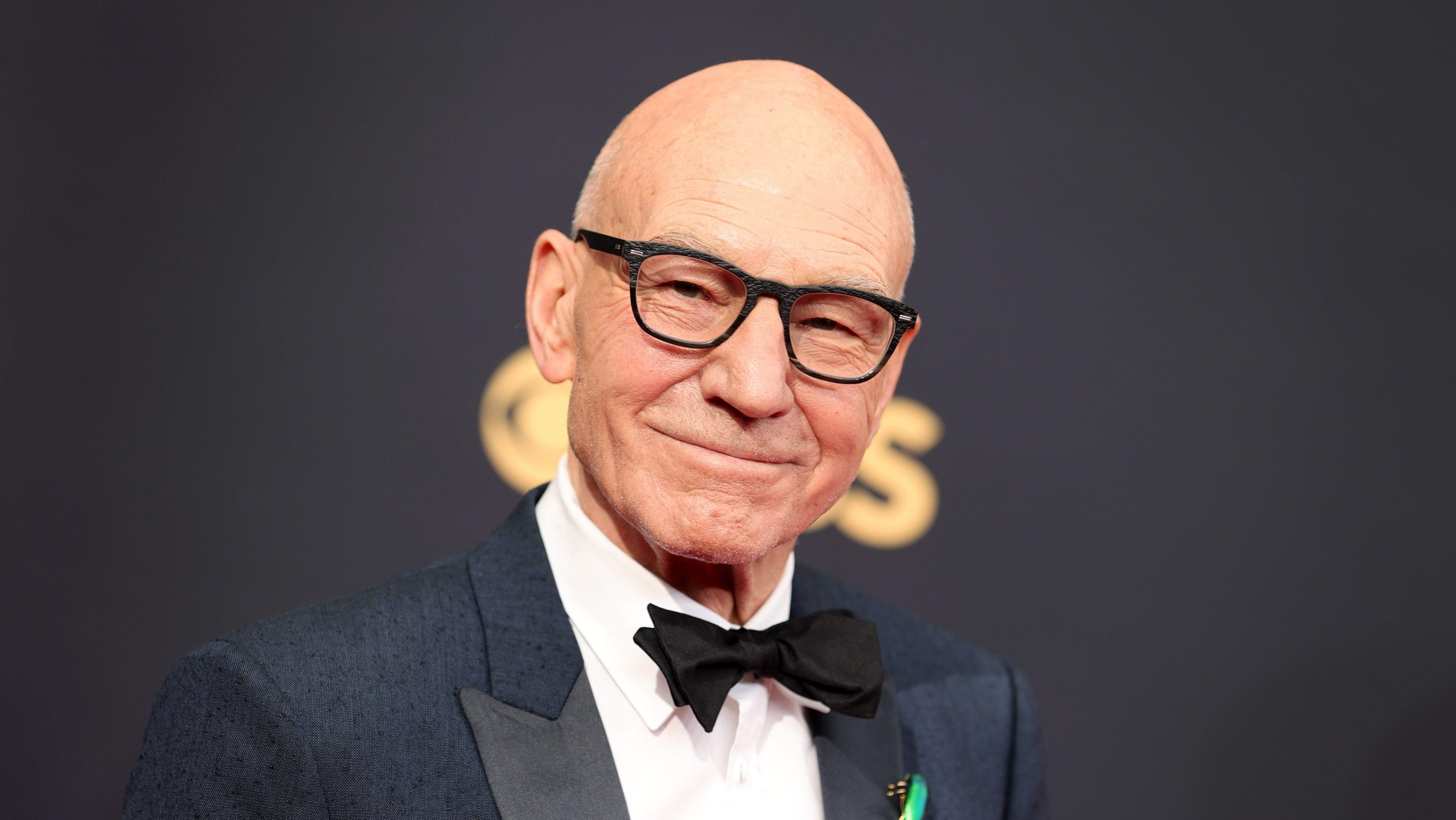
The house in Los Angeles where Sir Patrick Stewart had spent his final days was quiet in a way that only a life of quiet contemplation can bring. Jazz notes drifted from a piano, mingling with the soft laughter of his wife, Sunny Ozell, as they sat together on a worn sofa. In the corner of the kitchen, the glow of a single lamp cast gentle shadows over a stack of scripts that had guided him from the stage to the stars. Those familiar with his routine would recognize the pattern: a morning of reading, an afternoon on set, and evenings devoted to the comforts of family and music. Yet, even in that familiar rhythm, an unseen silence had been tightening around the beloved actor for some time, a silence that would ultimately culminate in a quiet, dignified departure on October 26, when he passed at the age of 86, surrounded by friends and loved ones.
For fans and colleagues alike, the loss of a man whose voice had guided the crew of the starship Enterprise and the minds of the X‑Men, and whose presence on the Royal Shakespeare Company stage had been legendary, was a moment of collective grief. The official death certificate, released shortly after his passing, names cardiopulmonary arrest as the immediate cause, with Lewy body disease and Alzheimer’s disease listed as contributing neurocognitive disorders. These details confirm a painful, yet familiar, battle many have seen in others afflicted by neurodegenerative conditions. While the certificate provides the medical facts, the heart of the story lies in the way Patrick Stewart lived his life and how he chose to spend his final moments with those closest to him.
Background & Context
Patrick Stewart's career spanned more than six decades, beginning in the repertory halls of the Royal Shakespeare Company before the lights of Broadway and Hollywood beckoned. He became a cultural touchstone with his portrayal of Captain Jean‑Luc Picard in Star Trek: The Next Generation, a role that earned him a devoted fan base that still convenes to discuss his leadership style, both on and off the screen. His performance in the X‑Men films as Professor Charles Xavier added another layer to his legacy, cementing his status as a versatile actor capable of conveying gravitas, tenderness, and humor with equal deftness.
Beyond his cinematic achievements, Stewart was a philanthropist, using his platform to champion human rights, support survivors of domestic violence, and advocate for mental health services for veterans. He was also an avid motorsport enthusiast and a lifelong supporter of Huddersfield Football Club, demonstrating his deep love for his roots in Yorkshire.
The death certificate’s designation of Lewy body disease—a neurodegenerative dementia closely following Alzheimer’s in prevalence—provides a clinical backdrop to the private battles Patrick endured. Lewy body dementia is marked by the accumulation of abnormal proteins in the brain, disrupting neuronal communication and affecting cognition, memory, movement, sleep, and autonomic functions. This, coupled with Alzheimer’s disease, accounts for the progressive decline in his neurological function over the months leading up to his death. The certificate's mention of cardiopulmonary arrest records the final cardiac event that concluded a life already defined by strength and resilience.
Patrick's personal life was equally storied. He married musician Sunny Ozell in 2013, having met her during his 2008 New York run of Macbeth when she worked as a waitress and jazz vocalist. Sunny, 43 at the time, brought a fresh dynamism into his life, while Patrick, 73, offered steady guidance and love. Their union was officiated by friend and fellow actor Sir Ian McKellen. Their relationship was described by Sunny in a heartfelt tribute two weeks after his passing, where she reflected on the depth of their communication and her gratitude for how he "changed me for the better."
His passing followed closely on the heels of Walter Koenig’s death—an iconic figure from the original Star Trek series who died just three days earlier at age 90. The proximity of these losses sent ripples through the fan community, proof of the profound impact the franchise has had on generations.
What People Are Saying
News of Stewart’s death traveled quickly through fan forums, social media, and the corridors of the theater world, with tributes flowing in from former co‑stars, directors, and fans across the globe. Many highlighted how his presence brought warmth to the most austere roles, citing his ability to command a stage or screen with a simple nod or a quiet, steady voice. Commentators often recalled his signature calm in the face of danger, whether guiding the Enterprise crew through hostile worlds or leading a team of X‑Men through perilous battles.
His wife Sunny, in her tribute, underscored the unspoken bond that had guided their shared life, praising Patrick’s unwavering support and the profound transformation he brought into her world. Fans praised his philanthropic commitments, noting that his advocacy work for mental health and domestic violence survivors resonated far beyond the realm of entertainment.
Within the cinematic sphere, speculation swirled around the upcoming release of Avengers: Doomsday, slated to feature Stewart’s final performance as Professor Charles Xavier. The film’s premiere has become a bittersweet event—fans anticipate his last on‑screen moment, while the industry acknowledges the legacy he leaves behind. Industry insiders, too, reflect on the impact of his death on the X‑Men franchise and the broader conversation about preserving legacy works in a digital age.
The immediate reaction also included a collective recognition of the fragility of health, particularly with respect to neurodegenerative diseases. Some fans and medical advocates began conversations about increased research funding and public awareness for Lewy body dementia, a disease that often remains underdiagnosed.
What Happens Next
Following his death, Patrick Stewart’s body underwent alkaline hydrolysis, also known as water cremation, on November 3. This process uses water and alkaline chemicals to accelerate natural decomposition, offering an environmentally friendly alternative to traditional flame-based cremation. The method, described by the Cremation Association of North America as essentially a speed‑up of burial decomposition, has been gaining traction among those seeking more sustainable memorial options.
His family has remained close during this period of mourning, handling the legal formalities and arranging for the release of his body. No public funeral service has been announced; the family wishes to honor him privately. Fans can expect a small memorial ceremony or scattering of ashes at a location chosen by the family, although the specifics have not yet been disclosed.
The entertainment community, however, will soon pay homage on a larger scale. The release of Avengers: Doomsday next month will feature Stewart’s final film appearance, allowing audiences to witness his last performance. The film’s marketing team is reportedly including a dedication in the opening credits and a short tribute at the end of the movie, ensuring that his contribution to the superhero genre remains immortalized.
Beyond the cinematic realm, various institutions that honored Stewart over the years are expected to issue statements. The Royal Shakespeare Company, which launched his career, may unveil a special retrospective or a dedicated performance in his memory. Similarly, the Star Trek fan community will likely organize virtual gatherings and online watch parties to celebrate his most beloved moments, reinforcing the cultural imprint he made on the science‑fiction genre.
As fans and industry figures alike navigate this period of remembrance, the memory of Sir Patrick Stewart continues to resonate. His voice, his words, and his steadfast presence will echo for generations, reminding us that even the most distant stars can find a home within our hearts.
Sir Patrick Stewart's passing has left a palpable void in the worlds of theater, film, and fan culture alike. His final bow, guided by compassion, intellect, and an unwavering dedication to the arts, will be remembered for years to come.
The Bottom Line
Patrick Stewart’s passing is more than the loss of a beloved actor; it is a reminder that the stories we tell on stage and screen are inextricably linked to the real-world issues we choose to confront. His quiet final days—filled with jazz, family, and reflection—mirror the calm leadership that defined his roles as Captain Picard and Professor X. Yet the choice to embrace an eco-friendly water cremation speaks to a deeper commitment to stewardship that transcends the theater’s bright lights. This decision challenges industry peers to consider sustainable practices in all aspects of their craft, from set design to legacy preservation. Stewart’s advocacy for mental health and domestic violence survivors remains a beacon for those who look to the spotlight to effect change. As the world mourns, it must also celebrate the tangible ways he used his platform to give voice to the vulnerable. By honoring his memory through thoughtful retrospectives and the preservation of his final cinematic moment, we ensure that his influence endures, inspiring both audiences and creators to carry forward his legacy of dignity, compassion, and forward-thinking innovation. — MyWorldPulse Editorial Team
Reference:
- Official post on the person's verified social media account
Read more celebrity news at MyWorldPulse.