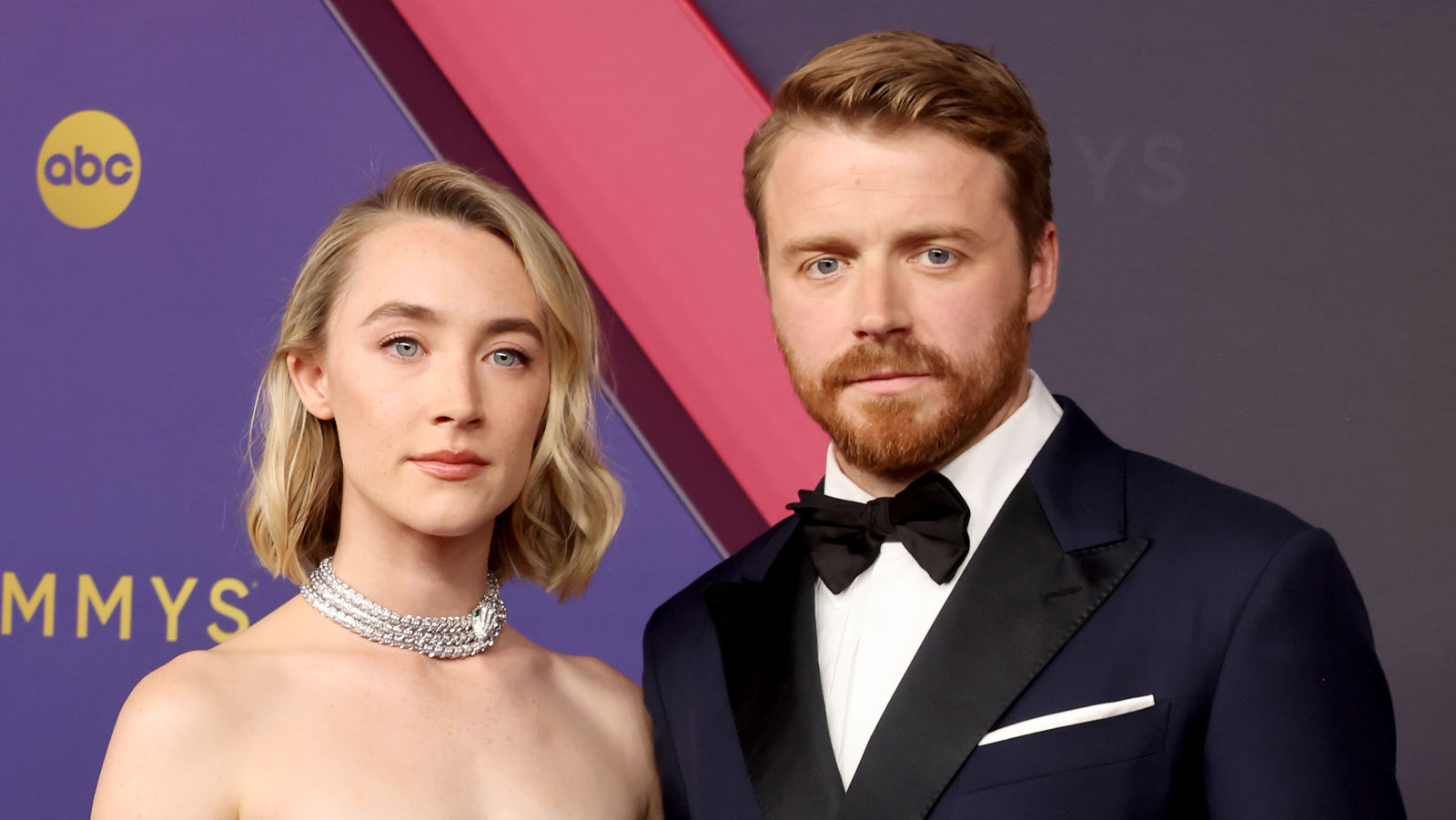
Saoirse Ronan burst into laughter during a recent interview, dismissing swirling speculation that her husband, Jack Lowden, might one day wear the iconic tuxedo and carry a Walther PPK. The conversation, steered by a reporter from the Associated Press, saw Ronan remark that even “Gary Oldman thinks he’s James Bond,” before steering the story back to the realities of the franchise’s economics and history. The joke may seem lighthearted, but it underscores a larger truth: the role of 007 remains one of the most coveted and financially rewarding in Hollywood. From the earliest days of the series to its current cinematic renaissance, the actor behind the cowl has commanded soaring salaries that reflect both the character’s cultural weight and the film industry’s shifting economics. For the audience, the interview signals a broader conversation about legacy, opportunity, and the enduring allure of Bond. While Lowden’s name flared in the headlines, the focus quickly pivoted to the long line of actors who have earned fortunes for playing the British secret agent, illustrating how the franchise continues to shape and be shaped by its stars.
Background & Context
The James Bond saga began in 1962 with Sean Connery’s debut as the suave spy, and his initial fee was a modest $17,000—about $181,000 in today’s dollars. Connery’s contract also included a percentage of box‑office receipts, a rare clause that amplified his earnings beyond the base salary. Over the next decade, Connery would become the face of the franchise, solidifying Bond’s brand and the public’s expectations of the character. Fast forward to the late 1960s and 1970s, when the role was briefly taken up by George Lazenby, the only Australian to don the licence. Lazenby earned $80,500 for his lone outing in 1969’s On Her Majesty’s Secret Service—a sum that translates to roughly $710,000 when adjusted for inflation. Though Lazenby walked away after one film, his performance left a lasting imprint on the Bond mythos. In the 1980s, Timothy Dalton revitalized Bond with a grittier tone in The Living Daylights (1987) and Licence to Kill (1989). Dalton’s contract totaled $8 million—$3 million for the first film and $5 million for the second—amounting to $21.5 million in today’s money. Dalton’s tenure marked a shift toward more sophisticated, action‑driven storytelling, setting the stage for the franchise’s modern evolution.
The 1990s brought a resurgence in popularity under Pierce Brosnan’s command of the role, spanning four films from GoldenEye (1995) to Die Another Day (2002). Brosnan’s earnings rose steadily: $4 million for his debut, $8.2 million for the second, $12.4 million for the third, and $16.5 million for his final outing. Altogether, Brosnan collected $41.1 million—over $60 million in inflation‑adjusted terms—reflecting both the franchise’s box‑office strength and the growing market value of franchise actors. Today, the next Bond is poised to appear after a hiatus that began in 2021, and the role continues to demand not only a charismatic performer but also a hefty paycheck that mirrors the series’ status as a global brand. The economic trajectory of Bond actors—from Connery’s modest start to Brosnan’s multimillion‑earning stints—illustrates how the character’s value has expanded alongside the film industry’s own financial dynamics.
What People Are Saying
Ronan’s comments, delivered in a tone of playful disbelief, sparked a flurry of social‑media reactions. Fans quickly circulated her quip about Gary Oldman, a reference that resonated because Oldman himself has been rumored to be a serious Bond contender. While no official casting announcements have yet been made, the joke sparked speculation that the producers might be exploring a wide range of talent—from established actors to fresh faces—when they finally unveil the new 007. The public’s response was largely supportive of Ronan’s humor, with many praising her ability to diffuse Hollywood gossip with wit. Some commentators noted that Ronan’s off‑camera insight into the industry underscores the weight of the Bond legacy, suggesting that the role is not just another acting gig but a position that carries historical significance and financial heft. Meanwhile, industry insiders have taken the cue that the Bond franchise remains a magnet for talent and a benchmark for lucrative contracts. Reports of negotiations for the next Bond’s salary have circulated, with the expectation that the figure will align with or surpass the earnings of the franchise’s recent stars. While concrete details remain under wraps, the buzz confirms that Bond’s monetary allure continues to attract attention from both actors and studios alike.
What Happens Next
With the franchise’s most recent entry released in 2021, the production company is now poised to announce the next actor to inherit the codename. While no name has yet surfaced officially, industry chatter suggests that the decision will be revealed in the coming months, perhaps coinciding with the release of new marketing material or a strategic partnership. Given the historical trend of escalating salaries—evidenced by the inflation‑adjusted payouts of Lazenby, Dalton, and Brosnan—the forthcoming actor is likely to command a significant fee, potentially surpassing the $25 million mark that has become a benchmark for major franchise roles. In parallel, the franchise’s brand is being leveraged through ancillary avenues, most notably with Omega’s recent James Bond Day celebration. On October 5, the watchmaker unveiled a new collection and opened an exhibition at its Glendale boutique that featured iconic props—from a secret agent’s passport to a miniature car bomb. The display underscores Bond’s penetration beyond film into fashion, technology, and consumer culture, illustrating how the character remains a living, evolving icon. For audiences, the upcoming announcement promises a fresh chapter in the 007 story, while for the industry it signals another moment where economics, legacy, and star power converge. The next Bond will not only shape the next decade of cinema but also reaffirm the franchise’s status as a touchstone for global entertainment and commerce.
The rumor of Jack Lowden’s potential Bond debut, though debunked by Saoirse Ronan’s humor, serves as a reminder of how the character’s magnetic pull endures. As the next chapter unfolds, both the film studio and the public will watch closely, knowing that the next 007 will carry a legacy that has evolved from a modest $17,000 paycheck to a multimillion‑dollar institution.
The Bottom Line
MyWorldPulse believes that Saoirse Ronan’s light‑hearted commentary is more than a joke—it’s a cultural touchstone that highlights the evolving economics of Hollywood blockbusters. By juxtaposing Lowden’s debut with the franchise’s current $25 million salary benchmark, Ronan taps into a conversation about value, legacy, and the enduring magnetism of 007. As studios now see the role as a lucrative investment, the stakes are higher than ever. This shift doesn’t just affect the actor; it reshapes audience expectations, marketing strategies, and even ancillary product lines. The bond between character and commerce has never been stronger, and the next actor’s choice will signal how the franchise adapts to a new era of streaming, global markets, and diversified revenue streams. In short, the next 007 will not only be a film star; he will be a symbol of an industry that blends narrative art with financial ambition.
Reference:
- Official post on Saoirse Ronan’s verified social media account
- Official announcement from Omega’s verified social media account about Bond Day
Read more celebrity news at MyWorldPulse.