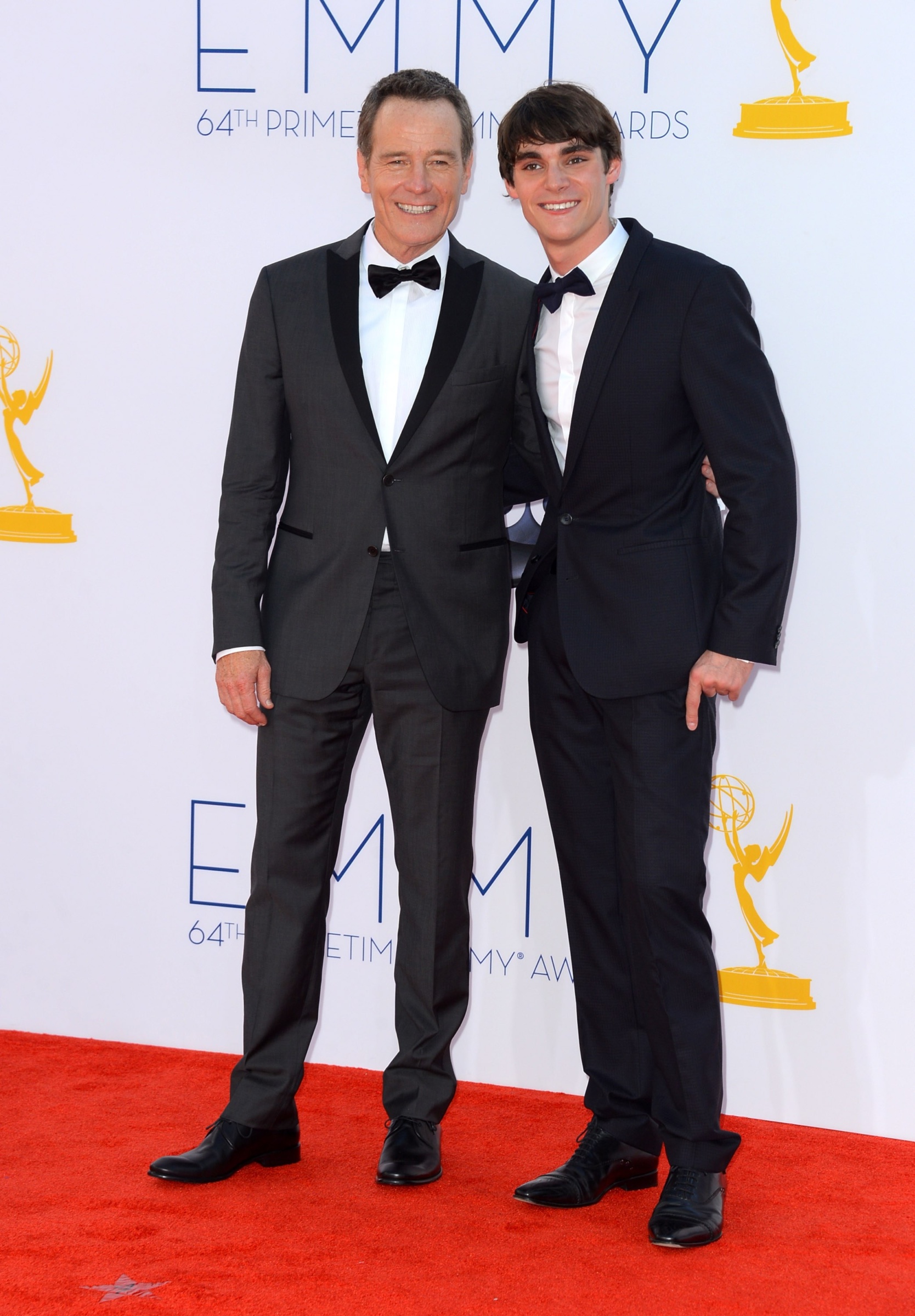
The weight of a shared on‑screen family has turned into a real‑world ache, as Bryan Cranston, Aaron Paul, and Dean Norris all paid heartfelt tribute to RJ Mitte, the actor whose presence made the world of Walter White feel all the more human.
In a quiet Instagram post that captured the gravity of the loss, Cranston called the moment “deep despair,” a phrase that mirrored the silence that has settled around the set of the show that shaped a generation. The actor who had grown up on the same lot that once ran the frenetic production of Breaking Bad reflected on the years since Mitte’s first camera‑ready smile. That reflection carried a raw tenderness: a 14‑year‑old who met Cranston on the set in 2007 and later became the son in the story of the world’s most infamous meth kingpin. The bond that formed when a boy, a family, and a production crew united over a single character has now become a shared grief that reverberates beyond the screen.
Mitte’s sudden departure at 34 left a trail of tributes, each a reminder of a life that balanced the demands of a complex role with the fight for visibility for those living with cerebral palsy. His death, confirmed as a suicide by his representatives, has cast a spotlight on the quiet battles many face, even when surrounded by fame and acclaim.
Background & Context
Breaking Bad premiered in 2008, drawing viewers into the moral gray world of Walter White and his son, Walter White Jr., portrayed by RJ Mitte. Mitte’s character was written to reflect his own reality, living with cerebral palsy—an authenticity that the series delivered with care. The show ran for five seasons, ending in 2013, and left an indelible mark on television drama.
Mitte’s journey to the set was anything but ordinary. Auditions stretched over six months, encompassing four takes in Los Angeles and one in New Mexico. He finally secured the role in early 2007, just as the pilot was taking shape. In the months that followed, a teenager with a visible condition became a regular on a show that demanded intense commitment. He learned to manage the rigorous filming schedule, demonstrating a resolve that impressed his co‑stars. The industry, which has historically sidelined actors with disabilities, found in Mitte a catalyst for change.
Outside the cameras, Mitte leveraged his platform for advocacy. He served as president of The Mitte Foundation and partnered with organizations such as United Cerebral Palsy and Shriners Children’s. Through these efforts, he pushed for broader representation for disabled actors, arguing that roles should not be limited to characters defined solely by disability. His voice resonated beyond Breaking Bad, reaching communities that had long been excluded from mainstream narratives.
What People Are Saying
Cranston’s tribute unfolded with poignancy. He recalled the first time he met Mitte—just a teenager—on the set, emphasizing the young actor’s determination: “Born with Cerebral Palsy, he never – ever – allowed that challenge to be an excuse for anything.” He went on to describe how Mitte grew from “raw” into “a really fine actor” over the course of the series. In his words, the actor had not only been a co‑star but a “sweet son” on screen, a fact that seemed to magnify the loss.
Aaron Paul echoed the sentiment of heartbreak. In a personal message that avoided the trappings of media hype, he described his bond with Mitte as a friendship that transcended the show. “RJ, I love you my friend. You will be missed,” he wrote, adding a note of encouragement for anyone who might be wrestling with their own struggles: “Please know you are loved, and you are not alone.” Paul's message served as both a homage and a gentle reminder that the pain of loss can coexist with messages of hope.
Dean Norris, who played Hank Schrader, offered a quieter recollection. He highlighted his protective instinct toward the young actor, describing Mitte as a “sweetheart of a young man.” Norris’s words underscored the off‑screen camaraderie that often forms in high‑pressure environments. He also hinted at the lightness that existed behind the camera, a contrast to the series’ grim narrative.
The outpouring of grief reflected the depth of the impact Mitte had on those he worked with. Fans and colleagues alike expressed how his authenticity had reshaped expectations for disability representation in media. The tributes, while rooted in personal anecdotes, also spotlighted Mitte’s broader legacy as an advocate.
What Happens Next
Mitte’s representatives confirmed his passing on Monday in Brownsville, Texas, but the details of the circumstances were withheld. Later information identified the cause as suicide, a fact that has stirred conversations about mental health among public figures. The revelation has prompted industry voices to advocate for better mental‑health support systems for actors and crew alike.
As the news spread, the Breaking Bad fan community channeled their sorrow into collective remembrance. Tribute videos, memorial posts, and petitions for increased awareness of cerebral palsy emerged on social media. In the weeks following his death, discussions around the show’s cultural influence have taken a new turn, with scholars and critics noting how Mitte’s portrayal helped shape public discourse about disability.
In terms of legal and procedural matters, authorities are continuing to investigate the circumstances of the death, although no official findings have yet been released. Meanwhile, the community of actors and advocates that Mitte nurtured through his foundation and public work will likely carry forward his mission of inclusion. Fundraisers and awareness campaigns may intensify as his supporters seek to honor his memory.
The conversation has expanded beyond the immediate grief to a broader reflection on the pressures faced by actors, especially those who bring visibility to marginalized groups. The industry’s response—whether through policy changes, mental‑health initiatives, or creative collaborations—may set new precedents for how stories about disability are told and how the individuals behind them are supported.
In the quiet aftermath, the world remembers a young actor who, against all odds, turned a personal challenge into a universal message of resilience and hope. His passing at 34 is a loss that extends far beyond the walls of a TV studio; it is a call to honor the human stories that, when told with authenticity, shape society.
The Bottom Line
The loss of RJ Mitte is a stark wake‑up call for Hollywood. It reminds us that the industry’s most iconic stories—like Walter White’s desperate descent—are only as powerful as the people who bring them to life. Mitte’s death exposes the silent struggles of actors who, despite breaking barriers, are still vulnerable to the same mental‑health crises that plague our society. The outpouring of love from his co‑stars illustrates that behind every great performance lies a human story deserving of support, not just applause. Hollywood must act now: establish comprehensive mental‑health resources, create inclusive casting practices that don’t pigeonhole actors by disability, and honor those who pave the way for future generations. Only by addressing these systemic gaps can we preserve the authenticity that audiences crave and ensure that the next generation of performers can thrive in a safer, more compassionate industry. –The MyWorldPulse Editorial Team
Reference:
- Official Instagram tribute by Bryan Cranston
- Official Instagram post from the Mitte Foundation
Read more celebrity news at MyWorldPulse.