In a move that sent shockwaves through the studio‑town, media magnate David Ellison announced that the newly merged Paramount‑Warner entity would be carried under the Skydance banner. The announcement, delivered in a crisp statement that evening, marked a bold rebranding effort that places a twenty‑year‑old production house in the spotlight over two of Hollywood’s most venerable names.
Ellison, who has steered Skydance from a modest 2006 startup into a powerhouse with a slate that includes blockbuster franchises and high‑profile collaborations, stated that the Paramount and Warner Bros. brands would remain intact. “We will honor what makes Paramount and Warner Bros. special — giving both studios the opportunity to grow, tell more great stories and bring those stories to even broader audiences around the world, powered by the scale and capabilities of Skydance,” he wrote. The move has ignited debate over legacy, brand equity, and the future of classic studio identities in an era of consolidation.
While the decision may seem like a statement of triumph, it also raises questions about how a new‑age studio will stand against the deep-rooted heritage that has long defined the American film and television landscape. The announcement comes at a time when the industry is wrestling with the implications of mergers, the shifting weight of global distribution networks, and the challenge of maintaining distinct creative voices under a single corporate umbrella.
Background & Context
For over a century, Warner Bros. has been a household name, its 12,500 feature films and 2,400 television programs serving as a cultural touchstone that has weathered numerous corporate reshuffles. Founded in 1923, the studio’s brand has endured through the golden age of Hollywood, the studio system’s decline, and the rise of digital streaming. Paramount, with its 114‑year history dating back to 1912, has similarly carved out an iconic legacy, albeit with a smaller library but an equally resonant brand.
Skydance, by contrast, began as a modest production company in 2006, quickly carving a niche by producing high‑profile projects across film, television, and interactive media. Its portfolio has included the Mission: Impossible franchise and the Star Trek reboot, underscoring its capacity for large‑scale storytelling. In recent years, Skydance has grown into a multi‑platform enterprise, encompassing a film division, a television unit, and a venture arm that supports emerging technology ventures.
The rebranding move follows a broader industry pattern of consolidation. Comcast’s ownership of Universal, for instance, left Universal’s brand largely untouched, with audiences still viewing it as a distinct entity. Disney’s acquisition of 20th Century Fox presented a more complex case: the studio’s name was dropped, and the output under the Fox banner diminished. These examples illustrate the spectrum of outcomes possible when a parent company absorbs historic studios.
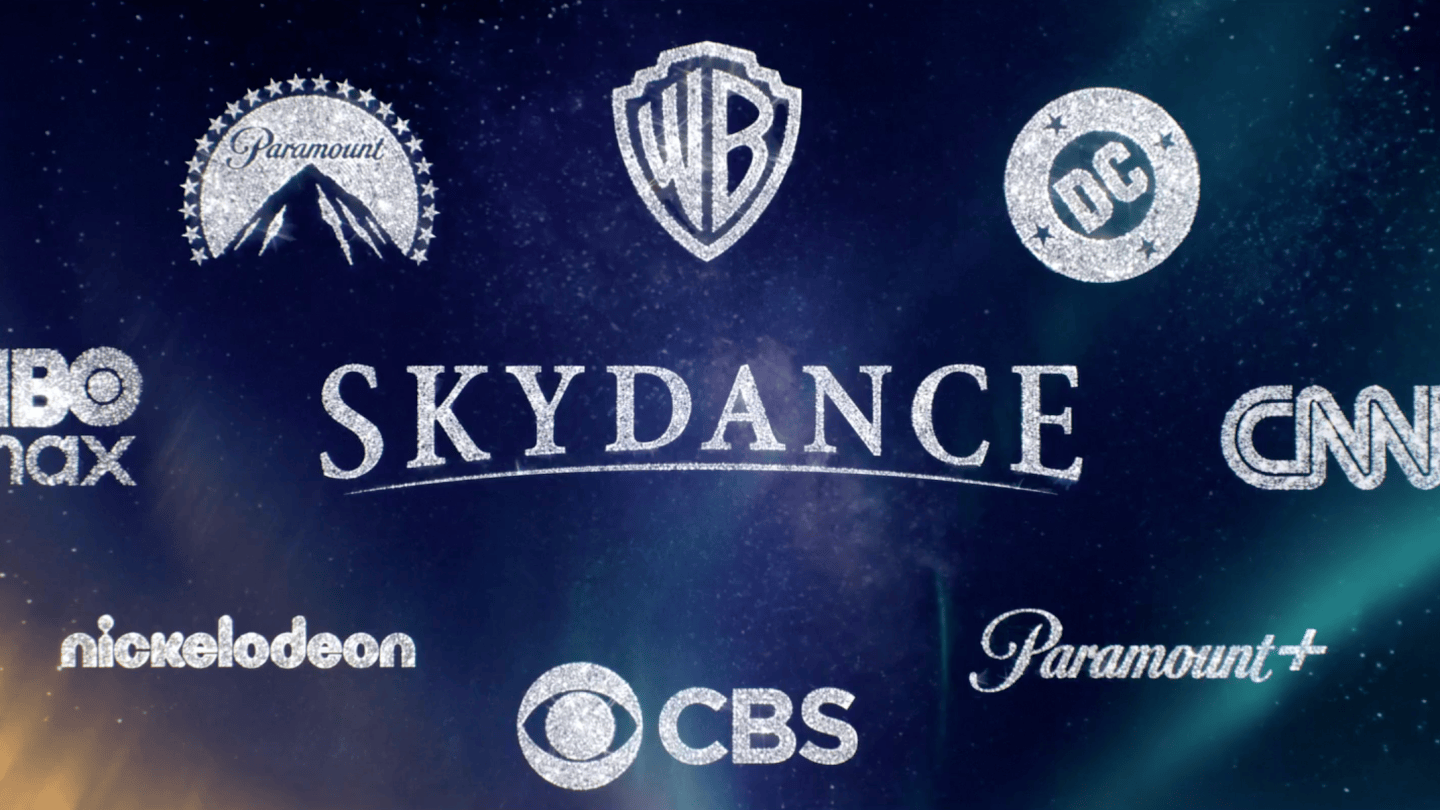
Ellison’s choice to place Skydance at the forefront, while keeping Paramount and Warner Bros. icons as satellites in the logo menu, signals an attempt to blend the gravitas of legacy names with the modern, tech‑savvy image of a contemporary studio. The logo itself shows Skydance prominently, surrounded by smaller symbols for CBS, HBO Max, DC, CNN, and Nickelodeon, creating a visual hierarchy that emphasizes the new parent brand while acknowledging the breadth of its holdings.
What People Are Saying
The announcement ignited an avalanche of reactions across social media and industry circles. Many commentators felt that the move undermined the historical significance of Warner Bros. and Paramount, two studios that have shaped the global entertainment narrative for generations. A common sentiment echoed online was that the decision appeared self‑congratulatory, as if the arrival of a new name marked a definitive “victory” over the old.
Yet there are also voices that view the rebranding as a strategic alignment, one that could streamline operations and unify disparate creative units under a single strategic vision. Some industry insiders argue that the Skydance name, while newer, carries an air of innovation that could resonate with younger audiences and digital platforms. The inclusion of other major brands—CBS, HBO Max, DC, CNN, Nickelodeon—within the same visual framework suggests an ambition to create a cohesive ecosystem rather than a purely top‑down corporate rebrand.
Despite the mixed responses, the consensus is clear: the ultimate test will come in how the merged studio translates the Skydance brand into box‑office success and audience loyalty. If the studio can preserve the storytelling excellence associated with Paramount and Warner Bros. while infusing it with a modern, tech‑driven approach, the rebranding could prove to be a winning formula. If not, the venerable names may lose their luster under a younger corporate mantle.
What Happens Next
In the coming months, the focus will shift to operational integration. The Skydance‑led leadership team is expected to realign production pipelines, talent contracts, and distribution agreements to reflect the new corporate structure. The statement that Paramount and Warner Bros. will continue to “grow, tell more great stories” implies that both studios will maintain a level of autonomy, perhaps operating as semi‑independent entities under Skydance’s umbrella.
Strategic decisions will also revolve around content distribution. With the rise of streaming and global markets, the merged studio must decide how to position its library across platforms such as HBO Max, Paramount+, and others. The logo’s inclusion of digital media brands signals that Skydance intends to leverage its existing distribution channels, but the exact strategy remains to be announced.
Investors and stakeholders will monitor the studio’s financial performance closely. The rebranding could affect box‑office expectations, advertising revenue, and partnership deals. If Skydance can demonstrate that its brand equity translates into tangible returns, the move may set a precedent for other studios considering similar consolidations.
The narrative of this rebranding will also be told through the lens of audience reception. Moviegoers and television viewers will be the ultimate judges of whether Skydance can honor the legacy of Paramount and Warner Bros. while forging a fresh, contemporary identity. Their response will shape the studio’s trajectory for years to come.
---
In a landscape where names carry weight and history can be a currency, David Ellison’s decision to foreground Skydance over two of Hollywood’s giants is both bold and contentious. Whether the move will elevate the combined studio to new heights or dilute the storied brands it now houses remains to be seen. The industry watches, and the audience waits, for the next chapter in this evolving saga.
The Bottom Line
MyWorldPulse sees David Ellison’s bold move as a calculated gamble that could either redefine Hollywood’s power structure or backfire by diluting iconic brands. Skydance’s rapid ascent to a parent‑brand status illustrates how newer, nimble companies can challenge entrenched titans. Yet the real test lies in execution: integrating talent, preserving the distinct creative voices of Paramount and Warner Bros., and delivering fresh, high‑quality content that resonates across streaming and theatrical audiences. If Skydance succeeds, it could inspire a new wave of strategic mergers that prioritize innovation without sacrificing legacy. If it fails, the industry will witness a cautionary tale of brand erosion. In any case, the move signals that legacy alone is no longer enough—consolidation, technology, and a clear strategic vision must go hand in hand to survive the next decade of entertainment. —MyWorldPulse Editorial Team
Reference:
- Ellison's Official Twitter Announcement
- Skydance Press Release on Studio Merger
Read more celebrity news at MyWorldPulse.