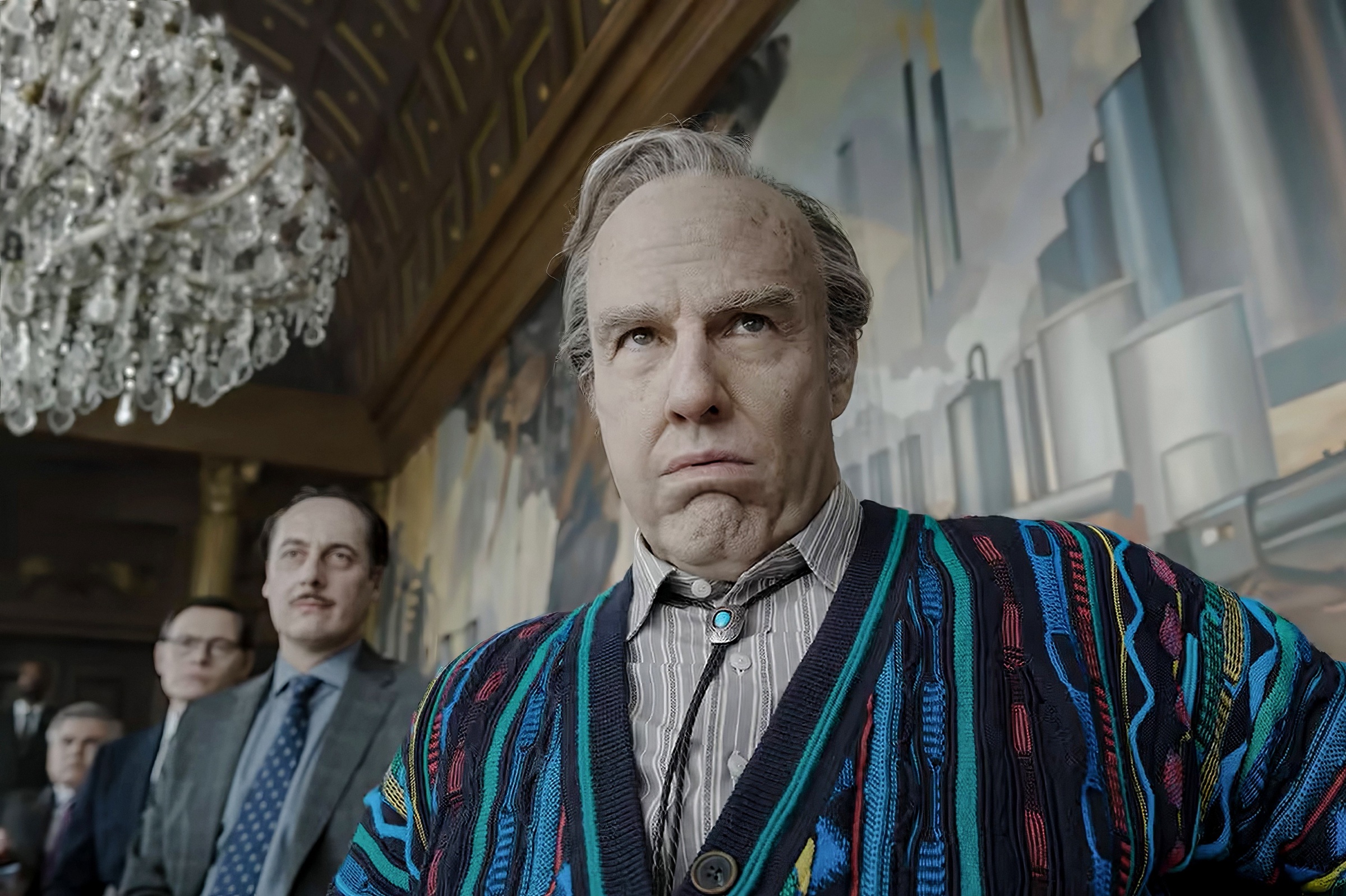
When Tom Cruise took a quiet, reflective pause in front of his camera in the early morning light of Hollywood, the camera caught a flicker of determination in his eyes that felt almost like a whispered promise.
In a post that quickly turned into a conversation among industry insiders and movie‑goers alike, the veteran star praised the creative team behind “Digger,” a big‑budget satire directed by Alejandro G. Iñárritu, while noting that the film had fallen to the lowest opening weekend in almost twenty years for a Cruise‑produced movie. The headline number—just under $10 million—casts a shadow over what had been touted as a triumphant return to the big screen for the 59‑year‑old actor.
The film, which debuted in the United States on a Thursday in the middle of a crowded spring lineup, faced an uphill battle from the start. Competing against a surprise hit that took the top spot and a slew of other new releases, “Digger” struggled to draw audiences into theaters. While the story revolves around a daring underground operation that pushes the boundaries of corporate espionage, the marketing campaign seemed to have misaligned with the tastes of the modern movie‑goer. Critics and audiences, in equal measure, expressed confusion over the film’s tonal shifts and the depth of its satire.
Yet for Cruise, the struggle on the box office was not the final word. The film’s director, a celebrated figure known for his willingness to tackle socially relevant themes, had a track record of creating thought‑provoking narratives. Together with the rest of the creative crew—screenwriters, producers, and a talented ensemble cast—the effort was, in his view, worth the investment. The star’s public defense came at a moment when many in the industry were re‑examining the economics of blockbuster filmmaking, especially in a landscape where streaming and changing viewing habits have reshaped how audiences approach cinema.
Background & Context
“Digger” emerged from a collaboration between Warner Bros. and an ambitious slate of projects designed to blend high concept storytelling with contemporary relevance. The film’s production, which began in 2023, promised to harness a mix of seasoned talent and fresh voices, with Iñárritu at the helm after a decade-long hiatus from Hollywood. In an industry where directorial presence often signals a film’s potential for critical acclaim, his involvement alone attracted a segment of cinephiles eager to witness his return to mainstream cinema.
Tom Cruise’s role as both producer and lead actor added a layer of star power that had historically translated into solid opening weekends for his projects. The last time a Cruise‑produced feature underperformed at the box office was 2007’s “Lions for Lambs,” which opened to $12 million. Comparatively, the current figure of less than $10 million reflects a significant deviation from his typical performance, especially given the film’s substantial marketing push and a budget that exceeded $100 million.
The film’s thematic core—an investigative journey that unpacks corporate malfeasance through satire—was an ambitious endeavor that risked alienating mainstream audiences accustomed to more straightforward action or comedy. While the narrative offered sharp commentary on the tech industry and social media influence, the pacing and tonal fluctuations drew mixed reactions from critics. Some praised the film’s audacity, while others noted that its satire was too dense for casual viewers. The early weekend numbers, therefore, can be seen as a reflection of both the film’s complex subject matter and the shifting preferences of movie‑goers.
What People Are Saying
Cruise’s public statement resonated differently across various groups. Within the creative community, many applauded his stance. Colleagues at the set described the post as a rallying cry that underscored a collective commitment to the film’s vision, rather than a concession to commercial failure. Industry insiders noted that such a defense, coming directly from a star of his stature, can reinvigorate morale and potentially influence word‑of‑mouth promotion.
In the broader conversation among fans and the general public, the message sparked debate on social media platforms. Some viewers interpreted Cruise’s tone as a call for patience, encouraging supporters to give the film time to find its audience. Others, skeptical of the film’s appeal, argued that a robust marketing campaign could not mask the perceived disconnect between the movie’s tone and audience expectations. Online discussions highlighted a tension between loyalty to a beloved star and critical assessment of a film’s artistic choices.
Critics, meanwhile, continued to dissect the film’s performance. While some acknowledged the strong performances and bold direction, others remained unconvinced that “Digger” could survive in a marketplace saturated with fast‑paced blockbusters and streaming exclusives. The film’s initial box‑office figure sparked commentary on the larger trend of Hollywood productions facing steep financial risks when they deviate from formulaic storytelling, especially in a climate where streaming platforms have reshaped the distribution model.
Across the board, the film’s reception underscored the delicate balance between artistic ambition and commercial viability. The conversation has now shifted from a mere performance metric to a broader debate on the future of theatrical releases and the evolving nature of audience engagement.
What Happens Next
With the first weekend behind it, “Digger” has several potential paths ahead. For the studio, the decision will involve weighing continued theatrical distribution against a pivot toward streaming. Warner Bros. has historically kept a cautious stance on shifting a film to the platform before a theatrical run, but the current box‑office trends suggest that a hybrid approach may be on the table. If the film is slated for streaming within a few weeks, it could still capture a sizable viewership, especially among fans of Cruise and Iñárritu.
From the standpoint of the creative team, the conversation is already turning toward a possible re‑marketing strategy. By tightening the focus of the film’s promotional material to highlight its satire and highlight the star power, the studio might attract a niche audience that appreciates thoughtful commentary. Some reports indicate that the team is considering a series of exclusive screenings at select theaters to generate buzz and encourage word‑of‑mouth traction.
For audiences, the film’s journey offers a case study in the evolving relationship between blockbuster films and their viewers. While the initial numbers are undeniably disappointing from a traditional box‑office perspective, the film’s continued presence on the market—whether through a prolonged theatrical run, limited release, or early streaming availability—may allow it to find a place among the cult favorites that often gain traction long after their initial release.
Meanwhile, Cruise himself has remained engaged with fans, using social media to discuss the film’s themes and the challenges of modern filmmaking. His stance suggests a willingness to adapt, acknowledging that the industry is shifting while also affirming his commitment to storytelling that challenges conventional narratives.
Ultimately, the film’s fate will hinge on how well the studio can translate its current performance into a strategy that maximizes both critical appreciation and audience reach. The story of “Digger” has already entered the conversation about what it means to produce a high‑concept film in an era where box‑office figures are just one part of a larger equation.
In the coming weeks, industry watchers will keep a close eye on how Warner Bros. adjusts its approach and whether the film can recover its momentum. For now, Tom Cruise’s message remains a reminder that the measure of a movie is not solely its opening weekend, but the conversation it sparks and the impact it ultimately leaves.
The Bottom Line
From the MyWorldPulse perspective, Tom Cruise’s reaction to a lukewarm opening is a clarion call for the industry to re‑evaluate how it measures a film’s worth. The focus should not be solely on front‑row ticket sales but on the broader conversation a movie sparks and the audience it ultimately reaches. "Digger’s" struggle to align its sharp, tech‑satirical narrative with mainstream expectations highlights a growing disconnect: audiences crave authenticity and complexity, but distributors risk under‑investing in projects that defy box‑office norms. Warner Bros.’ upcoming decision—whether to pivot to streaming or maintain a prolonged theatrical run—will serve as a litmus test for hybrid strategies that promise to bridge these gaps. While Cruise’s defense may buoy the film’s morale, it also underscores that star power alone cannot salvage a misaligned marketing strategy. The future of blockbuster cinema will likely hinge on a balanced mix of innovative storytelling, targeted promotion, and flexible distribution models that can adapt to shifting viewer habits. If studios embrace this multifaceted approach, they can transform a seemingly weak opening into a lasting cultural touchstone rather than a commercial misstep.
—MyWorldPulse Editorial
Reference:
- Official post on Tom Cruise’s verified Instagram
Read more celebrity news at MyWorldPulse.