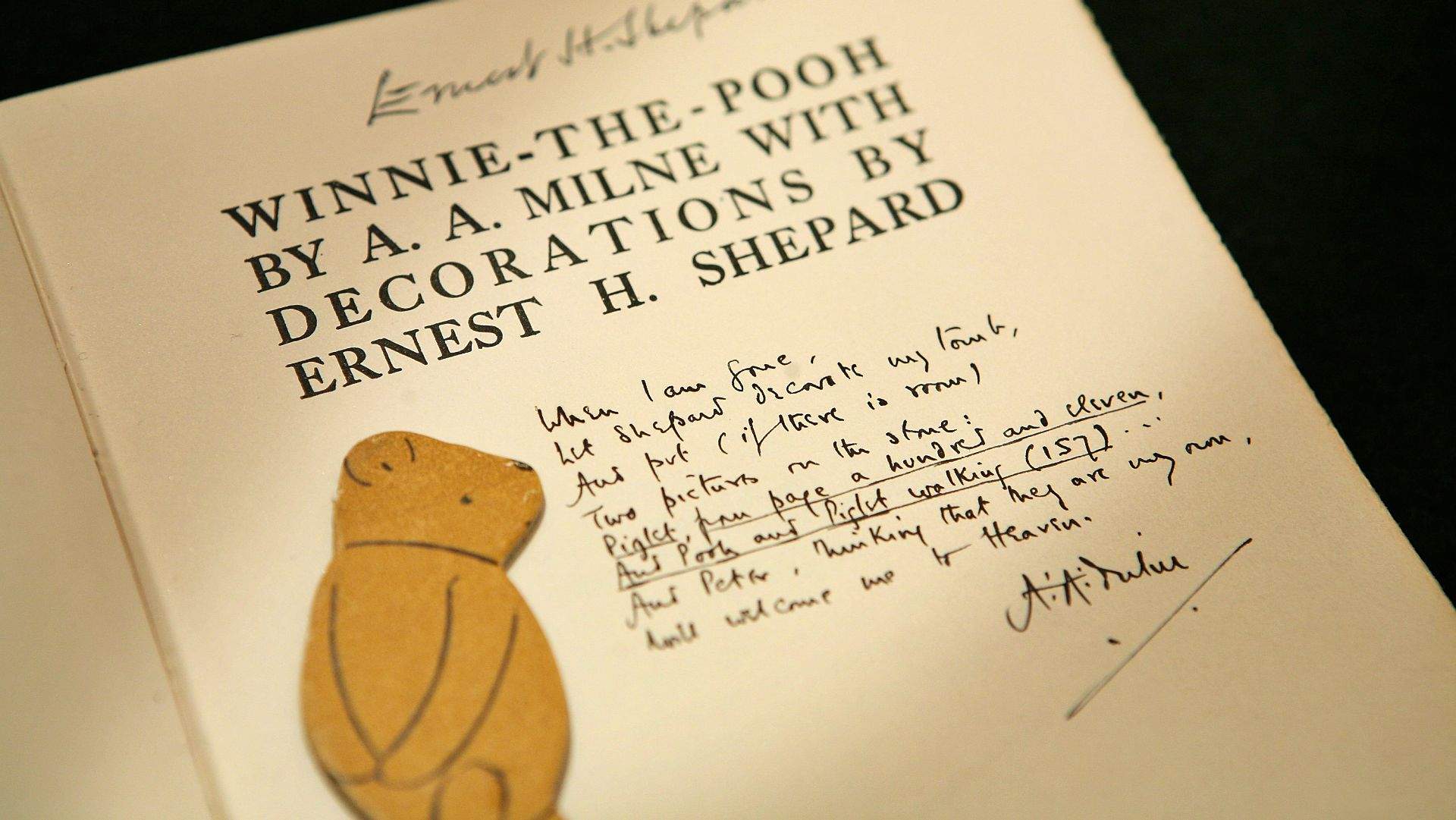
The 20‑inch plush that first roamed Christopher Robin’s nursery is now the center of a diplomatic tug‑of‑war, as the United Kingdom calls for its return after a century of quiet display in a New York library. The stuffed bear that inspired A.A. Milne’s classic stories has sat behind glass at the Donnell Library Centre in Manhattan since the 1980s, and with the milestone anniversary of the book’s publication—Oct. 14, 1926—fans and officials alike are demanding that the toy be shipped back across the Atlantic. More than a nostalgic relic, the bear embodies the very genesis of a cultural phenomenon that now includes animated films, television series, LEGO sets, commemorative stamps and a newly released sequel, “A Little Boy and His Bear.” Its status as a national treasure has sparked a renewed debate over the ownership of a child‑literature icon.
Background & Context
The original Winnie‑the‑Pooh was purchased in 1921 from the upscale department store Harrods for Christopher Robin Milne’s first birthday, a gift that would ignite his father’s imagination. A.A. Milne, moved by his son’s affinity for the stuffed companion, drew the bear’s cheerful, honey‑loving persona into the first book, “Winnie‑the‑Pooh,” which debuted on October 14, 1926. The 20‑inch toy quickly became the prototype for the literary character, inspiring the Hundred Acre Wood’s adventures that would later be re‑imagined in Disney’s 1966 film and subsequent media.
In 1947, with Christopher’s blessing, A.A. Milne donated the bear and a small cadre of other plush toys to his U.S. publisher for a publicity tour, cementing the bear’s transatlantic appeal. The New York Public Library’s Donnell Center acquired the collection in the 1980s, and it has been displayed within a glass case as part of the library’s “Treasures” collection ever since. The institution regards the bear as a “cornerstone of our world‑class collection of children’s literature,” a sentiment echoed in a statement from Brent Reidy, director of research libraries, who highlighted the exhibition’s role in showcasing the evolution of Milne’s timeless creations.
Britain’s longing for the bear dates back decades. In April, Queen Camilla presented the library with a replica of Roo, the baby kangaroo from the stories, yet her earlier suggestion that Pooh spend a celebratory stay at Buckingham Palace or Windsor Castle has been dismissed. The library has rebuffed several high‑profile requests, including appeals from former prime ministers Tony Blair and David Cameron, and most recently from the author Gyles Brandreth, a friend of Christopher who emphasized that the “ball is now really in the court of…the library.” These repeated refusals have only intensified the public’s interest in the bear’s whereabouts.
What People Are Saying
Public reaction has been polarized. In Britain, the announcement of the bear’s centennial sparked a wave of social‑media campaigns, with fans demanding that the toy be repatriated. Some supporters argue that the bear belongs to the nation that birthed the character, a sentiment amplified by the recent celebration of the Hundred Acre Wood’s anniversary through commemorative stamps and LEGO sets. Others view the bear as an American cultural asset, noting its long history within a New York public institution that has preserved it for scholars and visitors alike.
On the streets of London, petitions circulated, while in New York, visitors to the library marveled at the bear’s gentle charm, describing it as a “living piece of history.” Media coverage from both sides highlighted the symbolic tug‑of‑war: on one hand, the bear’s physical presence in a U.S. museum and on the other, its deep-rooted connection to a British literary heritage. A voice from the library stressed the importance of maintaining the bear’s display as part of a broader narrative of children’s literature, emphasizing that “the New York Public Library’s holdings of rare Winnie‑the‑Pooh materials stand as an important cornerstone of our world‑class collection of children’s literature.” This statement, while protective, also underscored the international significance of the bear as more than a single nation’s treasure.
Meanwhile, industry insiders have weighed in on the broader implications. The recent release of “A Little Boy and His Bear” and the surge of merchandise tie into the bear’s legacy, reinforcing its status as a multi‑platform brand. Fans and scholars alike have called for a collaborative solution that could see the bear on temporary loan to the UK or a joint exhibit, suggesting that a shared custodianship could honor both the bear’s literary lineage and its institutional home.
What Happens Next
The library’s current position remains firm. In August, the director highlighted the bear’s role in illustrating the development and timeless appeal of Milne’s creations, implying a protective stance over the artifact. Despite the British government’s calls, no formal agreement has been reached, and the bear continues to be housed behind glass in the Donnell Center’s “Treasures” gallery.
A potential path forward could involve a loan arrangement that satisfies both parties. The library has precedent in loaning other rare items, and a temporary relocation to Britain for the centennial celebration might satisfy the national sentiment while preserving the bear’s custodial integrity. Alternatively, a digital exhibition or joint commemorative event could bridge the gap, allowing fans on both sides to experience the bear’s legacy without physically moving the artifact.
Until such a decision is made, the bear will remain a silent sentinel in New York, its honey‑sweet smile a quiet reminder of a world that once believed that a stuffed bear could inspire a generation. The debate, however, underscores a larger conversation about cultural heritage, ownership, and the ways in which beloved childhood icons transcend borders.
The 100th anniversary of “Winnie‑the‑Pooh” has not only rekindled affection for a timeless character but also highlighted the enduring tug‑of‑war between national pride and institutional stewardship. Whether the original bear will ever cross the Atlantic again remains to be seen, but its presence in the library continues to inspire, provoke, and remind us of the simple, universal power of a story and the bear that first brought it to life.
The Bottom Line
While the UK’s demand for the Winnie‑the‑Pooh bear taps into deep‑rooted national sentiment, the New York Public Library’s insistence on keeping the artifact behind glass reflects a broader institutional commitment to preserving historical context and accessibility for scholars worldwide. MyWorldPulse believes that a pragmatic solution—such as a rotating loan program or a joint virtual‑physical exhibit—could honor both sides’ interests. Repatriation, if pursued, should be accompanied by clear agreements on conservation, insurance, and public engagement to avoid setting a precedent that jeopardizes the stewardship of other culturally significant items housed abroad. Ultimately, the bear’s fate will signal how modern societies reconcile heritage with global interconnectedness. — MyWorldPulse.com
Reference:
- UK Foreign Office tweet on Pooh bear repatriation
Read more celebrity news at MyWorldPulse.