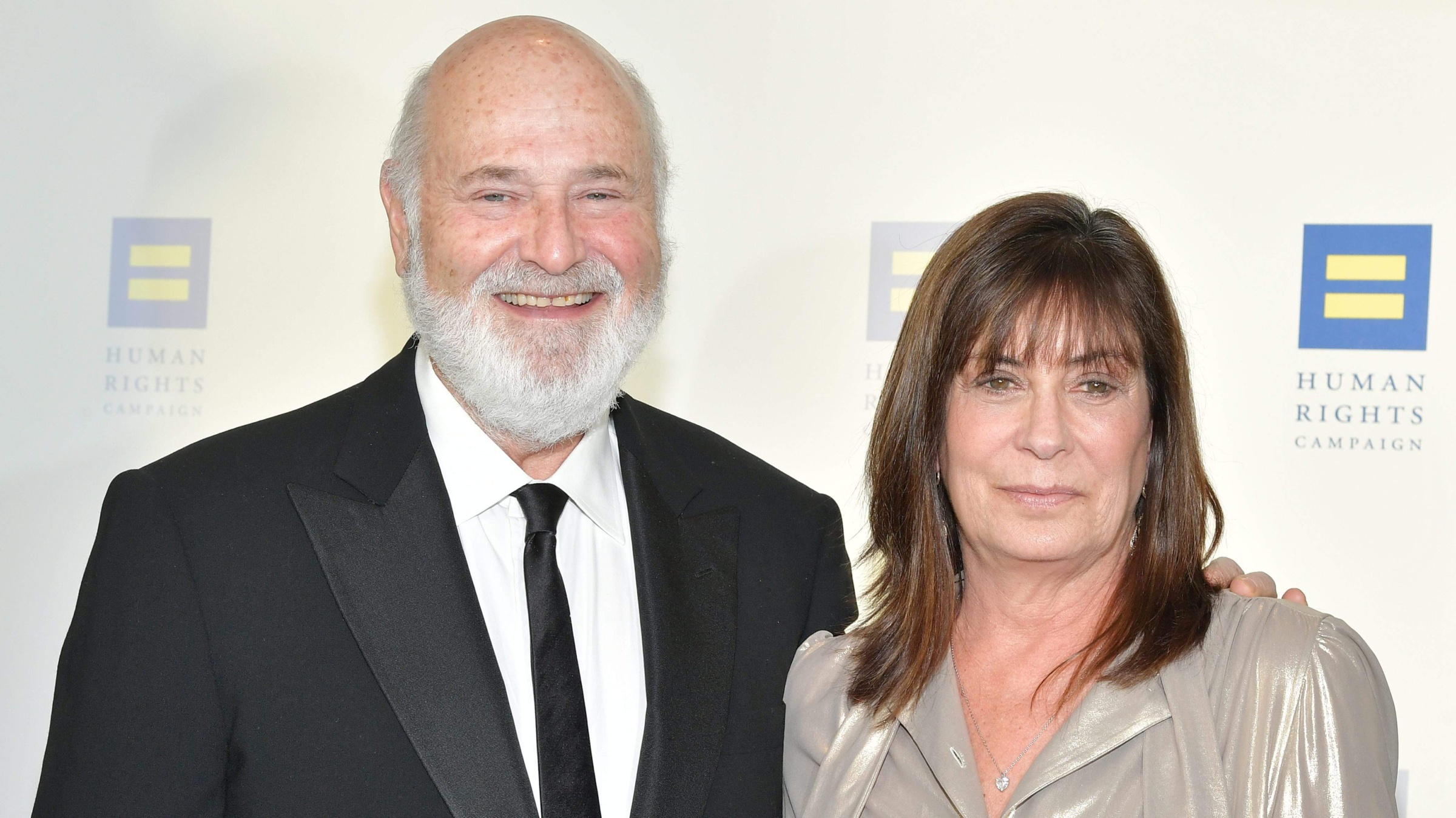
The sound of her phone’s vibration cut through the quiet morning as Martine Singer stared at the screen, the weight of the day ahead settling like a stone in her chest. It was January, a time she had marked as the start of a new chapter, yet the ache of loss clung to her like a second skin. Just months earlier, her sister‑in‑law, the celebrated actor Rob Reiner, had been found dead at his Brentwood home, and the next evening, their middle son Nick had been taken into custody. Martine’s return to the office felt more like a forced exhale than a welcome breath.
In a separate corner of the city, a different kind of sorrow had stirred. Gypsy‑Rose Blanchard, a name that had once resonated on late‑night talk shows and in the gossip columns, was rallying a new cause in the wake of her partner Ken Urker’s sudden death. As she penned an impassioned post, her words became a clarion call for accountability on social media platforms, urging fans and activists alike to sign Kenan’s Law—a petition demanding tighter controls over online harassment. Both stories, though rooted in distinct worlds, spoke to a shared thread of grief, justice, and the relentless human desire for closure.
Background & Context
The Reiner family’s tragedy unfolded on December 14, 2025, when the Hollywood icon and his wife, Michele, were found slain in their own home. Authorities revealed that the pair’s 14‑year‑old son, Nick, had been apprehended across town that evening after a heated exchange the night before at a holiday party hosted by Conan O’Brien. Nick, whose history of mental health struggles had been a private concern for the family, was charged with two counts of first‑degree murder and has pleaded not guilty, awaiting trial. The case has captivated the public, as many mourn the loss of a beloved filmmaker while grappling with the complex question of a son’s culpability.
Martine Singer, Michele Reiner’s sister, has navigated her grief with a quiet resilience that she described as “functioning.” She returned to work in January, a decision born out of necessity and a need to maintain some semblance of normalcy. Yet in interviews, she revealed that the memory of her sister remains “always in my mind and in my heart,” underscoring the depth of the loss. She admitted that speaking of Rob and Michele in the past tense is a “challenge,” and that their personalities—lively, boisterous, and sometimes brash—are difficult to encapsulate after their abrupt departure.
Meanwhile, Gypsy‑Rose Blanchard’s activism has taken a new direction following Ken Urker’s death. Prior to his passing, the couple had repeatedly reported harassment incidents to social media platforms, only to find that those platforms had failed to enforce their own community guidelines. Blanchard’s decision to launch a petition is a direct response to these systemic failures. Kenan’s Law, named after the 2017 “Kenan” case that exposed the loopholes in online harassment policy, aims to hold platforms accountable for how they handle hate speech and targeted abuse. Blanchard’s call for support is not just a memorial for Urker; it is a push for lasting change in the digital landscape that has increasingly become a battlefield for personal safety.
Both narratives highlight the stark contrasts between the physical, tangible world of crime and loss, and the intangible, pervasive realm of online interaction. While one involves a courtroom, the other a petition filed on a website, both cases demand accountability, justice, and the human need to heal.
What People Are Saying
Martine Singer’s interview reflected a delicate balance between remembrance and future possibilities. When asked whether she would welcome a conversation from Nick, she replied, “I’m not sure I can answer that.” Her words carried a quiet weight; she was acknowledging the complexity of reconciling love for a sister with the need to confront a son implicated in her murder. Though she has not spoken publicly about her brother or his actions, she openly expressed that the Reiners “were a force field,” proof of the emotional vacuum that now fills their absence.
Her son, Nick, remains behind bars, and the legal proceedings have kept the family’s private grief in the public eye. While Martine has not offered a direct statement about Nick’s future relationship with the family, her hesitation speaks to a larger cultural dialogue on forgiveness, justice, and the possibility of family reunification after crime. The Reiner case has also opened a wider conversation about mental health care for youth, especially those who live in high‑profile families.
In contrast, Gypsy‑Rose Blanchard’s call to action resonates with a broader, almost collective voice. Her post on the petition platform was not simply an emotional outpouring but a strategic blueprint: “Fame does not erase humanity,” she wrote, reminding fans that even those under public scrutiny are entitled to safety online. The petition she launched has already garnered thousands of signatures, indicating a surge in public awareness regarding how social media platforms often fall short in policing harassment. Blanchard’s focus on Kenan’s Law—a statute that seeks to enforce stricter platform responsibilities—has attracted the attention of tech commentators, law scholars, and digital rights advocates, amplifying the conversation beyond the traditional entertainment sphere.
Both figures have chosen to voice their personal tragedies in ways that transcend individual grief. Martine Singer, by speaking candidly about her pain and her uncertainty regarding future family dynamics, and Gypsy‑Rose Blanchard, by turning her loss into a platform for systemic change, illustrate the evolving role of public figures in shaping societal narratives about crime, justice, and digital safety.
What Happens Next
For the Reiner family, the legal clock is ticking. Nick Reiner’s trial is scheduled for later this year, and the outcome will determine whether he can ever step out of the shadows of his alleged crimes. The case is likely to set precedents for how courts handle first‑degree murder cases involving minors with documented mental health issues. Martine Singer, as a close relative, may find herself navigating a legal landscape that forces her to confront questions of family loyalty versus justice. Meanwhile, the broader public will watch how the family moves forward, especially regarding the relationship between Nick and the remaining siblings, Jake and Romy, who have both publicly processed their grief in varying degrees.
Gypsy‑Rose Blanchard’s petition, meanwhile, is just beginning its lifecycle. Kenan’s Law is still a proposal; it requires legislative action and potential court rulings to gain enforceability. The petition’s growing signature base may prompt social media companies to reassess their moderation policies, but concrete change will depend on political will and public pressure. As more users sign, platforms may feel compelled to adjust algorithms, increase transparency, and perhaps adopt stricter penalties for harassment. The success of the petition will also test the power of grassroots movements in influencing corporate behavior, a dynamic that has become increasingly significant in the digital age.
Both stories underscore the importance of public engagement. Whether through courtroom testimony or online signatures, the families involved are channeling personal loss into collective action. The Reiner family is facing a future that may or may not allow for reconnection with a son whose actions shattered their lives. In parallel, Gypsy‑Rose Blanchard is advocating for a safer digital environment, pushing society to acknowledge that fame is a layer that should not obscure humanity’s right to dignity.
In the months ahead, the Reiner family will be watching the legal proceedings closely, hoping for a resolution that offers some measure of peace. Meanwhile, the community that has rallied around Gypsy‑Rose’s petition will likely monitor the legislative progress of Kenan’s Law, eager to see if the digital platforms will heed the call for accountability. Both journeys, steeped in loss and tempered with resolve, remind us that grief can be a catalyst for change—whether in the quiet halls of a courtroom or the infinite scroll of social media feeds.
The Bottom Line
In a world where fame can feel like a double‑edged sword, the stories of Martine Singer and Gypsy‑Rose Blanchard remind us that public visibility does not absolve personal suffering or societal responsibility. Singer’s quiet resilience in the face of an unimaginable loss, coupled with the legal ambiguity surrounding her brother’s case, forces the industry to confront the often overlooked mental health crisis that can lurk behind Hollywood’s glitter. At the same time, Blanchard’s bold move to push for Kenan’s Law shows that celebrities can—and should—use their platforms to demand safer digital spaces for everyone. The confluence of these narratives speaks to a broader imperative: accountability must extend beyond the silver screen into the realms of law, policy, and everyday online interactions. As fans, we have a duty to support reforms that protect the vulnerable and hold institutions—whether courts or tech companies—answerable. MyWorldPulse believes that the intersection of grief and advocacy is where real progress begins, and it is our responsibility to keep the conversation alive.
-MyWorldPulse Editorial Board
Reference:
- Martine Singer’s Instagram post
- Gypsy‑Rose Blanchard’s tweet announcing Kenan’s Law petition
Read more celebrity news at MyWorldPulse.