Fire Performer Falls Off Stage at Chris Brown, Usher Show, 2 Fans Hurt
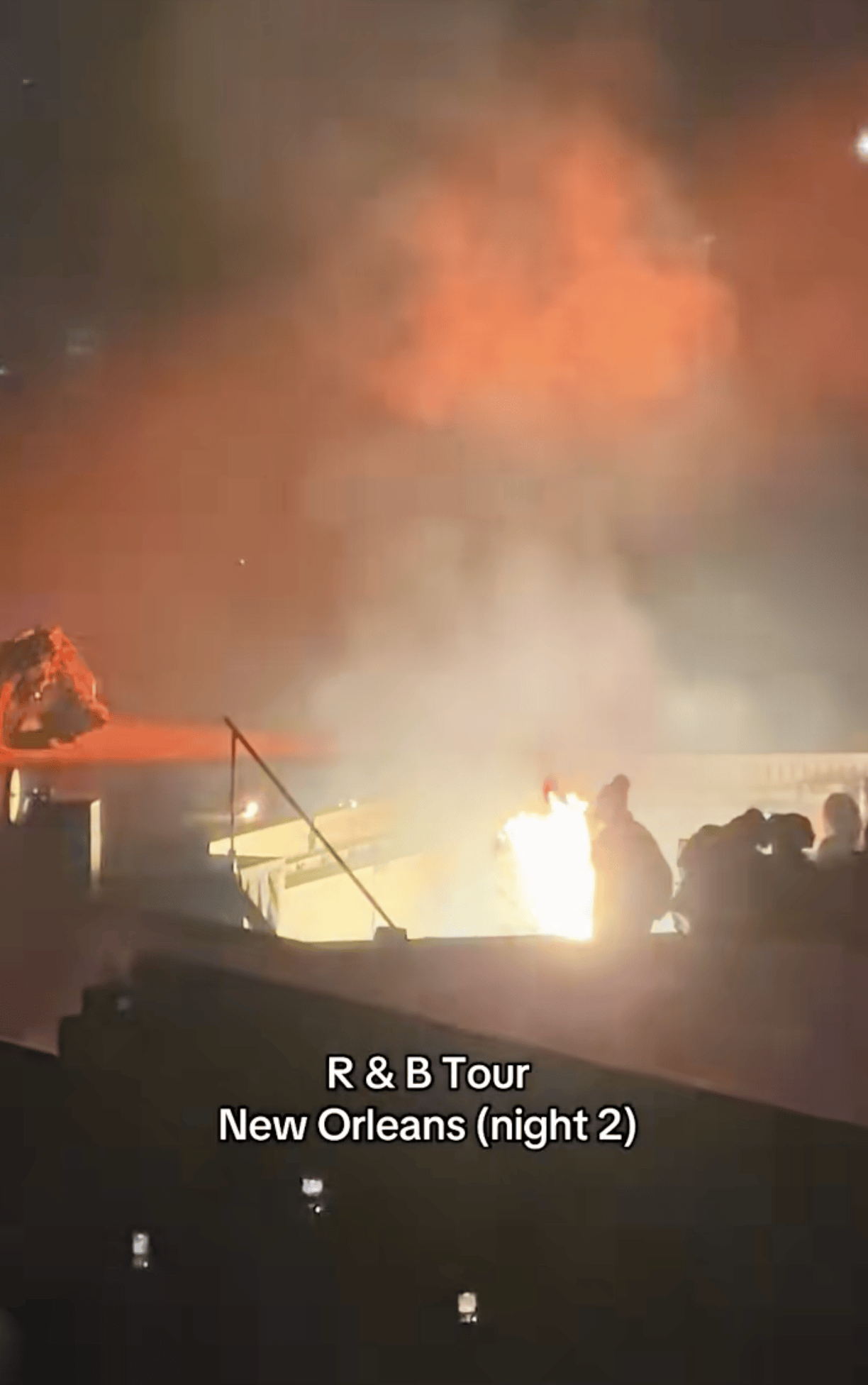
The night of the R&B tour that should have been a celebration of music turned into a chaotic scene when a fire performer, engulfed in flames, slipped from the stage and plummeted onto the audience floor. At the heart of the mishap were two concertgoers who suffered injuries that sent the venue into lockdown. The incident, witnessed by hundreds in the packed arena, unfolded in a matter of seconds as the pyrotechnic act reached its climax.
The performance was part of a high‑profile collaboration between Chris Brown and Usher, two of the most recognized names in contemporary R&B. Fans had traveled from all corners of the country to catch a rare joint set, expecting an electric night of smooth grooves and electrifying choreography. The arena, a massive venue capable of holding more than 20,000 patrons, had been a stage for countless headline acts in the past year, but the sheer scale of this particular event made it a logistical challenge for stage managers and safety crews.
When the fire performer, dressed in a reflective, flame‑resistant costume, began a daring act that involved dancing on a small platform set above the audience, the crowd held its collective breath. The flames—carefully choreographed to create a visual spectacle—intensified, and in an instant, the performer lost balance. The stage lights flickered for a split second before the fire performer crashed onto the floor, narrowly avoiding a cascade of flames. In the immediate aftermath, medical personnel rushed to the injured fans while security moved to secure the perimeter and assess the extent of the danger.
Background & Context
The Chris Brown‑Usher tour, announced earlier this year, was billed as a once‑in‑a‑lifetime reunion of two legends in the R&B world. The collaboration had drawn attention from fans and critics alike, especially after both artists released separate albums that had broken streaming records in their debut weeks. The tour’s production was helmed by a team known for incorporating high‑tech lighting and special effects to enhance the live experience. Stage designs for past shows have included floating platforms, laser arrays, and pyrotechnic displays, all orchestrated to match the energy of the performers.
Safety protocols for large concerts in the United States require strict adherence to fire codes, emergency evacuation plans, and thorough inspections of stage equipment. The National Fire Protection Association sets guidelines for flame‑propulsion devices on stage, mandating that performers wear fire‑resistant attire and that pyrotechnic sequences be tested multiple times before the show. Despite these safeguards, the unique choreography of a fire performer dancing on a raised platform introduces variables that can complicate the risk assessment. The platform’s height, the performer’s weight, the speed of the flame, and the proximity to the crowd all intersect to create a complex safety landscape that event coordinators must navigate.
For the R&B tour’s production crew, this was a new challenge. While both Chris Brown and Usher had performed on similarly elaborate stages before, the integration of a fire performance element marked a departure from their standard set pieces. The crew’s rehearsal schedule was tight, with rehearsals conducted a day before the show, leaving limited time to test the full pyrotechnic sequence under real‑time conditions. The incident serves as a stark reminder that even seasoned productions can encounter unforeseen pitfalls when incorporating elements that push the boundaries of conventional stagecraft.
What People Are Saying
In the immediate wake of the incident, the arena’s social media feeds were flooded with reactions ranging from disbelief to concern. Fans posted short clips of the moment the performer slipped, overlaying shaky footage with comments about the safety of the show. “This is insane, but they’re doing it right,” one tweet read, while another user expressed worry over the fire safety measures in place. Across the platform, concertgoers highlighted the professionalism of the emergency response, noting how quickly medical staff arrived and how the venue’s staff kept the audience calm.
Within the venue, security personnel guided the crowd through a discreet evacuation of the area closest to the incident. The venue’s management released a statement later in the evening, expressing regret over the injuries and confirming that the tour’s medical team had taken care of the wounded fans. “Our priority is always the safety of our patrons,” the statement read, echoing a sentiment that resonated with many attendees who appreciated the swift handling of the situation.
Industry observers pointed out that the incident would prompt a review of safety standards for future performances, especially those involving pyrotechnics. Some experts suggested that additional rehearsals with safety officers present might reduce the risk of similar events. Fans and industry professionals alike noted that the performers had not yet spoken publicly about the accident, leaving the audience waiting for further updates from the artists or their management teams.
What Happens Next
As the day progressed, the arena’s medical staff continued to treat the two injured fans, one of whom suffered a minor burn and a broken arm, while the other sustained second‑degree burns to the lower limbs. Both were transported to a nearby hospital for further observation. The venue’s security team, in collaboration with local fire marshals, conducted a comprehensive inspection of the stage setup to ensure that no additional hazards remained.
For the tour itself, the decision on whether to proceed with the remaining dates remains under consideration. In such circumstances, event organizers often weigh the safety of performers and audiences against contractual obligations. The tour’s management team has reportedly convened a crisis committee to assess the incident’s impact on future shows. If the decision is made to continue, it is expected that the production will implement stricter safety protocols, possibly reducing the scale of pyrotechnic elements or reconfiguring the stage layout to provide additional buffer zones between performers and the crowd.
Meanwhile, the two injured fans, while receiving medical care, are expected to recover fully, though their experience may change the way they approach concert attendance in the future. Their testimonies could influence broader discussions on concert safety standards, particularly in venues where high‑energy performances and elaborate visual effects are staples. The industry is likely to observe closely how this incident is addressed, as it could set a precedent for the integration of risky stage elements in live entertainment.
In the weeks to come, the spotlight will remain on the R&B tour’s next steps, as fans and stakeholders alike anticipate transparency regarding safety measures and the artists’ responses. The incident has underscored that even well‑planned productions can encounter moments of peril, reminding everyone that behind the music and spectacle lies an intricate web of safety protocols that, when disrupted, can have real‑world consequences.
The Bottom Line
The Chris Brown‑Usher tour’s dramatic fallout should serve as a wake‑up call for the entire live‑music ecosystem. Spectacle is seductive, but safety cannot be an afterthought. The fact that two fans sustained burns and fractures in an arena that routinely holds over 20,000 people reveals a systemic oversight: complex pyrotechnics combined with elevated stages were executed without sufficient rehearsal or redundant safety checks. Event organizers must adopt a zero‑tolerance approach to such risks, demanding multiple safety‑test cycles, independent fire‑safety audits, and real‑time monitoring during performances. Artists themselves should use their platforms to speak openly about the measures in place—or the lack thereof—so that fans understand the steps taken to protect them. In the long run, transparent safety protocols will not only protect lives but also preserve the credibility of touring acts and their management teams. Without a firm commitment to prioritizing safety, the industry risks repeating tragedies that erode public trust and jeopardize the very business model that thrives on fan enthusiasm.
Reference:
- Official post on the artists' verified social media account
Read more celebrity news at MyWorldPulse.