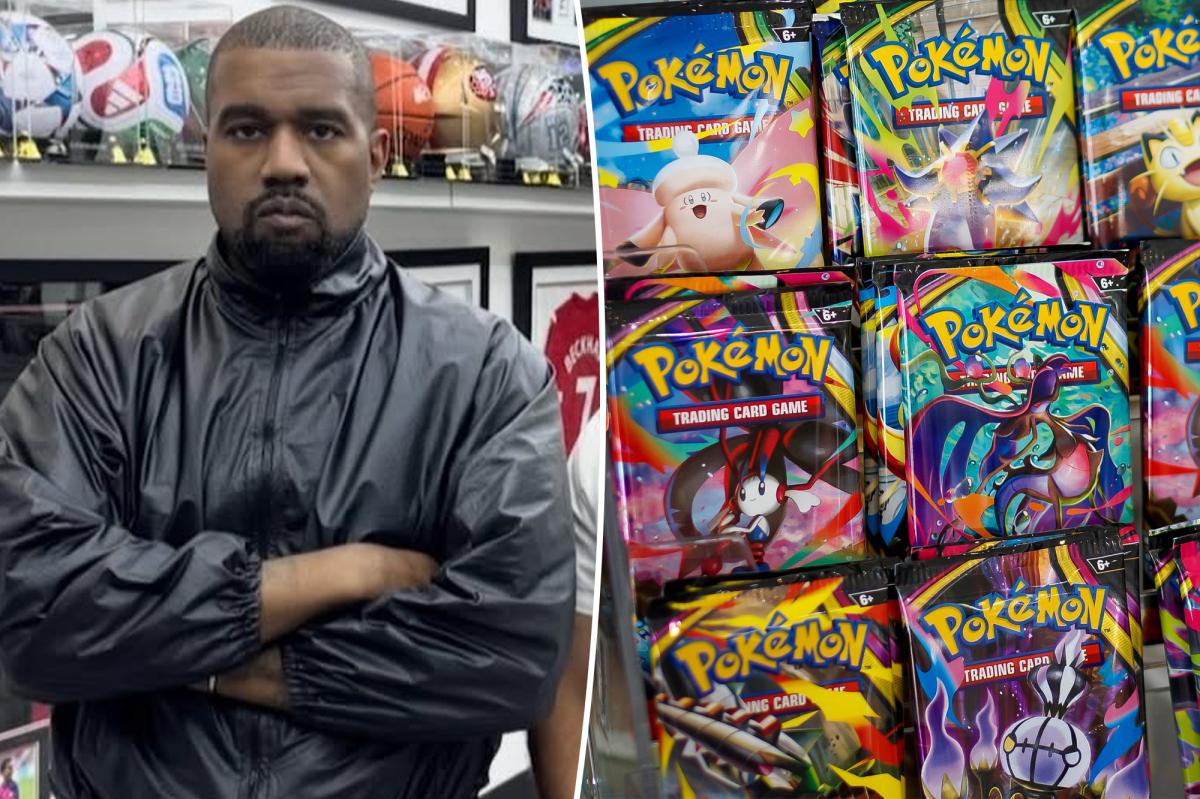
“I couldn’t believe how many cards were in the cart,” said the youngest of the West family’s children, eyes wide as the rapper walked past the front counter, a handful of shiny Pokemon in hand. The scene unfolded in a modest Burbank storefront that had long been a local hub for collectors, and it drew a small crowd of curious shoppers who had never seen the famed artist in such an ordinary setting.
The transaction, which reportedly totaled $20,000, was not a quiet purchase. West’s public persona as a music mogul and fashion icon collided with a more familiar image of a father eager to indulge his children’s interests. The cards—many of them rare, foil‑printed versions—lined up on the shelves as West and his kids perused the aisles, laughing and exchanging picks with a staff member who stopped the clock for a brief, family‑centric interlude.
For the community, the event felt almost cinematic. The Burbank shop, usually quiet except for a handful of enthusiasts, became a temporary playground for a celebrity family, and the sight of West closing the door to ensure privacy sparked chatter that rippled through local neighborhoods and online forums alike.
Background & Context
Kanye West’s fascination with pop culture artifacts is not new. In interviews over the years he has spoken about his love for collectibles, from vinyl records to sneakers. Pokémon cards, introduced in the United States in the late 1990s, have maintained a steady presence in the realm of nostalgia‑powered collectibles. The West family’s interest in the series—especially the premium, holographic sets—aligns with the artist’s long‑standing penchant for rare, high‑value items. The $20,000 figure translates to roughly 2,000 individual cards, many of which were limited‑edition releases that typically fetch between $10 and $30 on secondary markets.
The chosen location—an independent store in Burbank—has built its reputation on catering to collectors of all ages. Its small storefront, with a single shelf row of plastic cases and a staff that knows the value of a Charizard, was a fitting backdrop for a spontaneous, high‑stakes shopping spree. The shop’s owner, who has worked the counter for over a decade, reported that the transaction was the largest single purchase in the store’s history. In closing the doors, West allowed a brief moment of seclusion for his children, an action that highlighted a softer, more private side of the artist rarely seen by the public eye.
The economic ripple of a $20,000 purchase extends beyond the storefront. Card markets, which are often driven by scarcity and hype, can experience subtle shifts when high‑profile buyers acquire large quantities of coveted items. Although the cards were purchased in the open market, the act of a celebrity “dumping” them into his personal collection could, in theory, influence resale dynamics as fans and collectors speculate about future availability.
What People Are Saying
Shoppers who witnessed the event expressed a mixture of astonishment and amusement. “It was like seeing a superhero in a candy store,” one patron remarked, while another laughed, noting how the store’s usual quiet had been replaced by a buzz of conversation and the clink of plastic cards. The staff, accustomed to dealing with collectors, described the scene as “the most heartwarming chaos” they had encountered, highlighting how West’s presence seemed to transform the shop into a family-friendly arena.
Online chatter mirrored the in‑store enthusiasm. Comments ranged from admiration for West’s willingness to indulge his children to playful speculation about whether the cards might eventually make it to a museum exhibit or a charity auction. Some users expressed concern that the purchase could inflate card prices, arguing that the sudden removal of such a large quantity from circulation might create scarcity for other collectors. Others celebrated the act as proof of the artist’s generosity, suggesting that West’s children might one day trade their prized cards for philanthropic projects.
Within the collector community, the event sparked a broader conversation about celebrity influence on niche markets. A seasoned card dealer, who wished to remain anonymous, noted that “when a high‑profile name swoops in, it can momentarily shake the market’s sense of equilibrium.” Meanwhile, a few voices in the fandom expressed curiosity about the cards themselves—whether they were standard sets, special edition drops, or personal favorites of West’s own childhood.
What Happens Next
The Burbank shop is slated to reopen the following day, with staff planning a small “celebrity visit” display to honor the unexpected event. While the exact details remain confidential, it is anticipated that a portion of the cards could find new homes either through direct sales or charity raffles. Local news outlets have reported that the shop’s owner intends to host a community card‑swapping event, hoping to capitalize on the buzz and further cement the store’s standing in the region.
For West, the purchase may simply be one chapter in a series of personal endeavors aimed at cultivating his children’s interests. Interviews in the months after the spree have hinted at plans to introduce them to broader hobbies—music production, fashion design, and, perhaps, card trading—while reinforcing lessons about value, ownership, and generosity. Though the public rarely sees these moments, the Burbank visit provides a rare glimpse into the family’s dynamic, painting West as more than a larger‑than‑life persona.
On a larger scale, the incident could reverberate through the Pokémon card market. While a single large purchase may not dramatically shift global pricing, it serves as a reminder of the interconnectedness between celebrity influence and collector sentiment. If West’s children were to trade or auction any of the cards in the future, the cards could become prized items, potentially adding an additional layer of allure for collectors seeking a connection—direct or indirect—to the artist’s legacy.
The Burbank storefront’s brief closure, the generous purchase, and the laughter of a family under the fluorescent lights illustrate how public figures can intersect with everyday hobbies in unexpected ways. As the card sleeves close and the store’s doors swing open, both West and his children have left an imprint on a local community, one that may be felt in the quiet hum of collectors’ conversations for years to come.
The Bottom Line
The West family’s $20k Pokémon card haul is more than a family‑friendly shopping spree; it’s a micro‑case study of how celebrity influence can ripple through even the most niche markets. While the local shop’s owner proudly touts the transaction as the biggest in its history, collectors and enthusiasts should watch for subtle shifts in pricing and availability. This isn’t a headline‑making event that will overhaul the market overnight, but it does signal that high‑profile buyers can momentarily tilt the balance of supply and demand. For fans who follow West’s artistic journey, seeing him nurture his children’s interests in a tangible hobby provides a rare glimpse into the human side of an icon, while simultaneously reminding us that the collectibles economy is still very much a live, responsive ecosystem. The community’s response—planning charity raffles and swap meets—illustrates how local retailers can leverage celebrity visits to boost engagement. Ultimately, the Burbank visit proves that even a $20,000 purchase can spark conversations about ownership, value, and the intersection of fandom and commerce. —MyWorldPulse Editorial
Reference:
- Official post on Kanye West's verified Instagram account
Read more celebrity news at MyWorldPulse.