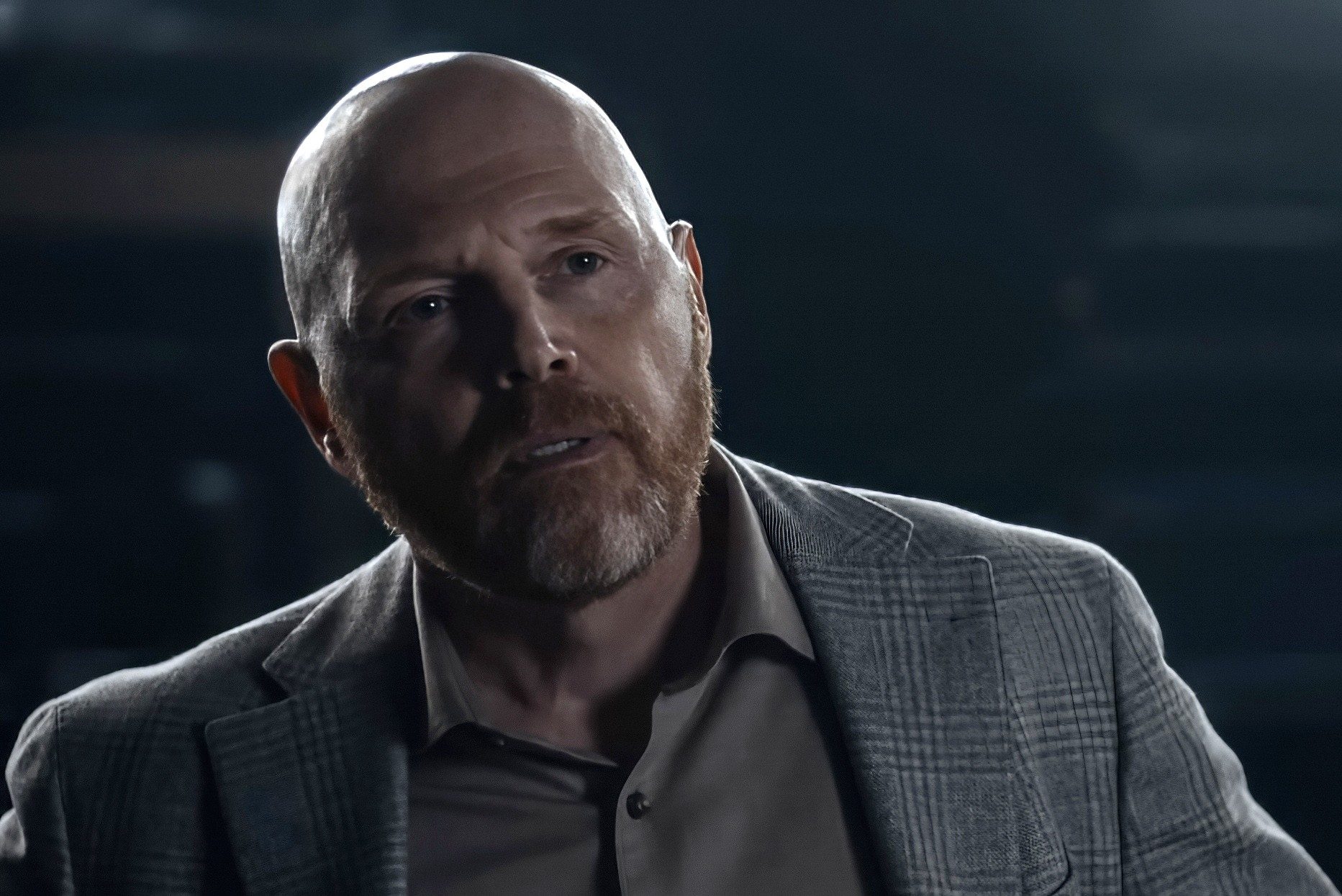
When seasoned comic Bill Burr launched into a scathing tirade that lasted almost three hours in Aaron Sorkin’s latest film, the audience was left in stunned silence and a tech‑industry that had never before seen its own CEO called out by a stand‑up legend. In a single scene, Burr’s character, Charlie Garrigan, dismantles Zuckerberg’s narrative with the kind of relentless energy that has defined Burr’s thirty‑year career, turning a scripted confrontation into a cultural flashpoint. The moment sent ripples through Hollywood, sparking fresh debate about the power of celebrity speech in an era where social media amplifies every word.
The timing could not have been more resonant. As big‑tech firms face growing scrutiny over privacy, algorithmic bias, and political influence, the film’s portrayal feels like a cinematic mirror reflecting the very real tensions between corporate titans and the public. Hollywood’s history of blending satire with hard‑hit commentary—think the earlier “The Social Network”—has always walked a fine line between entertainment and critique. Burr’s performance, however, crosses into territory that many fans see as a direct challenge to the status quo, prompting questions about whether actors should step into the political arena or remain entertainers.
Parallel to the film’s impact, another Hollywood figure—actor Glen Powell—has taken a public stance on politics, opting to stay out of the partisan fray. In an interview that ran alongside the movie’s release, Powell revealed that he believes heated political conversations divide people and do not foster healthy discourse. While he praised celebrities who do use their platforms for activism, Powell emphasized that his craft is about bringing people together through shared stories. His decision underscores a growing trend among entertainers to navigate the murky waters between personal conviction and public responsibility. Together, these two narratives highlight a shifting landscape in which stars wield words as powerful tools—either as sharp criticism or as deliberate neutrality—and the industry must grapple with the implications of each choice.
Background & Context
Aaron Sorkin’s “The Social Reckoning” picks up fifteen years after the first film that introduced Zuckerberg to a wider audience. The new story centers on a group of tech insiders who confront the consequences of the platform’s cultural dominance. Bill Burr’s casting as Charlie Garrigan—an abrasive, outspoken consultant—was a surprise move that set the stage for a high‑stakes showdown. Burr’s stand‑up background, known for unfiltered humor and political rants, made him an ideal foil for Zuckerberg’s calm, calculated persona. The scene in question, where Burr lays down a barrage of accusations about data misuse and echo chambers, is both the climax of the film and a moment that many viewers will replay long after the credits roll.
The conversation about tech accountability has intensified in recent months, with lawmakers and watchdog groups scrutinizing how platforms shape public opinion. “The Social Reckoning” arrives at a juncture where audiences are increasingly questioning whether the tech industry can be trusted to safeguard their digital lives. The film’s willingness to depict a real‑world CEO in a vulnerable light—unafraid to let a comedian expose his flaws—signals a new boldness in storytelling. Hollywood has long used historical dramas to comment on politics, but Sorkin’s decision to portray a contemporary figure in a dramatic, almost courtroom‑style setting suggests a readiness to tackle modern controversies head‑on.
Glen Powell’s own public statements echo the broader conversation. In a feature profile that ran concurrently with the film’s release, Powell revealed that he has chosen to distance himself from partisan politics, citing the divisive nature of heated debates. He noted that he “does not enjoy the discourse” that can arise when opposing viewpoints collide. Powell added that he appreciates other entertainers who choose to advocate for causes, but he believes his role as an actor is to unite audiences through shared narratives. The profile also highlighted his personal life—his relationship with actress Michelle Randolph—and how shared values and family priorities play into his decision to stay out of political arenas. By framing his stance in terms of personal integrity and professional focus, Powell taps into a larger conversation about the responsibility that comes with celebrity visibility.
What People Are Saying
The reaction to Burr’s monologue was immediate and intense. Online forums lit up with fans dissecting each line, while tech blogs debated whether the scene crossed the line from fictional satire into political activism. Some applauded Sorkin’s boldness, arguing that Hollywood has a duty to hold powerful figures accountable, and that Burr’s delivery served as a “necessary check” on Zuckerberg’s influence. Others warned that the film could be perceived as a marketing ploy, suggesting that Sorkin might have been leveraging Burr’s notoriety to boost box office receipts amid a crowded film slate.
Meanwhile, Powell’s comments sparked a mixed chorus of support and critique. Viewers who appreciate his refusal to engage in partisan battles praised him for choosing unity over division, calling his stance “a refreshing reminder that not every platform needs to be used for politics.” Critics, however, pointed out that avoiding political discussion may leave influential voices silent in moments that demand advocacy. The online conversation also drew comparisons between Powell and other actors who have taken clear stances, highlighting the varying strategies celebrities use to navigate their public personas.
Industry insiders noted that these two cases may signal a shift in how Hollywood engages with controversial topics. Film festivals that once shied away from overt political content are now embracing projects that tackle complex social issues head‑on, seeing them as both artistically rewarding and commercially viable. Similarly, the entertainment business is increasingly acknowledging that celebrity influence—whether wielded to critique power or to stay neutral—has real consequences for audience perception and box‑office performance. As a result, studios are reevaluating how they pair talent with subject matter, recognizing that the right voice can make or break a narrative’s resonance with contemporary viewers.
What Happens Next
The immediate next step for “The Social Reckoning” will be its distribution strategy. With a high‑profile cast and a contentious subject, distributors will likely emphasize the film’s provocative nature in marketing campaigns, targeting audiences who favor social commentary. Additionally, the film’s release may coincide with political events, such as election cycles or regulatory hearings, to maximize relevance and spark dialogue.
For the actors themselves, the path forward involves navigating the aftermath of their public positions. Burr may use the visibility from the film to reinforce his brand as a fearless commentator, potentially opening doors to future projects that push political boundaries. He has already hinted at plans to explore more socially relevant material, possibly through independent ventures or speaking engagements. Powell, meanwhile, might focus on producing or directing content that underscores communal storytelling, using his platform to foster solidarity rather than division. His choice to keep his personal life private, however, suggests a preference for maintaining a clear boundary between his on‑screen work and public commentary.
Beyond individual careers, the industry may see a broader recalibration of how it approaches political content. Studios could commission more projects that examine tech ethics, data privacy, and the societal impact of social media, recognizing the appetite for stories that merge entertainment with critical examination. Meanwhile, talent agencies may counsel clients on strategic alignment between personal values and professional choices, weighing the benefits of advocacy against potential backlash. Ultimately, the conversations sparked by Burr’s monologue and Powell’s reticence may influence future filmmaking, marketing, and public relations approaches, reinforcing the notion that celebrity voices—whether loud or quiet—shape cultural narratives.
The scene that sent Burr’s character to the center of a national conversation, coupled with Powell’s deliberate step away from politics, illustrates a turning point in Hollywood. As actors grapple with the weight of their words, the industry stands at a crossroads, deciding whether to champion the cause of accountability or to maintain an artistic distance from the heated corridors of power. Either path promises to reshape how stories are told and how audiences respond in an era where the lines between entertainment, advocacy, and corporate scrutiny continue to blur.
The Bottom Line
From MyWorldPulse.com’s view, the juxtaposition of Burr’s blistering critique and Powell’s measured neutrality offers a microcosm of Hollywood’s current dilemma: how loudly should the industry speak when the stakes involve data, privacy, and public trust? Burr’s performance demonstrates that a star can become a catalyst for discussion, but it also exposes the volatility that comes with taking a public jab at a tech titan. Powell’s stance underscores the risks of alienating segments of the audience, yet it also reflects a commitment to storytelling that unites rather than divides. For studios, the calculus is clear: pairing a voice that aligns with a film’s thematic intent can enhance authenticity, but it can also alienate sponsors and certain demographics. The fact that both approaches are resonating signals a maturation of audience expectations—people now demand accountability from both the industry and the public figures it celebrates. MyWorldPulse believes that the entertainment sector must navigate this terrain with intentionality, using star power not merely for spectacle but to foster informed dialogue while respecting diverse perspectives. In an era where tech and storytelling intersect, the choices Hollywood makes today will shape how society perceives both the medium and the messages it carries.
Reference:
- Bill Burr’s Twitter: rant clip
- Glen Powell’s Instagram: stance on politics
Read more celebrity news at MyWorldPulse.