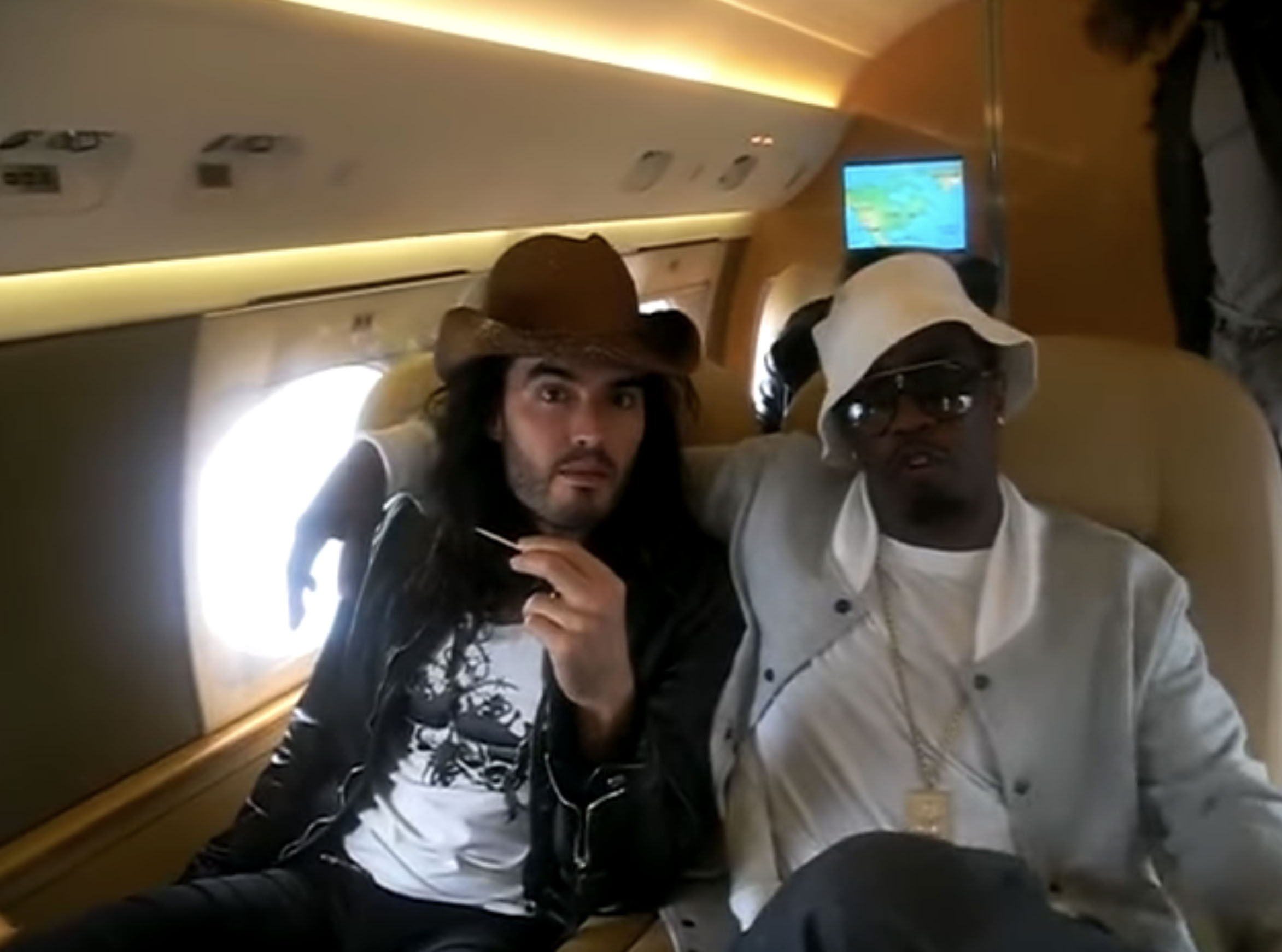
The last time a celebrity’s past footage blew back to the public eye was in 2009, when Russell Brand and Sean “Diddy” Combs, then co‑stars in Get Him to the Greek, were caught joking about “finding women to have sex with” while cruising to a “straight‑guy date” in Las Vegas. Fast‑forward fifteen years, the resurfaced clip has re‑ignited a debate that now stretches from the courtroom to the world of streaming platforms and beyond, shaking the entertainment industry’s long‑standing tolerance for toxic masculinity and the mechanisms that hold public figures accountable.
For the industry, the Brand saga signals a turning point. It forces studios, talent agencies and streaming services to grapple with a new reality: a single past indiscretion, once considered a “locker‑room joke,” can ignite a petition that gathers 15,000 signatures, prompt a social‑media platform to delete an entire account, and push a long‑time comedian into a prison cell. This ripple effect forces a reckoning with how reputations are built, maintained, and ultimately destroyed in the age of instant video and viral outrage.
Background & Context
Russell Brand’s rise began with a razor‑sharp wit and a penchant for social commentary. From his stand‑up routines in the UK to a high‑profile relationship with singer Katy Perry, Brand positioned himself as a counterculture icon. Their whirlwind romance—meeting on the set of Get Him to the Greek in 2009 and marrying in 2010—captured headlines worldwide. Yet the same film would become the seed for the controversy that now defines Brand’s legacy.
The 2009 video, uploaded years later to YouTube, shows Brand and Diddy in a low‑key Las Vegas getaway. Their dialogue—replete with crude references to finding women for sex—was dismissed by many as a backstage joke, a relic of a more permissive era in entertainment. However, as societal norms shifted and the #MeToo movement gained traction, such language is no longer seen as harmless. The clip resurfaced on social media in 2026, a time when the public’s appetite for accountability had never been higher.
Brand’s legal troubles culminated on November 9, 2026, when Southwark Crown Court convicted him of rape and sexual assault, sentencing him to ten years and six months behind bars. He maintains his innocence, citing procedural errors and the need for a fair appeal. The court’s decision came after months of media coverage and intense public debate. Notably, his wife, Laura Brand—formerly Gallacher—has been a steadfast supporter, appearing at hearings and publicly expressing her devotion. Together they have three daughters, a reality that humanizes Brand’s situation but also magnifies the emotional toll on his family.
A petition titled “Free Russell Brand,” launched by an anonymous individual, quickly amassed over 15,000 signatures. The petition argues that Brand’s right to appeal must be protected and that due process requires transparency. It insists that while the charges are serious, the legal system must respect the accused’s right to challenge convictions. The petition’s popularity highlights how deeply engaged fans and broader communities are in the intersection of justice, celebrity, and morality.
What People Are Saying
The social media storm that erupted around Brand’s conviction has been as swift as it has been divisive. On November 12, an account posting on Brand’s behalf shared the petition link, tagging it #FreeRussellBrand. The post appeared to be an attempt to rally supporters and underscore the importance of an appeal. The timing—just a day after Meta announced that Brand’s Instagram account had been disabled for violating community standards—seemed calculated to reignite discourse.
Meta’s explanation, delivered through a single tweet, stated that Brand’s account was removed because his activity did not comply with their rules. The terse response, “There never was a Russell Brand, according to @Meta. Thank God for @elonmusk. Stay tuned,” was interpreted by many as a subtle jab at the platform’s algorithms and a deflection from the substance of the issue. The reaction was immediate: some users dismissed the move as a routine enforcement, while others saw it as a suppression of a public figure’s voice amid a legal crisis.
The backlash from industry insiders was swift. A segment of talent agents voiced concerns that a suspended profile could harm a client’s marketability. In the same vein, casting directors questioned whether working with someone facing such a conviction could expose projects to reputational risk. Meanwhile, the broader public—fans, critics, and activists—debated whether Brand’s personal behavior should influence professional opportunities. The petition’s growing numbers amplified this conversation, framing it as a question of due process versus public safety.
Diddy’s own reaction added another layer. In the original 2009 footage, the two comedians’ jokes were meant to be edgy, but in the current climate they appear as emblematic of an era that tolerated sexist humor. While Diddy has not publicly commented on the petition, his earlier involvement in the resurfaced video has placed him in the cross‑hairs of an audience now more sensitive to misogynistic undertones. The fact that the clip resurfaced only when Brand’s legal troubles came to light suggests that the entertainment world is recalibrating how it views past humor in light of modern accountability.
What Happens Next
The immediate legal focus will shift to Brand’s right to appeal. The petition’s demand for a transparent appellate process has already prompted a formal review by the court system. Should the appeal be granted, a new hearing will scrutinize the evidence and procedural integrity of the original trial. Depending on the outcome, Brand could face either an overturned conviction, a reduced sentence, or a reaffirmation of the original ruling.
Parallel to the courtroom drama, the entertainment industry will reassess Brand’s role in ongoing and future projects. Film studios may reconsider his involvement in upcoming releases, especially those targeting younger audiences. Streaming services, sensitive to community standards and public sentiment, could either distance themselves from his brand or negotiate new contracts that include stricter behavioral clauses. The fallout may also influence how agencies manage talent with controversial histories, prompting them to adopt more robust risk assessments.
For Brand’s personal life, the ramifications are profound. His wife, Laura, has been a pillar of support, but the stress of a decade‑long legal battle and the loss of a public platform could strain family dynamics. The three daughters, now older and more aware of their father’s legal situation, will undoubtedly experience a shift in their public and private identities. Their own futures, whether in or outside the entertainment industry, may be shaped by the legacy of their father's actions and the public's response.
From a broader perspective, the Brand case underscores a shift in how society negotiates the line between celebrity privilege and legal accountability. The combination of a resurfaced 2009 video, a high‑profile conviction, and a massive petition illustrates how digital platforms and public sentiment can converge to enforce new standards of conduct. For the entertainment world, it signals that past jokes or behaviors—once tolerated—can now be weaponized in the court of public opinion, influencing both legal outcomes and career trajectories.
In the wake of the conviction, the industry’s future will likely hinge on transparency, accountability, and a renewed focus on the ethical responsibilities of public figures. Russell Brand’s saga serves as a cautionary tale and a catalyst for change, reminding everyone that the stories we tell—whether on screen or in a courtroom—carry weight far beyond their original context.
The Bottom Line
The fallout from Russell Brand’s 2009 video underscores a hard‑earned lesson: in a digital age where every moment can be extracted, amplified, and judged, the entertainment industry must adopt a proactive, transparent stance toward accountability. Studios and streaming giants cannot afford to assume that a single past joke is innocuous; the current climate demands that historical content be contextualized against evolving standards of consent and respect. Meta’s swift removal of Brand’s account, while ostensibly a routine policy enforcement, exposed the thin line between safeguarding community values and silencing a public figure’s right to a fair dialogue. Moving forward, every platform and production company must implement rigorous risk‑assessment protocols that evaluate both present conduct and legacy content. Audiences deserve to know that ethical considerations drive hiring and content decisions, not merely public relations spin. MyWorldPulse.com calls on industry leaders to institutionalize these practices, ensuring that talent contracts include clear behavioral clauses and that crisis response plans are rehearsed with the same diligence as production schedules. By institutionalizing accountability, we honor the audience’s right to informed consumption and preserve the integrity of the entertainment landscape.
—MyWorldPulse.com
Reference:
- Meta’s tweet announcing removal of Russell Brand’s Instagram account
- Southwark Crown Court judgment, 9 Nov 2026, sentencing Russell Brand to ten years and six months
Read more celebrity news at MyWorldPulse.