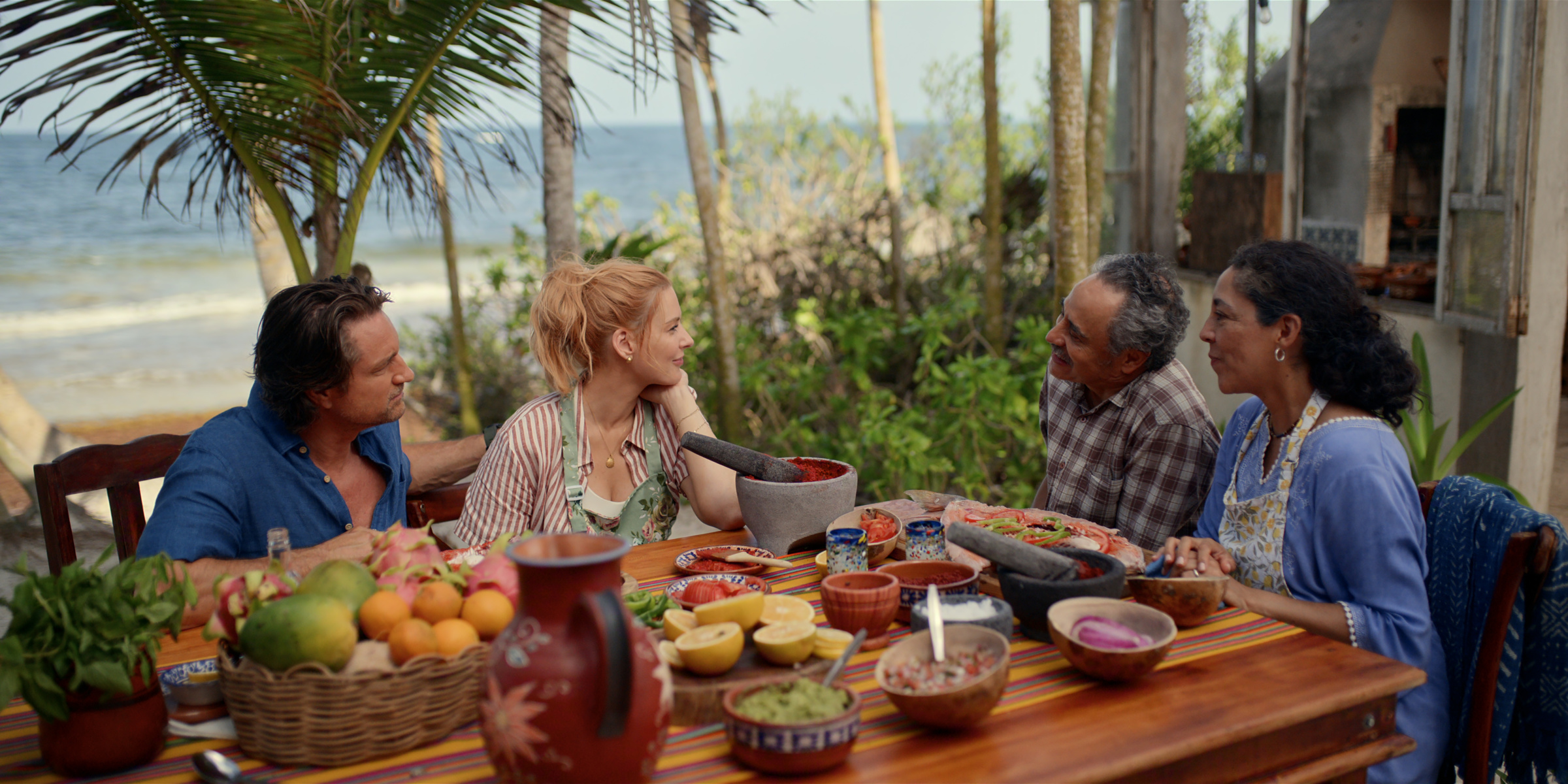
In a move that has sent ripples through the streaming world, Alexandra Breckenridge’s portrayal of Dr. Melinda “Mel” Monroe has been cemented as the linchpin of “Virgin River” for a ninth and final season. The decision, announced months ahead of the 2027 premiere of season 8, not only extends the beloved series beyond every other original drama on the platform but also redefines Netflix’s commitment to long‑form, character‑driven storytelling. The announcement has become a cultural touchstone for fans who have followed Mel and Jack through heartbreaks, triumphs, and the slow, healing rhythm of life in a California valley.
This renewal arrives at a pivotal juncture for the streaming giant. A period of executive reshuffling and a shift in creative strategy has prompted Netflix to look inward for stable, proven content. “Virgin River” is now the longest‑running scripted series on the platform by season count, a milestone that speaks volumes about its enduring resonance and the company’s willingness to invest in nuanced, slice‑of‑life narratives that rival the high‑budget spectacles dominating headlines.
Background & Context
“Virgin River” first opened its doors to viewers in 2018, drawing from Robyn Carr’s novel series and establishing a distinct tonal identity: a gentle, almost pastoral narrative that prioritizes relationship over spectacle. Its setting—a remote valley tucked between California’s rolling hills—provides a canvas for stories that unfold with deliberate pacing, mirroring the rhythm of real life rather than the fast‑cut tempo of many contemporary dramas. From the outset, the show eschewed melodrama in favor of quiet moments, letting its ensemble cast breathe and grow over time.
The series’ structural consistency has been a key factor in its longevity. Each season comprises ten tightly interwoven episodes, a format that balances production practicality with audience appetite for deep character exploration. This measured approach aligns with Netflix’s early strategy of encouraging binge‑watching through serialized arcs that reward sustained engagement. The platform’s algorithm, which promotes content that keeps viewers glued to their screens, found a perfect match in “Virgin River’s” steady emotional beats and recurring themes of community, healing, and hope.
Comparing “Virgin River” to other long‑running series offers insight into its unique positioning. While shows like “Stranger Things” and “The O’Reilly Family” have built large fanbases through high‑concept premises and supernatural elements, “Virgin River” has carved a niche in the quieter, human side of storytelling. Its reputation for tackling mental health, fostering inclusive representation, and providing a safe space for conversations around grief and identity has earned it critical praise and loyal viewership across age groups. The show’s cultural footprint has grown beyond streaming metrics; it has become a reference point for real‑life relationship dynamics, inspiring fan‑created content ranging from poetry to community support groups.
In a broader industry context, the renewal signals Netflix’s strategic pivot toward sustainable content. As streaming platforms compete for subscriber attention, the pressure to produce blockbuster releases has intensified. However, “Virgin River’s” success demonstrates that consistent, character‑heavy storytelling can maintain audience loyalty and deliver measurable returns. The decision to extend the series aligns with a broader trend of re‑examining the value of serialized, low‑budget dramas that prioritize emotional resonance over flashy spectacle.
What People Are Saying
The fan response to the renewal has been overwhelmingly positive, echoing the deep emotional investment many have cultivated over the past eight seasons. Social media feeds are flooded with nostalgic snapshots of key scenes: Mel’s first patient in the valley, Jack’s first love letters, the community’s collective grief following the loss of a beloved character. Fans have seized on the announcement to celebrate the show's longevity, with many expressing excitement that the narrative will finally reach a satisfying conclusion.
Online forums and fan‑curated communities have taken to dissecting potential story arcs. Discussions revolve around how the final season might resolve lingering tensions: Mel’s battle with postpartum depression, Jack’s reconnection with estranged family, and the valley’s response to a new, unnamed threat that challenges the town’s harmony. Some speculate that the season could explore a deeper examination of generational trauma, a theme that has been subtly woven into earlier episodes.
Critics and industry observers have also weighed in. Reviews highlight the show’s measured pacing and its deft handling of complex social issues. Analysts note that the renewal underscores Netflix’s confidence in serialized storytelling that rewards patience rather than rapid, high‑concept releases. The platform’s willingness to continue “Virgin River” signals a strategic emphasis on building and retaining communities of viewers who stay loyal to long‑form narratives.
A notable point of discussion is the show’s portrayal of LGBTQ+ relationships. Over the years, “Virgin River” has featured a range of queer characters whose stories are treated with the same care and nuance as their straight counterparts. Fans have praised the series for normalizing diverse identities within a rural setting, fostering a sense of acceptance that resonates with many viewers. The upcoming season is expected to continue this trend, potentially introducing new queer narratives that reflect evolving societal conversations.
The conversation extends beyond the immediate fanbase. Academics specializing in media studies have cited “Virgin River” as a case study in effective character development, noting how the show demonstrates the impact of long‑term storytelling on audience empathy. The series is frequently referenced in university courses that examine contemporary television’s role in reflecting and shaping social attitudes.
What Happens Next
Production for the ninth and final season is slated to begin later this year, giving the creative team a full year to craft scripts that honor the series’ legacy while providing fresh, compelling stakes. The production will stay true to the original filming locations, preserving the authenticity that viewers have come to associate with the valley’s rustic charm. The use of natural light and real locations will continue to give each episode a sense of place that feels almost tangible.
The season is expected to consist of ten episodes, each offering a mix of intimate character moments and broader community dynamics. The writing staff, many of whom have been with the series since its inception, will likely focus on arcs that bring unresolved threads to a satisfying close. This includes Mel’s journey toward healing after a devastating personal loss, Jack’s potential re‑engagement with his estranged father, and the valley’s struggle to adapt to a new economic reality as tourism declines.
Marketing for the season will highlight the emotional stakes that have defined the show’s identity. Promotional materials will showcase intimate scenes of community support, underscoring themes of resilience and collective care. The campaign aims to rekindle the emotional bond between the audience and the characters, ensuring that viewers feel a sense of anticipation and investment leading up to the 2025 premiere.
Industry insiders have speculated that the renewal may open doors for spin‑off projects. Though nothing official has materialized, discussions have centered on the possibility of a limited series that explores the backstory of a secondary character introduced in season 7. A feature film adaptation is also on the radar, potentially expanding the narrative universe and appealing to longtime fans who crave a cinematic finale. These ventures would capitalize on the established fanbase while allowing the cast and crew to explore new storytelling horizons.
The decision to bring the series to a definitive end also reflects a broader trend in television, where creators are increasingly prioritizing narrative closure over indefinite continuation. As streaming platforms face fierce competition, the value of a well‑planned, satisfying conclusion becomes paramount, ensuring that viewers leave with a sense of completion rather than lingering uncertainty.
Closing
The announcement that “Virgin River” will embark on a ninth and final season serves as proof of Netflix’s enduring belief in stories that unfold slowly, with empathy, and with a commitment to real human experience. In an era where flash and spectacle often dominate headlines, the series stands out as a reminder that the quiet moments—shared by a small community, anchored by love, and tempered by loss—can capture hearts for generations. For fans across the globe, the upcoming season promises one last chapter of tenderness, triumph, and the gentle magic that only a small California valley can provide.
The Bottom Line
MyWorldPulse sees Virgin River’s final season as a triumph of grounded storytelling in an age of hyper‑production. The series proves that when a show stays true to its characters and community, it can build a devoted audience that thrives on authenticity. Netflix’s bold move to extend and conclude a quiet drama speaks to the platform’s commitment to narrative depth, and it offers a blueprint for future projects seeking to balance artistic integrity with commercial viability. The episode lineup promises closure that feels earned—Mel’s journey toward healing, Jack’s reconnection with family, and a new chapter for the valley’s residents—all wrapped in the same gentle, hopeful tone that has made the show a touchstone for viewers worldwide. As the series bows, it leaves a legacy that affirms the enduring relevance of stories that honor everyday life, encouraging creators to trust the quiet power of long‑form character arcs.
— MyWorldPulse Editorial
Reference:
- Official post on the show's verified Twitter
Read more celebrity news at MyWorldPulse.