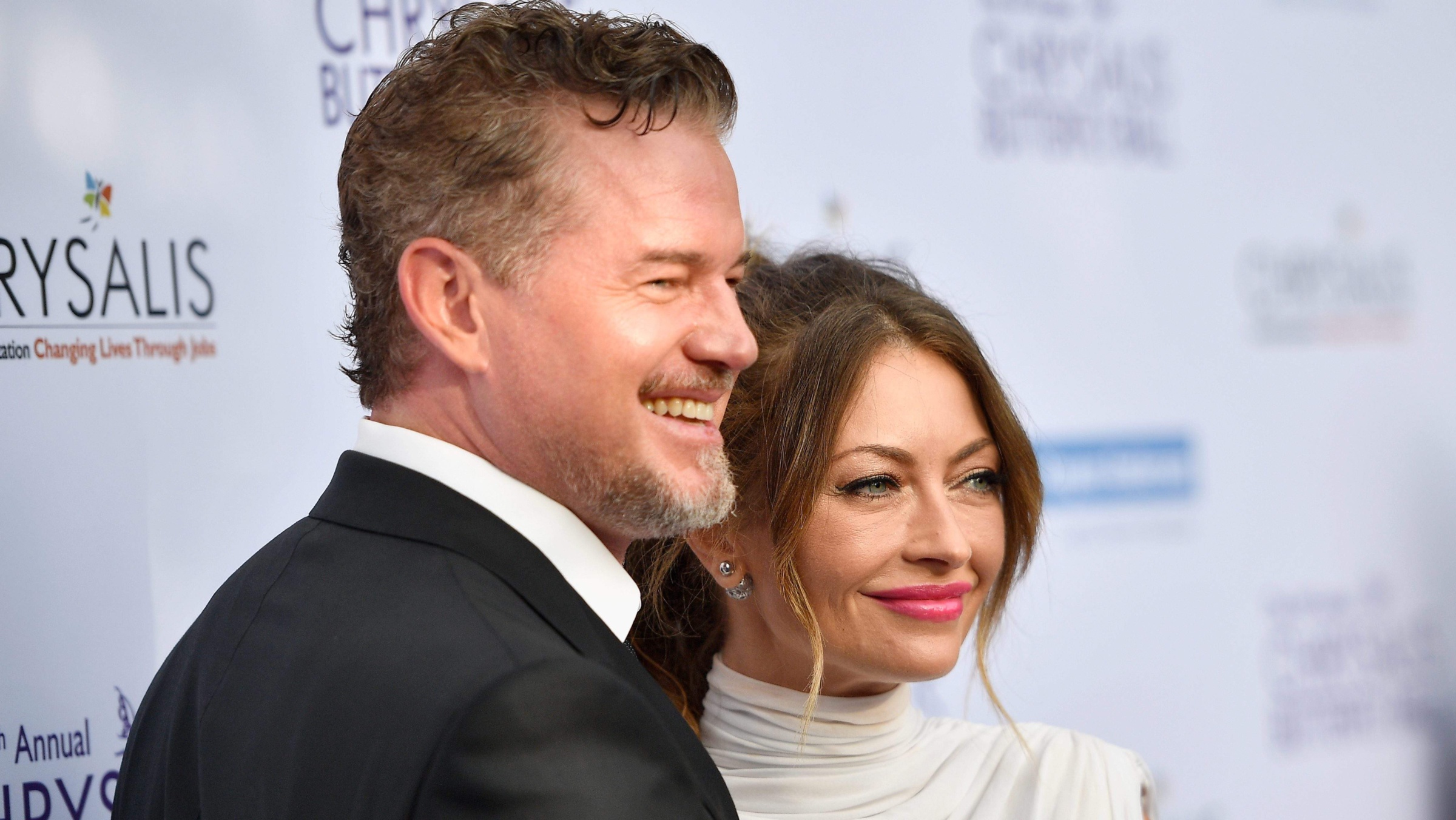
When Eric Dane’s memoir, My Book of Days, slipped onto shelves in early 2025, the first chapter that caught readers’ attention was the raw, unfiltered phone call he made to his partner, Rebecca Gayheart. The scene is set in a quiet kitchen, the hum of a refrigerator, and the clatter of a sushi dinner turning into a moment of crisis. Dane, whose name first flashed across screens with his brooding charm on Grey’s Anatomy, had been nursing a silent, gnawing loss in his right hand. A single sentence from the book – “It’s what we feared” – instantly turned the pages from the ordinary to the profound. The story not only chronicles a battle with amyotrophic lateral sclerosis (ALS) but also serves as proof of the power of human connection, the weight of professional identity, and the quiet strength that often lies beneath a celebrity’s public persona.
The narrative opens with Dane’s own words: he had been eating sushi with his two daughters when he suddenly found his right hand numb, unable to hold the chopsticks. He dismissed it as a fleeting inconvenience, blaming too much texting. But the numbness returned, growing sharper and more debilitating, forcing him to confront the possibility of a disease that could erode his very ability to act. For nine months, he wrestled with denial and silence. Then, in the early winter of 2025, the diagnosis arrived: ALS – a relentless motor neuron disease that robs muscle control and will eventually bring all voluntary movement to a halt. In that moment, Dane chose to turn the private struggle into a public act of courage, pledging himself to fight, to protect his daughters, and to keep his career alive.
Background & Context
Eric Dane’s path to fame began in the early 2000s, when he landed the role of Dylan Young on the hit teen drama The O.C. That breakout led to his most iconic part: Mark Sloan, the charismatic plastic surgeon on Grey’s Anatomy, a character who became a fixture for over a decade. Dane’s portrayal earned him a legion of fans who grew to love his nuanced performance and his off‑screen kindness. By the time he was diagnosed, his reputation had shifted from actor to confidant; his voice had become a familiar presence in the lives of millions.
The public revelation of his diagnosis came almost a year after the initial symptoms surfaced. He deliberately kept the conversation with his family private until the truth could no longer be contained. When he finally announced it on the evening of April 16, 2025, the tone was measured but resolute. He thanked his family for their love, expressed gratitude for the opportunity to keep working, and requested privacy for those closest to him. The decision to speak publicly was a calculated one – a way to humanize the disease, inspire other patients, and maintain control over his narrative.
In many ways, Dane’s experience echoes the journeys of other public figures who have confronted ALS. The late, beloved actor’s story invites comparison to a few pivotal moments in the entertainment world. The most prominent is perhaps the experience of Dr. Stephen Hawking, whose relentless curiosity and scientific brilliance became a beacon for patients worldwide. In the entertainment realm, the story of comedian Steve Martin, who publicly addressed his ALS diagnosis in 2015, offers another lens: Martin’s approach was one of candid humor, whereas Dane’s was one of quiet fortitude. Both men leveraged their platforms to educate, advocate, and, crucially, maintain dignity in the face of a degenerative disease.
Beyond the personal dimension, the industry’s reaction was equally layered. Production companies and fellow actors rallied around Dane, recognizing that a battle against ALS could jeopardize not only an individual’s career but also the collaborative ecosystem of a long‑running television show. In the weeks that followed his announcement, the crew of Grey’s Anatomy honored Dane with a week of tributes, allowing him to finish filming a pivotal storyline before stepping away. Industry colleagues who had worked with Dane over the years shared their admiration for his professionalism – his ability to give a heartfelt performance even as his body began to falter. His colleagues' words were proof of a shared belief that talent transcends physical limitations.
Dane’s memoir, released in the spring of 2025, offers an intimate look at the emotional and psychological toll of the disease. He describes the first time he had to admit to his partner that he was losing the use of his right hand. It is a scene so intimate that readers feel the weight of each breath, each sob. The narrative is interwoven with vivid memories of his daughters’ laughter, the quiet kitchen at night, and the way the family gathered around a table to make sushi and share stories. Dane’s voice remains steady, but the underlying tension is palpable. He paints a picture of a man who, at the point of losing his voice, chose to give his daughters the gift of hope, a message that he would carry until the end.
What People Are Saying
The entertainment community responded to Dane’s story with a blend of admiration, grief, and renewed advocacy. Fans across the globe took to social media to share memories of his most memorable scenes – from his heartfelt confession to Dr. Bailey in the early seasons, to his dramatic exit in the final season’s cliffhanger. These posts highlighted how his on‑screen presence had shaped viewers’ lives, often offering comfort during personal struggles. The emotional response was not limited to fans. In an era of instant connectivity, people from all walks of life joined in a collective tribute, drawing parallels between the resilience Dane displayed on screen and the resilience required in everyday life.
Within the industry, actors and producers reflected on the profound impact of his decision to go public with his diagnosis. The narrative prompted conversations about how production schedules should adapt to accommodate the needs of actors dealing with chronic illness. Some executives revealed that they had to rethink storylines, while others saw it as an opportunity to spotlight the broader conversation about ALS. The message became clear: the entertainment industry can be a platform for advocacy and change, and Dane’s willingness to share his story made that possibility tangible.
A wave of scientific and medical professionals also weighed in. Neurologists and ALS researchers highlighted how early public disclosure can bring a human face to the disease, helping to destigmatize it and encourage early testing. These professionals praised Dane for his candidness and the way he used his platform to promote early intervention. They also acknowledged that, while ALS remains incurable, increased awareness can accelerate research into potential treatments. The impact on fundraising was tangible; a portion of Dane’s memoir sales was pledged to ALS research foundations, ensuring his legacy would live on in the form of tangible progress.
In the months leading to his passing, Dane recorded a heartfelt message for his daughters, Georgia and Billie. He wrote, “Fight with every ounce of your being, with dignity.” These words became a rallying cry for supporters worldwide, as people resonated with the image of a father giving his children a final gift of hope. Fans posted their own interpretations of this message, drawing parallels to stories of endurance that had touched their own lives.
What Happens Next
The release of My Book of Days has sparked plans to extend Dane’s story beyond the pages of a memoir. A documentary featuring interviews with colleagues, family, and medical experts is reportedly in development, poised to provide an in‑depth look at his battle with ALS. The project promises to humanize a disease that often feels abstract, using Dane’s story as a conduit for broader awareness.
The estate has announced a partnership with a leading ALS advocacy group, a collaboration that aims to amplify fundraising efforts for research and support services. This partnership will not only keep Dane’s name alive in public consciousness but also provide a tangible benefit to those who are currently facing similar challenges. In a world where celebrity status can become a platform for change, Dane’s story is a prime example of turning personal tragedy into communal advocacy.
Industry professionals are using Dane’s experience as a springboard to rethink their own approaches to accommodating actors with chronic illness. The conversation is already shaping new guidelines that allow for flexible shooting schedules, on‑set medical support, and even the possibility of digital performances when necessary. While the practicalities may vary, the underlying principle remains: empathy and adaptability can coexist with professional excellence.
Beyond policy changes, there is a cultural shift at play. The emotional resonance of Dane’s message has inspired a new generation of artists and public figures to speak openly about health challenges. The narrative demonstrates that vulnerability can be a source of strength, not a weakness. As the entertainment world continues to evolve, Dane’s legacy will serve as a reminder that the industry can be a beacon for societal change, even in the face of adversity.
Eric Dane’s passing on February 19, 2026, was a loss that rippled far beyond the world of television. Yet the words he left behind—his relentless determination, his love for his daughters, his unyielding belief in fighting with dignity—continue to inspire. In a world that can often feel indifferent to the suffering of the individual, Dane’s story reminds us that the human spirit is resilient, that a single voice can ignite hope, and that, even when the body falters, the heart can endure.
The Bottom Line
Eric Dane’s courage to speak openly about his ALS diagnosis demonstrates the profound responsibility celebrities hold in shaping public discourse. By sharing his vulnerability, he set a new standard for authenticity in an industry that often prizes polished personas over real struggles. The subsequent industry adaptations—flexible shooting schedules, on‑set medical support, and respectful storytelling—highlight a necessary evolution toward inclusive work environments. This story also showcases how public acknowledgment can catalyze concrete outcomes: a surge in ALS donations, a documentary that educates, and a partnership that funds research. For our readers, Dane’s journey reminds us that empathy and advocacy can coexist with professional excellence, and that each voice can ignite hope. It is a call to the entertainment community and its audiences to champion openness, support affected individuals, and use fame as a platform for meaningful change. – MyWorldPulse
Reference:
- Official announcement of ALS diagnosis by Eric Dane on his verified Instagram account
Read more celebrity news at MyWorldPulse.