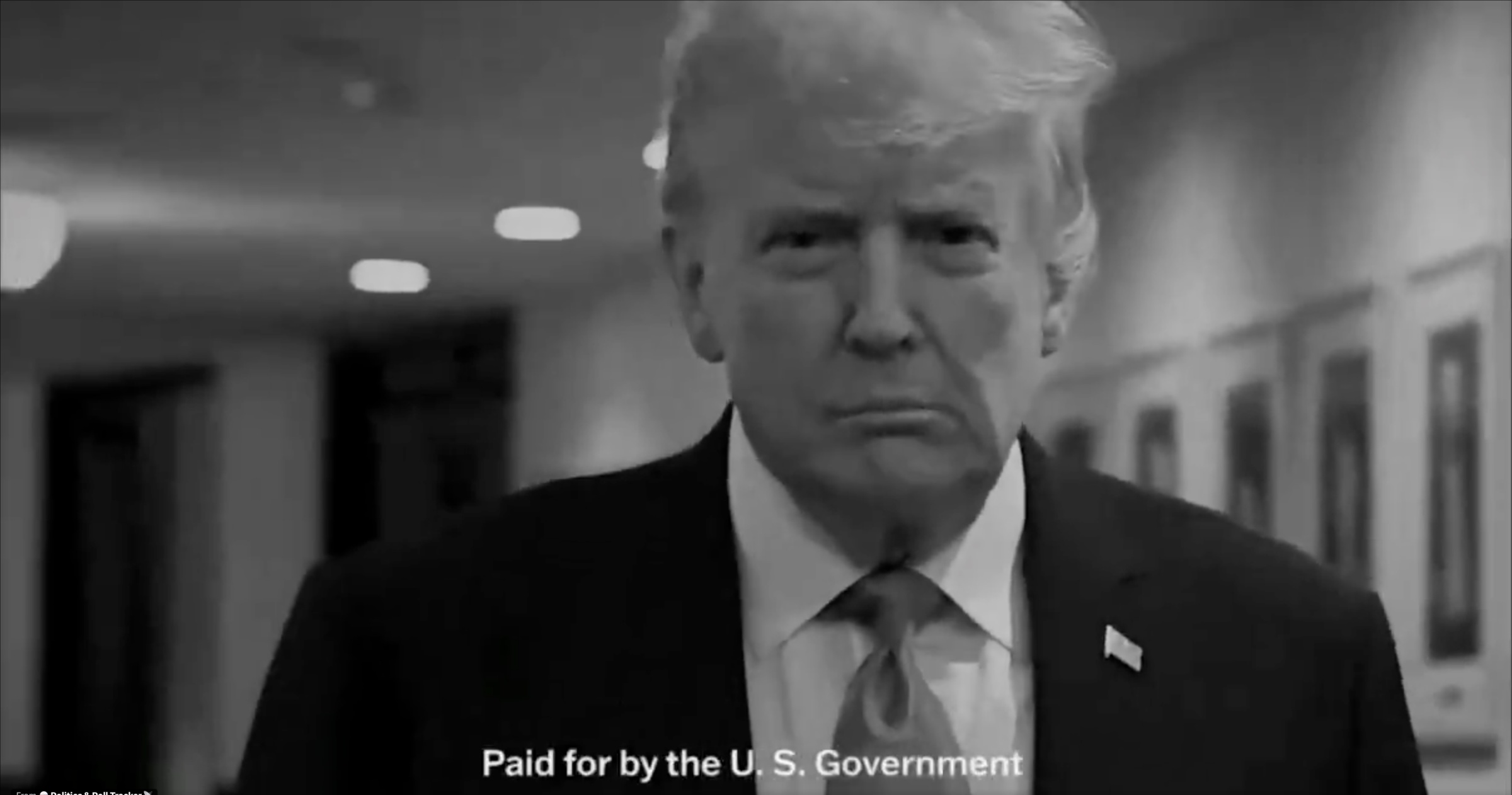
The moment the news broke, the air on the capital’s streets felt charged; social media erupted with a mix of relief and frustration, as supporters and critics alike stared at their screens, wondering how a president could continue to fund political messaging with money that came from ordinary taxpayers.
The injunction came from U.S. District Judge Jennifer L. Rochon, who issued a temporary restraining order that bars the Trump administration from using Department of Homeland Security (DHS) funds to air advertisements that resemble campaign propaganda. The court gave the administration a 14‑day window—exactly two weeks—to cease such activities. The directive follows a long‑standing debate over the limits of executive power and the appropriate use of federal resources for political purposes.
The order means that any spots produced by DHS, or any that use DHS money, must stop airing until a full hearing can determine whether the government’s practice is lawful. If the court later finds the ads to be improper, the restriction could become permanent, potentially affecting the administration’s communication strategy nationwide.
Background & Context
The dispute began when the Trump administration started producing a series of digital ads that echoed its presidential messaging, including calls for strong border security and promises to “restore American greatness.” While the administration argued that the ads were part of its official public‑service mandate—promoting homeland security policies—opponents claimed that the content was too political, effectively functioning as a campaign ad for the incumbent president.
The federal court’s decision follows an investigation that traced the spending of over $100 million appropriated to DHS over the past year, with a portion directed toward content that was unmistakably partisan. The Treasury Department’s Office of Management and Budget had issued guidance in 2020 limiting the use of federal funds for political messaging, but the Trump administration had been accused of bending those rules. This was not the first time a president’s use of taxpayer money for political purposes had been scrutinized; a 2018 ruling by the Court of Appeals had found that President Donald Trump’s "Make America Great Again" campaign had violated federal law by using taxpayer money for campaign purposes.
Judge Rochon’s order reflects a growing judicial trend that closely watches how the executive branch uses public funds. Earlier this year, the same judge ruled that the Department of Justice had exceeded its authority by using federal resources to investigate political opponents, further tightening the court’s stance on executive overreach.
What People Are Saying
On the internet, opinions split sharply. Some commenters praised the ruling as a check on abuse, saying that “the people’s money should not be used to push a political agenda.” A 30‑year‑old Twitter user from Seattle wrote, “Finally, a justice who understands that the President is not a one‑time candidate.” Others, however, argued that the decision undermines national security communications. A 45‑year‑old Facebook comment by a former DHS employee read, “We can’t afford to keep people uninformed about border threats while the administration does not have a clear voice.”
In Washington D.C., the mayor’s office issued a statement applauding the court’s intervention, emphasizing that public funds must remain neutral. Meanwhile, the Trump administration’s spokesperson issued a terse statement claiming that the order was “unfairly targeting the president’s right to communicate with the public” and that the administration would appeal.
The political science community has also weighed in. A professor of constitutional law at Georgetown noted that “the ruling is consistent with the principle that the executive cannot blur the lines between governance and campaigning.” Meanwhile, a commentator in a well‑known think tank argued that the administration’s use of DHS funds for public messaging—though political in tone—was not strictly prohibited under existing federal statutes, citing a vague loophole in the federal campaign finance laws.
At the heart of the debate is the question of how to balance the President’s communication needs with the rule that campaign advertisements should be funded by private donors. A handful of lawmakers in the House Committee on Oversight called for an investigation into the DHS’s spending records, while the Senate’s Subcommittee on Commerce, Science, and Transportation proposed a new bill that would tighten the definitions of permissible “public‑service” content.
What Happens Next
The temporary restraining order is set to expire on August 12th, but the case will advance to a full hearing within the next 60 days. Judge Rochon will likely hear arguments from both sides, weighing the executive’s right to disseminate information against the constitutional limits on using taxpayer money for campaign purposes. The administration has already notified the court that it will appeal the order, and the appellate court could decide whether the injunction should remain in place or be lifted pending the outcome.
If the case moves forward, the court will examine the exact nature of the ads. Are they merely informative bulletins about border security, or do they contain messaging that directly appeals to voters for the upcoming midterm elections? The definition is crucial; if the ads are deemed to be campaign propaganda, they could be barred from using federal funds entirely.
The stakes for the Trump administration are high. The timing of the order—just weeks before the election cycle—could impact the administration’s ability to rally support for its policy positions. On the other hand, if the court sides with the judiciary, it would reinforce a precedent that no executive can use federal funds to promote a political agenda, potentially reshaping how administrations communicate with the public.
Meanwhile, the DHS’s internal review will likely assess its communications strategy, as a result of the court’s mandate. The department may need to reallocate its budget or create a separate funding channel for political messaging that could not be funded with appropriated money.
As the deadline approaches, lawmakers and pundits alike will watch for the next steps. A hearing could set a significant precedent for future presidents. The broader public will be attentive to whether the restriction will stand, whether the administration will find a workaround, and whether the decision will influence the political climate in the months leading up to the national elections.
The episode serves as a reminder that even amid an administration’s most aggressive campaigns, the rule of law remains a steady counterbalance, ensuring that the nation’s taxpayers are not turned into a campaign finance machine.
The Bottom Line
Our view is that the court’s swift action is a necessary check on executive overreach. By preventing the DHS from using taxpayer money as a springboard for partisan messaging, Judge Rochon reaffirms the constitutional boundary that keeps government funding from becoming a campaign finance tool. This decision protects public funds from being exploited to influence voters, a safeguard that preserves the integrity of democratic processes. The temporary restraining order is a bold statement that the federal government cannot double‑duty public resources for political gain without facing judicial scrutiny. The ruling also compels the administration to rethink how it informs citizens about security policy—removing political spin from public service announcements and ensuring that any persuasive content is properly funded and disclosed. In a time when political messaging is saturated with partisan cues, this case serves as a reminder that public money must remain impartial, or risk legal and reputational damage. We applaud the judiciary for stepping in and expect this precedent to guide future administrations in maintaining clear boundaries between governance and campaigning.
Reference:
- U.S. District Court Judge Jennifer L. Rochon Temporary Restraining Order
- Department of Homeland Security Statement on DHS Advertising Expenditures
Read more celebrity news at MyWorldPulse.