The Los Angeles Lakers’ coffee‑table tome has leapt from a modest $100 staple to a five‑figure treasure, and across the country a venerable arts complex sits on the brink of a two‑year hiatus that could herald its end. Both moves reverberate through the worlds of pop culture and public heritage, underscoring how nostalgia, scarcity and political pressure are reshaping the market for what many once thought immutable.
For collectors, the surge of a limited edition, signed by the very man who propelled Showtime into the national consciousness, signals a shift toward hyper‑exclusive memorabilia that marries history with high art. For policy makers and arts advocates, the Kennedy Center’s proposed closure exposes the fragility of cultural institutions when confronted by a legacy of aging infrastructure, budget constraints and the whims of a former president. Together, these stories illustrate a broader trend: an economy of memory that prizes limited availability while simultaneously threatening the very spaces that preserve that memory.
Background & Context
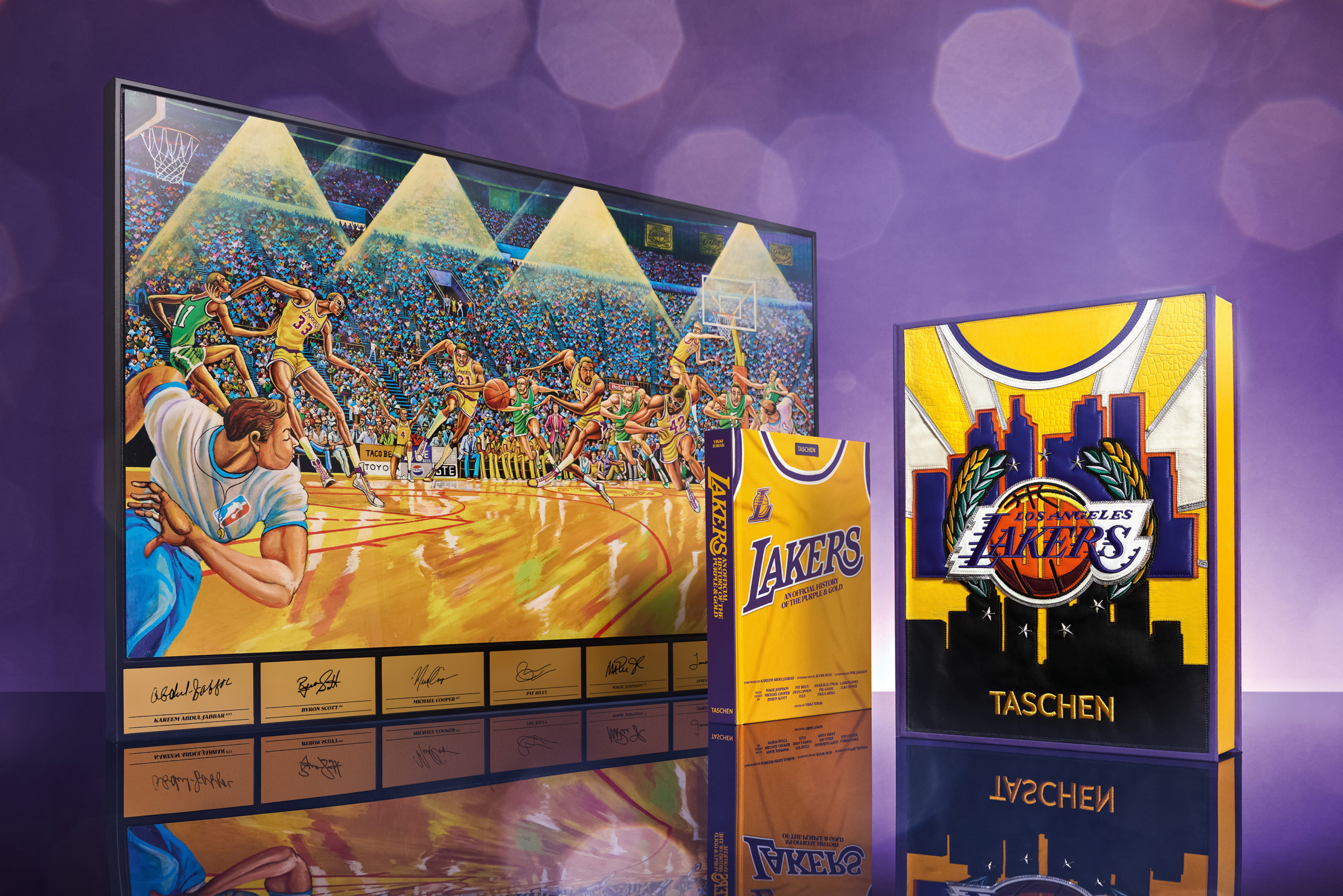
In September, Taschen—a publisher renowned for its lavish art books—partnered with the Lakers organization to release two deluxe variants of Lakers: An Official History of the Purple & Gold. The standard edition, priced at $100, chronicles the franchise’s triumphs from the early 1940s through the 21st‑century dynasty. The limited editions, capped at 1,000 copies each, carry an array of exclusive features: authentic hardwood planks reclaimed from the former Staples Center court, intricate artwork signed by Earvin Johnson himself, and his original handprints on a printed panel that captures the essence of Showtime’s magic. The price tag of $9,600 reflects the book’s rarity, the craftsmanship of its materials, and the cultural cachet of the figures involved. It also marks a milestone for sports publishing, moving beyond glossy retellings into the realm of collectible art objects.
Meanwhile, a separate narrative is unfolding in Washington, D.C., where the Kennedy Center—a 55‑year‑old beacon of American performing arts—faces a two‑year shutdown planned by the Kennedy Center Board of Trustees. The closure is intended to facilitate major renovations: a new, state‑of‑the‑art arena, improved acoustics, and a revitalized public space. However, critics fear that the prolonged absence could make the complex vulnerable to demolition, especially with former President Donald Trump’s stated interest in repurposing the site. A federal judge, still deliberating, is poised to decide whether the Board can proceed with the closure plan. The legal standoff underscores the tension between preserving cultural heritage and adapting to evolving entertainment landscapes.
These two events, though separated by geography and genre, share a thread of scarcity. One is a physical artifact that exists in a handful of copies, while the other is an institution that may vanish or transform entirely. Both test the limits of how we value and protect our cultural capital.
What People Are Saying
Within collector circles, the Lakers’ limited editions have been greeted with a mixture of reverence and excitement. Enthusiasts point to the tactile allure of the authentic court wood, arguing that it adds a layer of authenticity that digital reproductions cannot match. The handprints of Earvin Johnson, a living legend, are hailed as a unique convergence of sport and art, creating a bridge between the athlete’s legacy and the book’s narrative. Some see the $9,600 price as proof of the market’s appetite for exclusivity, where scarcity can drive demand far beyond the original $100 price point. Others question whether such high prices risk alienating a broader fan base, arguing that the essence of sports fandom lies in shared experience rather than rare ownership.
In contrast, the debate around the Kennedy Center has polarized both the public and the arts community. Advocates for the renovation highlight the potential to modernize the venue, improve accessibility, and attract new audiences. They view the two‑year hiatus as a necessary step toward long‑term sustainability. Critics, however, warn that the shutdown risks eroding the Center’s cultural footprint and could pave the way for demolition. They emphasize the historical significance of the Kennedy Center as a monument to American arts, arguing that any closure should include safeguards against permanent loss. Legal analysts note that the judge’s pending decision could set a precedent for how other public institutions negotiate large‑scale renovations while balancing preservation and progress.
The two stories also reveal a growing trend of hyper‑curated experiences in the entertainment industry. Whether through a book that offers a tangible connection to a past era or a center that faces the possibility of redefining its role, audiences are increasingly confronted with choices that blend nostalgia with novelty. Some applaud the creative packaging of the Lakers’ book as an art piece, while others caution that the monetization of nostalgia may create new barriers to cultural participation.
What Happens Next
The release of the Lakers’ limited editions is slated for a November launch, with pre‑orders opening immediately. The publisher has stated that each copy will be individually numbered and accompanied by a certificate of authenticity signed by Earvin Johnson. As the sales window approaches, the market will likely see a surge in secondary pricing, with collectors willing to pay premiums for verified copies. The event could also inspire similar high‑end projects from other sports franchises, potentially setting a new standard for how teams monetize heritage.
In Washington, the fate of the Kennedy Center hinges on the federal judge’s forthcoming ruling. If the closure plan proceeds, the complex will remain shuttered until the renovations conclude, likely in the second half of the next decade. The Board has indicated that during this period, select performances will be hosted at alternative venues, but the overall cultural footprint will be diminished. Conversely, a ruling against the closure would force the Center to either delay its renovation plans or seek a revised timeline that minimizes disruption. The outcome will influence future strategies for cultural institutions across the country, especially those grappling with aging infrastructure and evolving public expectations.
Both scenarios illustrate a broader shift toward curated, scarcity‑driven offerings in the entertainment sector, while simultaneously raising questions about accessibility, preservation, and the long‑term viability of cultural landmarks. As fans and patrons grapple with these changes, the industry must navigate the delicate balance between honoring legacy and fostering inclusive growth.
The intersection of a $9,600 sports history book and a potential two‑year shutdown of a national arts venue encapsulates a moment when the past and future collide. In a world where memories are commodified and cultural spaces are constantly renegotiated, the decisions made now will shape how audiences experience heritage for generations to come.
The Bottom Line
The Lakers’ $9,600 book shows how nostalgia can be weaponized into a luxury commodity, rewarding a tiny elite while leaving the majority with a hollowed‑out fan experience. In contrast, the Kennedy Center’s planned closure is a stark reminder that heritage spaces are not immune to politics or budget cuts; they can be abandoned or repurposed when their financial viability is questioned. Both cases expose a cultural industry that increasingly prioritizes scarcity and exclusivity over accessibility and preservation. We must resist the temptation to equate heritage with high price tags and instead champion models that democratize cultural participation while ensuring that iconic institutions remain true to their public purpose. MyWorldPulse believes that sustainability, not scarcity, should guide the future of sports memorabilia and national arts venues alike.
Reference:
- Official Lakers announcement of the limited‑edition book
- Kennedy Center Board of Trustees closure plan press release
Read more celebrity news at MyWorldPulse.