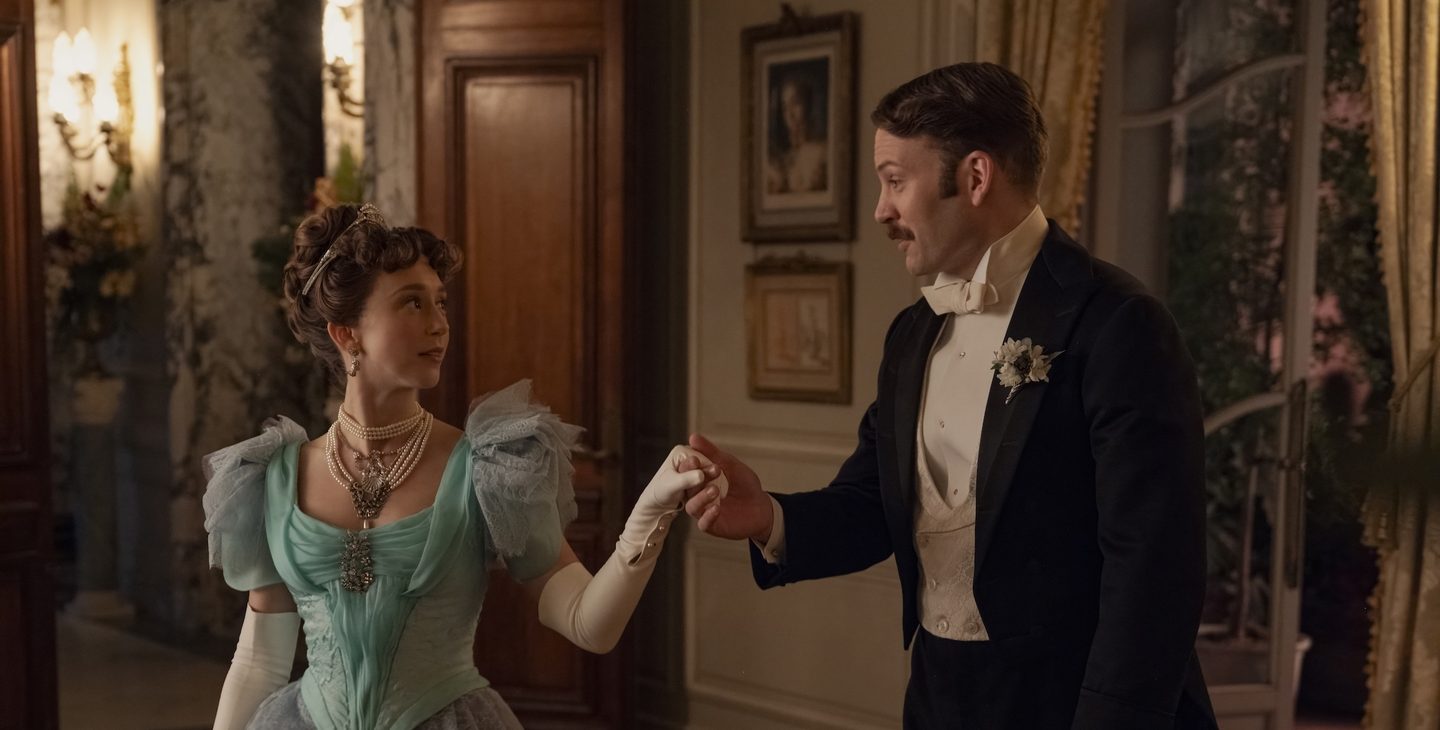
Taissa Farmiga’s Duchess Gladys Russell has once again turned heads as the first episode of The Gilded Age season 4 drops a torrent of drama and revelations, proving that the show’s glittering surface still hides a cauldron of intense intrigue.
The premiere, clocking in at 1 hour and 18 minutes, launched on March 1 in a prime-time slot that drew a record audience for the series. In the opening moments, Gladys finds herself entangled in an arranged marriage to the Duke of Buckingham, portrayed by Ben Lamb, a deal that promises power but also threatens to unravel everything she has built. Her world, already a chessboard of social alliances, tilts when she is forced to confront her own agency and the expectations of an aristocracy that is as unforgiving as it is glamorous.
For the entertainment industry, the episode is a reminder that period dramas still captivate audiences when they blend lavish production values with sharp, character‑driven storytelling. Producers are watching closely as the series demonstrates that even after three seasons, a well‑crafted narrative can keep viewers on the edge of their seats, especially when a beloved character like Gladys steps into a new, uncertain chapter.
Background & Context
The Gilded Age first graced screens in 2021, transporting viewers to 1880s New York City where ambition, wealth, and scandal collide. The show has become a cultural touchstone, offering a nuanced look at class, gender, and the pursuit of status during a transformative era. Taissa Farmiga, who stepped into the role of Duchess Gladys Russell in season three, brought a fresh, fiercely independent energy to the character, turning Gladys into a fan favorite. Her performance highlighted the tension between personal desire and societal duty, a recurring theme that has defined the series.
Season three ended with a cliffhanger: Gladys’s marriage to Henry James, the future Duke of Marlborough, seemed to offer a new pathway to power, yet her future remained uncertain. The producers hinted that the next season would explore the consequences of such unions, pushing Gladys to confront not only her own ambitions but also the expectations of the aristocracy she now serves. The decision to pair Gladys with the Duke of Buckingham, a man whose own ambitions and secrets are as murky as they are captivating, signals a new direction for the narrative. This pairing introduces fresh dynamics—political intrigue, rival families, and an undercurrent of romance—that are poised to deepen the storyline.
The show’s success has been measured not just in ratings but also in the depth of its character arcs. The Gilded Age has consistently leveraged its rich historical backdrop to comment on contemporary issues, drawing parallels between 19th-century power structures and modern social dynamics. By positioning Gladys at the center of a high-stakes marriage, the series taps into themes of autonomy, consent, and the price of ambition, resonating with an audience that has grown more socially conscious over the years.
What People Are Saying
The initial wave of fan reactions was swift and intense, with social media buzzing about Gladys’s “intense” first episode. Viewers were drawn to the dramatic scenes where the Duchess confronts her new husband over the terms of their union, and the underlying power play that suggests her marriage may be more a strategic alliance than a romance. Commentators praised Farmiga for her subtle yet commanding presence, noting how she navigates the delicate balance between her own agency and the expectations placed upon her by the aristocracy.
In the broader entertainment community, critics praised the show’s production design, noting that the lavish sets and meticulous period details remain on par with other high-end historical dramas. Some reviewers highlighted the series’ ability to weave intricate plotlines while maintaining emotional depth, particularly in how it handles Gladys’s journey toward self-determination. The decision to pair her with the Duke of Buckingham has been described as “bold” by several commentators, suggesting that the writers are not afraid to challenge the status quo even within a historical context.
On the fan forum side, some have taken to praising the complexity of the Duke’s character, noting how Ben Lamb’s performance adds layers of intrigue and unpredictability. Others expressed concern that the arranged marriage could risk sidelining Gladys’s character arc. However, many fans see this as an opportunity for the Duchess to assert herself in new ways, perhaps redefining her role in the world of high society.
The discussion extends beyond fans and critics. Industry insiders have noted that The Gilded Age’s consistent viewership provides a blueprint for period dramas seeking to blend storytelling with visual opulence. The success of the first episode signals that audiences are ready for further exploration of how personal choice and societal pressure intersect. The show’s trajectory may influence other productions that aim to combine high production values with socially relevant themes.
What Happens Next
Season four promises to delve deeper into Gladys’s relationship with the Duke of Buckingham. Early footage suggests that the marriage will be a battleground for influence, as each party seeks to advance their own agenda while navigating the delicate social hierarchies of the time. The next episodes are expected to explore the intricate web of alliances among the elite, revealing betrayals and secret alliances that could threaten Gladys’s newfound status. The narrative will likely focus on her struggle to maintain her identity and voice in a world that seeks to subsume her individuality under the weight of tradition and power.
Additionally, season four opens up a number of subplots that intersect with Gladys’s personal storyline. One notable arc involves the rise of a new political movement that challenges the established order, giving the Duchess a platform to speak out against injustices she has witnessed. These threads hint at a broader social commentary that The Gilded Age has become known for, connecting the past’s inequalities to contemporary dialogues about representation and empowerment.
Production reports suggest that the writers are planning to raise the stakes by introducing unexpected twists—such as a scandal that threatens to unravel the marriage or a betrayal that forces Gladys to choose between loyalty and survival. With the series set to run for at least ten episodes, the creative team will have ample time to craft a story that balances personal drama with the larger historical context that has defined the show. This structure allows the audience to experience the evolution of Gladys’s character while keeping them engaged with the shifting political landscape of 1880s New York.
The industry will be watching to see whether the series can sustain its momentum. If the themes of ambition, autonomy, and societal pressure continue to resonate, The Gilded Age could set a new standard for period dramas in the streaming era, proving that authenticity and depth can coexist with visual splendor.
The next chapters promise to be as riveting as they are revealing, and as the season unfolds, viewers will see whether Duchess Gladys can navigate the treacherous waters of marriage, power, and self‑determination while holding her own amid a world that often seeks to define her by the roles it assigns. The Gilded Age season four is poised to keep audiences captivated, proving that when history meets drama, the result is always worth watching.
The Bottom Line
At MyWorldPulse, we see The Gilded Age season four as a bold reminder that period dramas can be more than costumes and set pieces—they can be arenas where timeless human struggles play out. Taissa Farmiga’s navigation of a forced marriage that threatens to eclipse her autonomy is a mirror for today’s conversations about consent and power. The episode’s record viewership proves that when a show marries meticulous production with emotionally resonant storytelling, it not only captivates audiences but also sets a new benchmark for what a historical drama can achieve. We applaud the writers for daring to let Gladys confront the very institution she’s been groomed to serve, turning her into a vessel for modern feminist discourse within a 19th‑century context. This is the kind of narrative risk that pushes the industry forward, inviting creators to craft stories that are both lavishly visual and deeply relevant. We believe The Gilded Age is poised to influence a new generation of period pieces, proving that authenticity and spectacle can coexist and thrive. —MyWorldPulse
Reference:
- Taissa Farmiga’s official Instagram post about the season 4 premiere
Read more celebrity news at MyWorldPulse.