On a crisp Friday night in November, the buzz that had begun to simmer over a late‑summer NBA Finals court‑side appearance turned into a flurry of social media heat. Tyler Kolek, the 25‑year‑old guard for the New York Knicks, took to the “NBA 2K League” segment on Instagram to voice a dismissive opinion about a certain “fakest celebrity Knicks fan.” The comments, which he said would draw “hate from Swifties,” were met almost immediately by a torrent of defense from the singer’s legion of supporters, who reminded everyone that Taylor Swift has been cheering from the stands for a decade.
The controversy erupted after Kolek, along with teammate Deuce McBride, 26, answered a question about the most “performative” celebrity attendees at Knicks games. Kolek remarked, “At the Knicks games, I would say it’s very performative, ’cause, like, they just want to be seen at the game. They’re not necessarily fans. Maybe Taylor Swift? I don’t know if I’ve seen her at any other games.” He added that he anticipated backlash from fans. McBride agreed, warning that “Swifties are not going to like that, actually.” The clip quickly went viral, with fans on both sides debating whether a pop star’s presence at a sporting event constitutes genuine fandom or mere publicity.
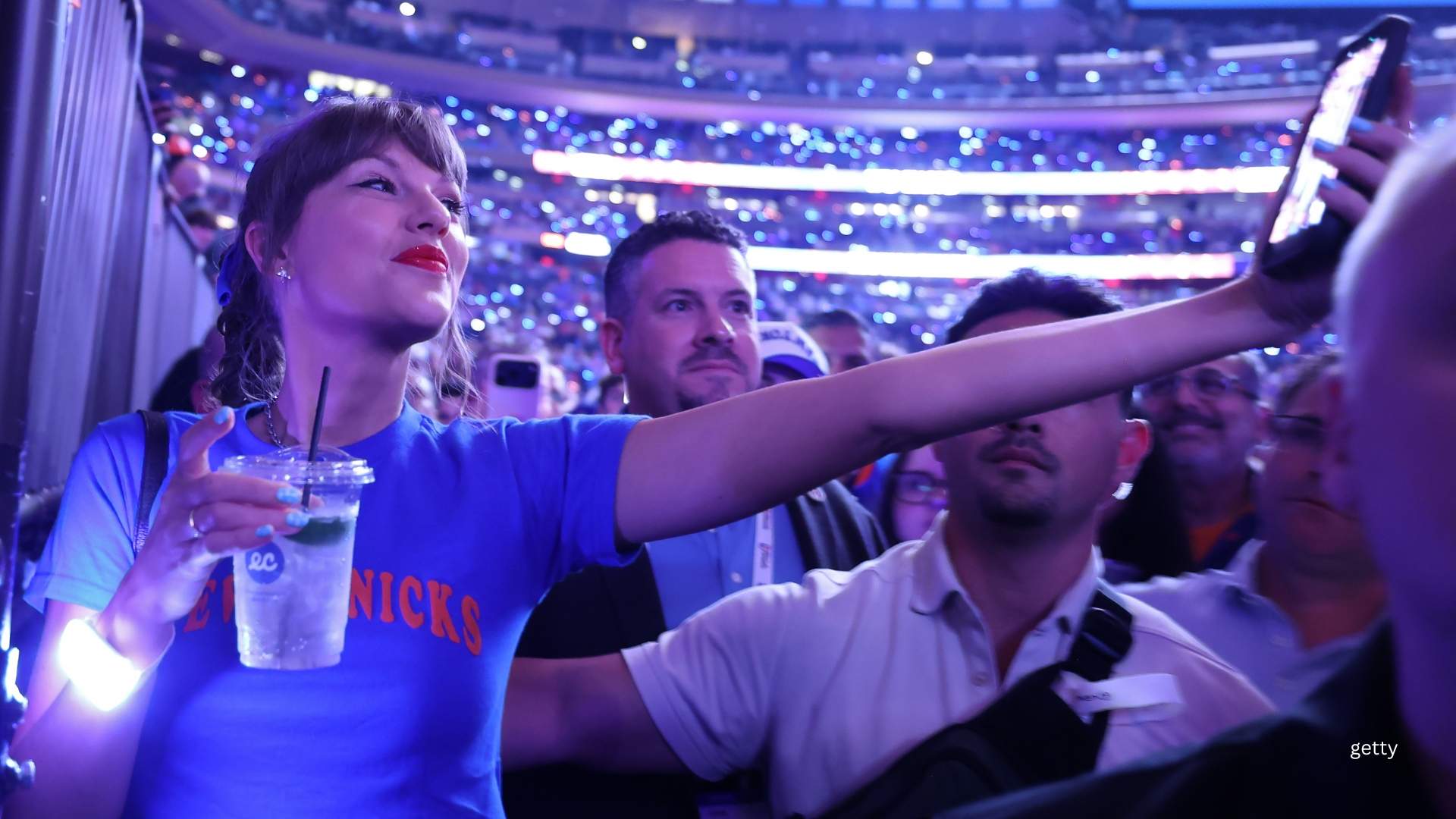
Yet the narrative that unfolded was less about a single player's comment and more about the enduring relationship between Taylor Swift and the New York Knicks. The singer’s presence at the June 10, 2026 Finals courtside—sharing a moment with Mariska Hargitay and the HAIM sisters—was a continuation of a pattern that dates back to the early days of her career. Hargitay recounted how Swift arrived at the game “physically ran from the theater to the game,” and that she “handed it to me” in a custom black T‑shirt, a gesture that encapsulated the singer’s meticulous and personal approach to fandom.
Background & Context
Taylor Swift’s affinity for the Knicks began long before she became a household name. In the early 2000s, while still carving her niche in country music, Swift would attend games in the same seat she occupied at a local high‑school basketball match. Over the years, she has been spotted at nearly every home game, whether in the stands or perched on the court sidelines. Her 2026 Finals appearance was not a first for the star; it followed a tradition of her attending when the Knicks were in playoff contention. According to fans, Swift has been a “long‑standing” supporter, attending for over a decade—a period that predates both Kolek and McBride’s professional careers with the team.
The 2026 NBA Finals saw the Knicks face the San Antonio Spurs in a dramatic Game Four held at Madison Square Garden. The venue’s atmosphere was electrified by the presence of celebrities, with Swift making headlines again for her choice of custom shirts—an element that underscored her commitment to the team. In a recent interview on “Jimmy Kimmel Live,” Mariska Hargitay described the moment: “I was doing a play at the time, and I actually ran from my theater. Physically ran from the theater to the game, and we were sitting together, and I was wearing a black T‑shirt.” The anecdote highlighted the singer’s readiness to weave personal relationships into the larger tapestry of the Knicks’ cultural impact.
Within the broader sports landscape, celebrity attendance at games has long been a double‑edged sword. On one hand, it elevates a team’s visibility; on the other, it invites scrutiny of whether these patrons genuinely support the sport or are merely opportunists. Tyler Kolek’s comments reflect a growing trend among younger athletes to question the authenticity of star appearances. Nevertheless, the community surrounding the Knicks remains deeply invested in the idea that genuine fandom transcends a single game or appearance.
What People Are Saying
The backlash was swift. Within minutes of the clip’s release, fans took to the comments section and Twitter to defend Swift. One user wrote, “I’ve never heard of these players but Taylor’s been going to the Knicks games for over a decade-before they were even there.” Another added, “She was going to games before both of you were in the league lol.” A third fan noted the earliest time they saw her at a game: “Earliest I’ve seen her at the games was when Melo and Stat were on the team.” These responses highlighted the depth of the singer’s history with the franchise, reinforcing the notion that her presence is not a fleeting publicity stunt but an ongoing tradition.
A more sardonic comment emerged, stating, “Kolek is messing with forces he doesn’t understand … best of luck bro.” While the remark carried a tone of mockery, it also reflected a broader conversation about how celebrity culture intersects with professional sports. The comments suggest that many fans are unwilling to accept the notion that Swift’s attendance is performative; instead, they see it as a personal passion for basketball.
Behind the social media noise, many observers have framed the situation as an instance of a new generation of athletes questioning old tropes about celebrity fandom. McBride’s acknowledgment that “Swifties are not going to like that, actually” indicates an awareness of the potential backlash, while Kolek’s own admission that he would “get hate from Swifties” shows a readiness to defend his opinion. For fans, the defense of Swift has become an affirmation of the broader cultural practice of fan solidarity and loyalty, transcending the boundaries between music and sport.
What Happens Next
At the time of writing, the conversation is still unfolding. The Knicks organization has yet to issue a formal statement regarding Tyler Kolek’s remarks. If the team chooses to respond, it will likely emphasize the inclusive nature of its fan base, which includes high‑profile personalities alongside ordinary supporters. The incident may also spark a broader dialogue within the NBA about the role of celebrity presence and how it shapes fan engagement.
In the short term, the singer’s forthcoming concert tour—scheduled to begin in late December—may bring additional attention to her Knicks connection. Fans might view the tour as an opportunity to showcase her continued support, perhaps through coordinated merch drops or special game-day promotions. Meanwhile, Kolek and McBride may face ongoing scrutiny from their teammates and the wider community, a reminder that athletes are increasingly vocal about social media discourse.
From a media perspective, the story illustrates how a single remark can ignite a conversation that touches on celebrity culture, fan loyalty, and the evolving expectations of public figures. The narrative underscores a shift: athletes no longer remain silent observers; they are active participants in cultural conversations, and their words can resonate far beyond the court.
In the end, the debate may remain unresolved, but it will leave an indelible mark on how fans perceive the intersection of celebrity and sport. The story also serves as proof of the power of fandom—both its ability to unite and its capacity to defend the authenticity of those it loves.
The Bottom Line
Our view at MyWorldPulse is that the Tyler Kolek‑Taylor Swift saga is a clear indicator of how sports and pop culture are becoming inseparable. Kolek’s critique, while framed as a simple observation, tapped into a long‑standing narrative of Swift’s loyalty to the Knicks—an anecdote that has been part of the franchise’s lore for over a decade. The backlash from Swift’s fan base showed that fans will fiercely protect their icons, especially when perceived authenticity is questioned. For the Knicks, the incident underscores the necessity of monitoring how players engage on social media; a single comment can reverberate across fan communities and even the broader cultural conversation. Rather than ignoring or suppressing such commentary, teams should foster a culture of open dialogue, guiding athletes to express honest opinions in a respectful, constructive manner. This approach not only preserves the athlete’s voice but also protects the brand’s integrity, ensuring that the excitement around a team’s fandom is genuine and sustainable. Signed, MyWorldPulse Editorial Team.
Reference:
- Tyler Kolek’s Instagram post in the NBA 2K League segment
Read more celebrity news at MyWorldPulse.