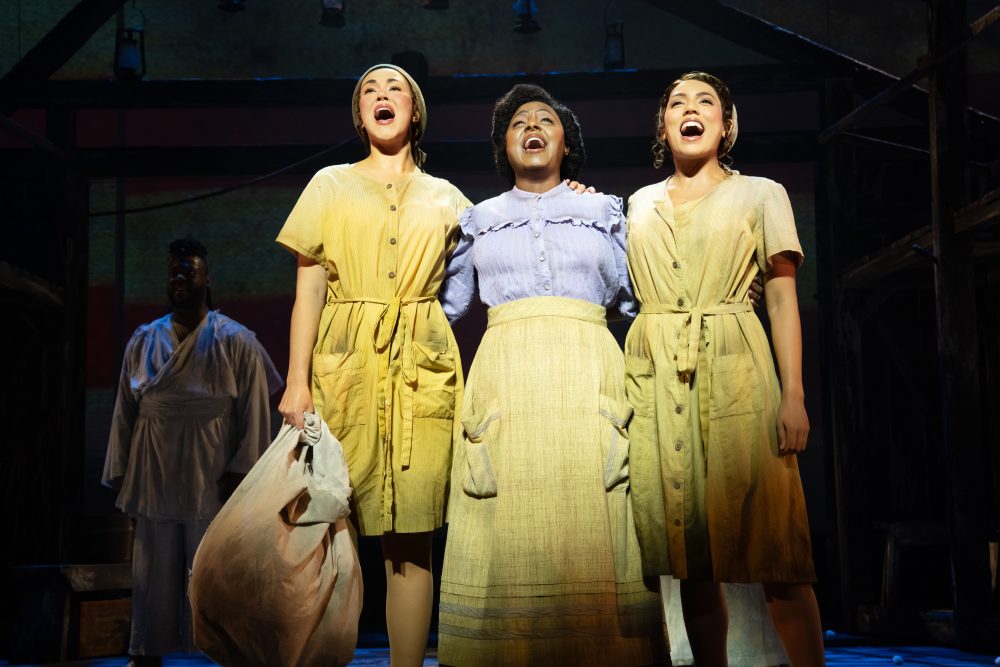
In a city that thrives on headlines and spectacle, the quiet arrival of Angelica Chéri’s new musical Wanted feels almost like a hush‑filled prayer. The show, staged at the historic Booth Theatre, has carried the weight of a 12‑year developmental odyssey into the heart of Broadway, and its debut has already sparked conversations that stretch far beyond the marquee.
Wanted is not a generic tale of ambition or heartbreak; it is a deeply personal pilgrimage rooted in Chéri’s family lineage. The plot is drawn from the lives of her great‑great aunts, Mary, portrayed by Solea Pfeiffer, and Martha Clarke, brought to life by Liisi LaFontaine. Both women were Black Texans navigating the post‑emancipation era, a period of profound transition that redefined identities and destinies. Their stories—laden with resilience, faith, and quiet rebellion—are rendered through a mixture of gospel-infused melodies, spirited choreography, and an undercurrent of social commentary that refuses to be silent.
The production’s creative team, led by director Stevie Walker-Webb, has spent more than a decade refining the script, score, and staging. This long gestation, coupled with the depth of personal history, set lofty expectations for audiences and critics alike. Yet the reception, though warm in its intent, has highlighted a tension between the musical’s ambitious narrative and its actual delivery. Some reviewers commend the powerful vocal performances and evocative set design, while others note that the storyline feels “muted,” struggling to fully capitalize on the raw emotional currents it seeks to explore.
Background & Context
Angelica Chéri, a playwright and lyricist known for her work that interlaces personal memory with larger cultural narratives, grew up listening to family anecdotes about the post‑Civil War era in Texas. Her great‑great aunts’ lives were stories of both subjugation and empowerment, and Chéri has long felt a compulsion to bring those voices to a wider audience. She partnered with director Stevie Walker-Webb, who shares a history of working on productions that emphasize strong, often underrepresented characters. Together, they formed an artistic vision that would translate the aunts’ lived experiences into a theatrical experience, blending gospel, blues, and soul with contemporary musical theatre techniques.
The musical’s journey to Broadway was anything but linear. Initially conceived in the early 2010s, the project faced multiple production halts, budgetary constraints, and creative disagreements. It was only after a significant Kickstarter campaign—bolstered by a community of supporters who recognized the importance of telling these stories—that Wanted could secure the resources necessary for its Broadway incarnation. The Booth Theatre, known for hosting socially conscious productions, became the fitting home for a show that interrogates history while celebrating personal triumph.
From a historical perspective, Wanted is a critical addition to Broadway’s evolving tapestry of narratives that center Black experiences. The musical’s focus on post‑emancipation Texas offers a counterpoint to the more commonly portrayed narratives of the American South. It invites the audience into a space where the lingering shadows of slavery intersect with the bright light of faith and community. The inclusion of gospel music further roots the show in the African American tradition of turning adversity into artistic expression, providing a sonic bridge between past and present.
What People Are Saying
Upon its opening night, Wanted received a mix of praise and critique. Critics applauded the vocal prowess of Pfeiffer and LaFontaine, noting their ability to convey the complexity of their characters with nuance. The choreography, described as “spirited yet grounded,” received accolades for its ability to translate historical movement into contemporary theatre. The musical score, heavily influenced by gospel and soul, was highlighted as a standout element that amplified the emotional stakes of the narrative.
However, several reviewers raised concerns about the pacing and structure of the storyline. While the lyrical content was powerful, the narrative arc was often described as “muted,” a phrase that suggested a disconnect between the weight of the subject matter and the story’s delivery. The 12-year development period might have contributed to this, as the script underwent numerous rewrites that sought to balance historical fidelity with dramatic tension. Some felt that the musical’s ambition exceeded its execution, leaving certain plot points underdeveloped or emotionally distant.
Audience reactions echoed this duality. In the weeks following its premiere, the Booth Theatre reported strong ticket sales, especially from community groups and local historians eager to see their heritage represented on stage. Social media buzz around the show grew organically, with attendees sharing clips of the gospel performances and discussing the historical context. Yet many comments on platforms like Instagram and Twitter expressed a desire for deeper exploration of the characters’ inner lives—questions about the aunts’ motivations and the societal forces shaping their choices that the musical hinted at but never fully unpacked.
Industry insiders noted that Wanted may serve as a stepping stone for Chéri and Walker-Webb, both of whom are now considered significant voices in the movement to diversify Broadway’s repertoire. The show’s presence at the Booth Theatre—alongside other notable productions—underscores a broader shift towards narratives that reflect America’s multifaceted past and present.
What Happens Next
As Wanted continues its run, several potential avenues for expansion are on the table. The creative team is reportedly in discussions with the National Black Theatre in New York, considering a co‑production that could broaden the show’s reach beyond Broadway’s traditional audience. The musical’s gospel score and storytelling format lend themselves well to touring productions, especially in regions with rich African American cultural histories, such as the Deep South and the Midwest.
There is also speculation about a possible film adaptation, a format that could allow the raw emotional moments and gospel performances to resonate with a global audience. The story’s historical depth would be an attractive feature for filmmakers seeking to blend historical drama with contemporary musical elements. However, any adaptation would need to honor the authenticity of the original source material, maintaining the delicate balance between entertainment and historical fidelity that Wanted strives to achieve.
Meanwhile, Angelica Chéri has indicated a desire to continue exploring her family’s stories in future projects. She has mentioned the possibility of writing a memoir that complements the musical, offering a more intimate look at the aunts’ lives beyond the stage. Her partnership with Stevie Walker-Webb could also lead to new productions that tackle other underrepresented histories, using the same blend of music, storytelling, and cultural reverence that defines Wanted.
Closing
Wanted arrives on Broadway as proof of perseverance—both personal and artistic. Its 12-year journey from a family anecdote to a staged performance mirrors the perseverance of the aunts it portrays. While critics have debated its narrative sharpness, the musical’s capacity to bring under‑told histories into the limelight cannot be understated. For the audience, it offers an invitation to listen, to reflect, and perhaps to find echoes of their own stories in the gospel-soaked chords that carry the memory of a resilient generation. As the show continues to occupy the Booth Theatre’s bright lights, it reminds us that the stories we tell, however quiet, can still resonate across the stage and into the hearts of those who watch.
The Bottom Line
MyWorldPulse’s take: *Wanted* is a triumph of perseverance, yet its story still feels like a whisper in a cathedral. The musical’s gospel score and the powerful vocal performances of Solea Pfeiffer and Liisi LaFontaine deliver an unforgettable sonic experience that transports audiences to post‑Civil War Texas. However, the narrative’s lingering sense of being ‘muted’ reveals an industry-wide issue: a disconnect between the weight of historical material and the demands of contemporary storytelling. Broadway has long been a stage for grand narratives, but *Wanted* reminds us that nuance and emotional immediacy must be equally prized. As the show continues to run, its potential adaptations—whether touring, film, or a memoir—offer an exciting avenue for deepening its impact. The show’s existence encourages other creators to pursue under‑represented histories with confidence, knowing that audiences are eager for both the authenticity and the immediacy of the stories told. In short, *Wanted* is a clarion call to the industry: let’s amplify voices that have long been silent, but do so with a story that speaks as loudly as the music.
Reference:
- Angelica Chéri’s Instagram post announcing the Broadway premiere
Read more celebrity news at MyWorldPulse.