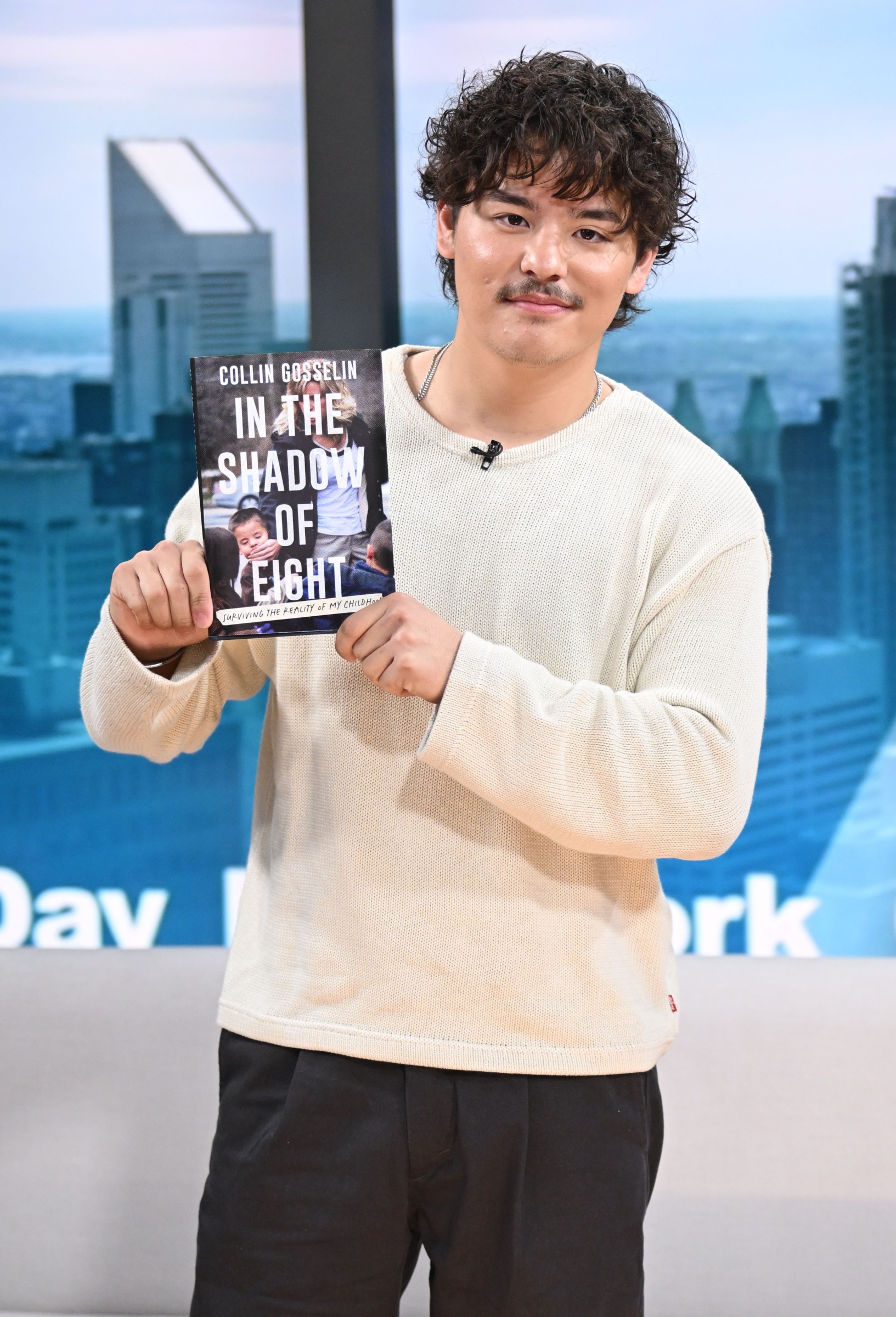
Ashley H., a former housekeeper for the Gosselin clan, has stepped into the spotlight, reinforcing the harrowing allegations that Collin Gosselin, the son of reality‑TV star Kate Gosselin, makes in his bestseller In the Shadow of Eight: Surviving the Reality of My Childhood. In a quiet confession that echoes the book’s own claims, Ashley insists that the world’s fascination with the Gosselin family has been a front for an abusive, suffocating home life that even the cameras never captured.
---
Intro: A Quiet Witness Steps Forward
The Gosselin household, long celebrated on television as a whirlwind of laughter, chaos, and endless parenting advice, has always been an object of public fascination. Yet, behind the glossy sets and staged family moments, a far darker reality has simmered. Collin Gosselin’s memoir, which has quickly ascended bestseller lists, alleges that his mother, Kate Gosselin, subjected him to relentless physical abuse and emotional neglect. The book’s revelations have rattled fans, sparking debates about the true cost of reality television fame.
Now, Ashley H., who once worked as a housekeeper within the same estate, has confirmed that the abuses Collin describes were not isolated incidents. According to her, Kate’s controlling nature extended beyond the family to the staff, with a strict “house manual” that dictated everything from photography rules to how the family dog could roam. Ashley’s testimony adds weight to Collin’s claims, suggesting that the abusive dynamics were systemic, not accidental.
The convergence of Collin’s testimony and Ashley’s corroboration has thrust the Gosselin household into an unprecedented scrutiny. Fans who once admired the family’s seemingly perfect life now question what was happening behind closed doors. The story raises unsettling questions about the responsibility of media producers, the safety of children on reality shows, and the ethical obligations of employers toward their staff.
---
Background & Context
Collin Gosselin’s book, In the Shadow of Eight, has become a cultural touchstone for those skeptical of the polished veneer of reality television. The memoir recounts an upbringing marked by a strict regimen, physical punishments, and emotional distance from a mother who was equally devoted to her public image. The book’s title hints at the double life the family led: on screen, they were the quintessential big‑family dynamic; off screen, they reportedly maintained a house that felt “unlived‑in” at all times.
Ashley H. first entered this environment after meeting Kate Gosselin in a coffee shop. Kate’s reputation for luxury and the mystery surrounding her household made the opportunity intriguing, and Ashley accepted a house‑keeping role that granted her intimate access to the inner workings of the estate. The Gosselin household operated under a “house manual,” a set of rules that restricted photography of the children, confined the family dog to the basement, and limited the children’s wardrobe to one or two school outfits per week to curb laundry. These protocols, according to Ashley, were designed to preserve the illusion of a pristine, controlled home while actually stifling the children’s freedom.
She recalls the house’s atmosphere: toys were absent, no children were allowed to play freely, and Kate’s interactions with her kids appeared “robotic.” The mother’s favoritism was stark, with certain children receiving affection while others were subjected to harsher treatment. The tension between public persona and private practice was palpable. Kate’s insistence on a spotless, orderly environment mirrored the television show’s portrayal of perfection, masking a reality where physical discipline and emotional distance were routine.
---
What People Are Saying
Collin’s book has ignited a wave of responses ranging from shock to skepticism. Fans of the original reality series express disbelief that the glamorous family dynamic could conceal such cruelty. Others, more critical, view the memoir as a potentially manipulative narrative aimed at capitalizing on the family’s name. In social media circles, there is a sharp divide: some defend Kate’s parenting style as stringent but not abusive, while others point to Collin’s vivid descriptions as undeniable evidence of a toxic environment.
Ashley’s testimony has intensified the conversation. By confirming the presence of a “house manual” and describing specific moments where Collin was physically grabbed, she lends tangible weight to the book’s claims. Her description of discovering a red plastic spoon hidden among school supplies—an odd detail in an otherwise meticulously organized home—has become symbolic. It represents the hidden, overlooked violence that permeated the household, hidden behind a veneer of order.
Industry insiders, though reluctant to comment, have noted the broader implications for reality television production. Producers often prioritize narrative drama over participant welfare. The Gosselin case has reignited discussions about safeguarding protocols for children on long‑running reality series, with some advocating for more stringent oversight. Meanwhile, some commentators argue that the series’ success depended on the very strictness that now appears to have caused harm, suggesting a dangerous cycle of sensationalism and neglect.
---
What Happens Next
As the Gosselin family confronts mounting scrutiny, several avenues are opening. Legally, Collin has hinted at possible civil action against his mother, citing abuse and neglect. While no formal lawsuit has been filed yet, the public exposure of the allegations increases the likelihood of legal proceedings, especially if evidence from Ashley and other staff can corroborate Collin’s accounts. The timing of Collin’s book, combined with Ashley’s support, could prompt investigators to examine the household’s past, potentially leading to formal charges or protective orders.
Beyond the courtroom, the industry may undergo policy changes. Reality television networks could review and reinforce child safety guidelines, ensuring that producers actively monitor the well‑being of participants. The Gosselin case may serve as a cautionary tale, highlighting the consequences of neglecting child welfare in pursuit of ratings.
On the public front, the book’s sales have spiked, indicating that readers are eager to understand the hidden side of a familiar family. Media outlets are likely to revisit the original series, offering new analyses that contextualize the family’s on‑screen behavior within the framework of Collin’s revelations. If a film or documentary emerges, it could reach a wider audience, further shaping the narrative.
Finally, Kate Gosselin’s response remains critical. While she has not yet publicly addressed the specific allegations in this instance, her future statements will be closely watched. A denial, an apology, or a nuanced explanation could influence public perception, legal outcomes, and the legacy of the Gosselin name.
---
Closing
The convergence of Collin Gosselin’s memoir and Ashley H.’s firsthand confirmation forces a re‑evaluation of a family that once symbolized the dream of big‑family bliss. Behind the glitz of a reality‑TV household lies a stark reminder that appearances can be deceiving, and that those who appear to thrive under the spotlight may be quietly enduring abuse. As the story unfolds, the industry, the public, and the law will each grapple with the ramifications, ensuring that the narrative of the Gosselin household is no longer just a televised spectacle but a cautionary tale of hidden suffering.
The Bottom Line
The Gosselin revelations are a stark reminder that the spectacle of reality television often masks a far more troubling reality. When a family’s on‑screen narrative diverges so dramatically from the lived experience of its members, it becomes clear that producers, network executives, and audiences share a responsibility to protect those who are most vulnerable—children in particular. The evidence presented by Ashley H., especially the symbolic discovery of a red spoon, demands that we move beyond lip‑service and enact rigorous, enforceable safety protocols. Reality TV must evolve from entertainment alone to a platform that safeguards its subjects, or else it risks repeating the Gosselin tragedy on a larger scale. The time for complacency is over; the industry, the media, and the public must champion genuine accountability. —MyWorldPulse.com
Reference:
- Collin Gosselin’s official Instagram post announcing the book
Read more celebrity news at MyWorldPulse.