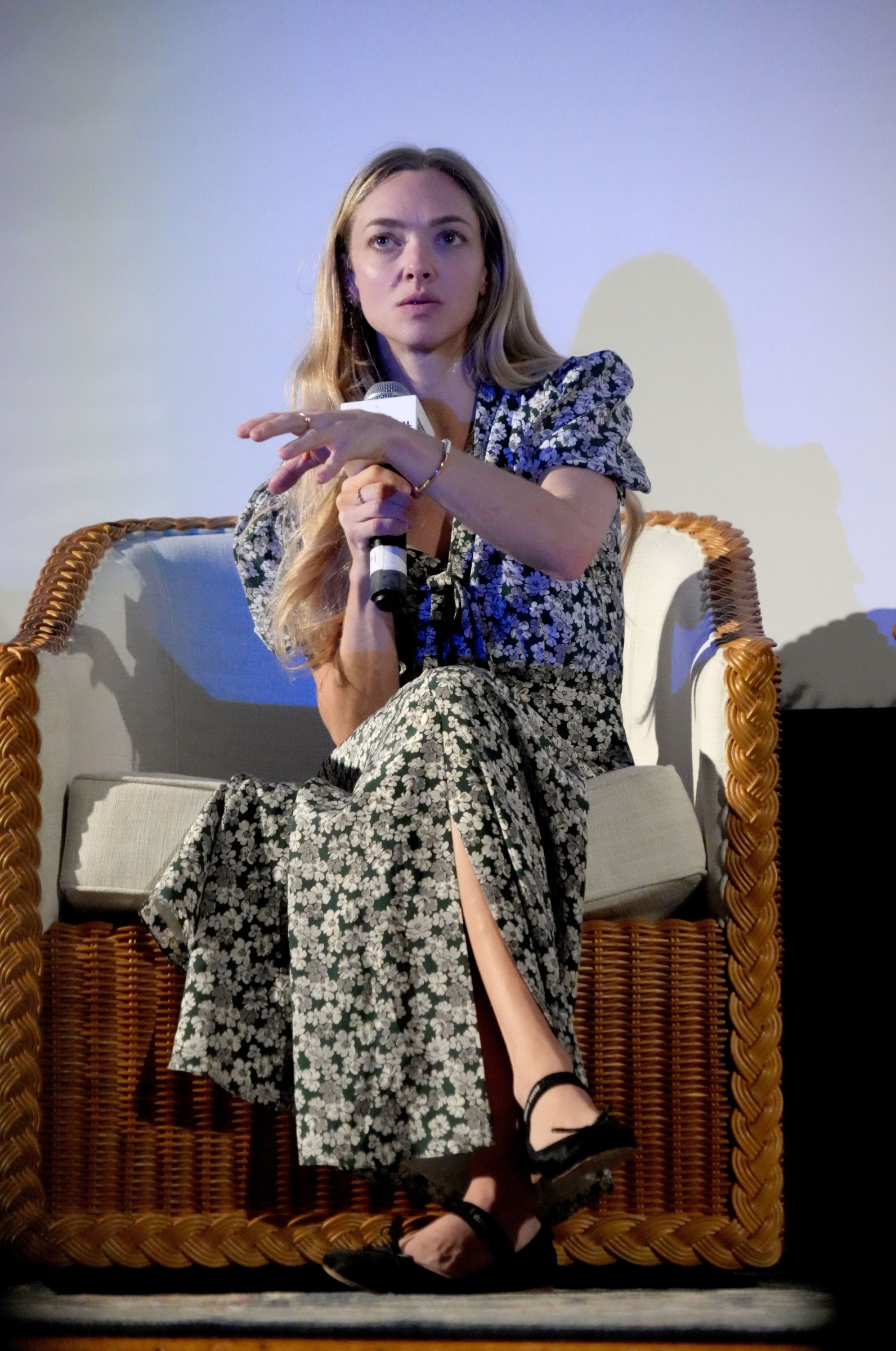
For the first time in more than a decade, the actress we’ve followed from “Mamma Mia!” to “Les Misérables” chose to walk away from a high‑profile television role that demanded a 15‑minute intimate sequence. “I don’t wanna do it,” she told reporters after her decision was revealed, a candid admission that has sparked conversation about the evolving boundaries actors set in their careers.
The choice came in the context of a competitive industry where creative vision and personal comfort must balance. Seyfried, who has always been selective about projects, had already completed a major role in the upcoming sci‑fi series “Beyond The Edge,” a show that had just wrapped its first season and was slated for a second. Her departure left producers scrambling to find a suitable replacement, and the media frenzy that followed underscored the high stakes involved. What made this story resonate beyond the surface was the actress’s explicit statement that she no longer feels at ease with scenes that depict sexual content, a stance that reflects broader shifts in how performers negotiate the portrayal of intimacy on screen.
Beyond the headline, the incident invites a closer look at how the industry’s landscape is changing. Actors are increasingly vocal about their comfort zones, and audiences are more attuned to the ethical dimensions of storytelling. Seyfried’s public acknowledgment invites a wider conversation about the autonomy of performers and the responsibilities of creators to respect personal boundaries.
Background & Context
Amanda Seyfried’s career has spanned a remarkable range of roles that showcased her versatility. From the vibrant music‑filled romance of “Mamma Mia!” to the emotionally charged drama of “Les Misérables,” she has consistently chosen projects that push her creatively. In recent years, she expanded into science fiction and television, taking a leading role in the cyber‑thriller “The Last of Us” and appearing in the acclaimed series “The Midnight Library.” These choices reflected a deliberate effort to diversify her portfolio and avoid being pigeonholed.
The new show in question—rumored to be a limited series produced by a major streaming platform—promised a blend of psychological thriller and speculative drama. The role of a protagonist navigating a labyrinthine conspiracy required an intimate moment that would span 15 minutes of on‑screen time. For an actress whose career has not centered around explicit sexual content, the request marked a departure from her previous work. It was not merely the length of the scene that mattered; it was the broader implication of portraying sexual intimacy in a way that felt authentic while maintaining personal agency.
Industry insiders suggest that the offer came during the post‑production phase of the first season, with producers keen to elevate the emotional stakes of the narrative. They argued that the scene would deepen character development and resonate with a mature audience. However, for Seyfried, the decision to refuse the role was rooted in a long‑standing personal principle. She had previously spoken in interviews about the importance of consent and authenticity, and her choice was consistent with her public stance on maintaining control over her body and image.
What People Are Saying
Reactions have been swift and diverse. Some fans praised Seyfried’s honesty, applauding her commitment to personal boundaries and calling her decision an example of integrity in Hollywood. Others, particularly within fan communities that cherish her work, expressed disappointment that the actress would forgo a potentially high‑profile role. The dialogue on social media platforms was polarized, with hashtags such as #RespectHerChoice and #ArtisticIntegrity trending for a few hours after the news broke.
Professional commentators weighed in on the broader implications. A well‑known entertainment critic highlighted the growing trend of actors setting strict limits on the depiction of sexual content, arguing that this shift signals a change in how storytelling is approached in mainstream media. In a recent column, the critic noted that the industry has historically pressured performers to conform to conventional norms of intimacy, and that Seyfried’s refusal could catalyze a new standard of respectful representation.
Within the industry, reactions ranged from supportive to pragmatic. A producer who worked with Seyfried on an earlier project emphasized the importance of creative trust, noting that the actress’s refusal was handled with professionalism and respect. A fellow actor, known for a similarly controversial decision a year earlier, expressed solidarity, citing the importance of personal comfort in a field that often demands compromise.
The conversation also touched on the financial aspects of such decisions. While the specifics of the contract were not disclosed, it is widely understood that the role was accompanied by a substantial compensation package. Seyfried’s choice to decline the role, therefore, also signals a willingness to prioritize artistic integrity over financial gain—a stance that has inspired both admiration and debate among industry stakeholders.
What Happens Next
In the immediate aftermath, the production team behind the series announced an open casting call to fill the vacant role. The search highlighted a need for a performer who could navigate the emotional depth required by the 15‑minute scene while maintaining the narrative flow. This process is expected to take several weeks, as producers aim to secure an actor who aligns with the creative vision and ethical guidelines set forth.
Seyfried’s decision has opened a door for her to pursue new projects that resonate more closely with her values. Rumors suggest that she is in talks for a role in an upcoming period drama that requires minimal on‑screen intimacy, allowing her to focus on character nuance. Her agent has indicated that she remains open to projects that challenge her acting skills while respecting her personal boundaries.
The incident is likely to have a ripple effect across the television and film industry. Production houses may revise their approach to intimate scenes, incorporating clearer consent protocols and providing actors with greater transparency regarding the nature of such sequences. This shift could lead to more collaborative environments where the comfort levels of performers are discussed openly before contracts are finalized.
Moreover, the conversation that has unfolded is set to influence upcoming policy discussions within industry guilds. The Screen Actors Guild‐American Federation of Television and Radio Artists (SAG‑AFTRA) has announced a new working group focused on the depiction of sexual content in media, aiming to establish guidelines that safeguard actors’ autonomy and welfare.
In the days to come, Amanda Seyfried will likely appear at a few media events, discussing her perspective on creative choices. Her upcoming appearance at the New York Film Festival is slated to feature a panel on “Consent and Creativity in Modern Storytelling.” Fans and critics alike will watch closely to see how her candid approach will shape her career trajectory and influence broader industry practices.
The decision may seem like a single point in a long career, but it is emblematic of a larger shift toward respect, agency, and open dialogue in the arts. Amanda Seyfried’s choice underscores that even in an industry where the line between personal and professional can blur, an artist can stand firm in her convictions, setting a precedent for others to follow.
The Bottom Line
MyWorldPulse View: Amanda Seyfried’s choice to decline a 15‑minute intimate scene is a bold stand that challenges the long‑standing expectation that actors must tolerate explicit content to secure high‑profile roles. This act of personal integrity sends a clear message that consent and comfort are non‑negotiable, even in a market driven by sensationalism. The industry must heed this signal by embedding explicit consent protocols into every contract, ensuring that every intimate moment is negotiated with transparency and mutual agreement. Audiences deserve to see stories told with respect for performers, and studios should view such boundaries as opportunities to enhance creativity, not obstacles. By championing this shift, MyWorldPulse affirms that the power of storytelling lies not in how much we show, but in how we choose to show it—with dignity, respect, and clear consent for every actor involved.
Reference:
- Official post on the person's verified social media account
Read more celebrity news at MyWorldPulse.