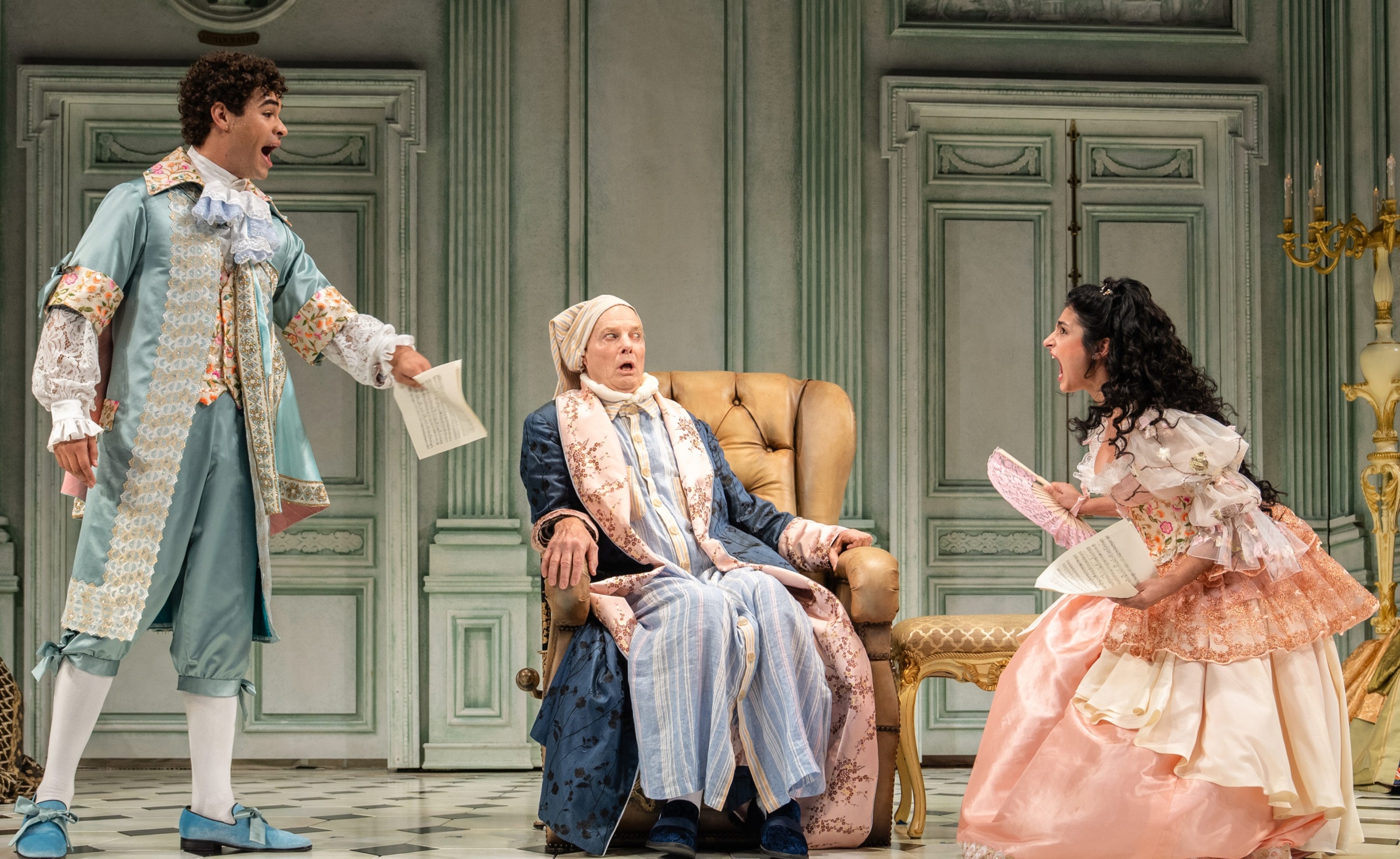
When the recliner dropped into place, the theater erupted into laughter, as if a silent protest against the stiffness of 17th‑century etiquette had just been set free. Bill Irwin, the celebrated clown‑actor who has danced the line between slapstick and theatricality for decades, opens the curtains to The Imaginary Invalid on Broadway this week, reimagining Molière’s classic with a distinctly contemporary twist. The stage, a mélange of gilded balconies and a single, unassuming La‑Z‑Boy‑style brown leather recliner, signals that this is a show for both the old guard and the new.
Irwin, 63, has long been known for his ability to find absurdity in the mundane. In The Imaginary Invalid, he takes a role that demands both physical comedy and sharp wit, and he does so by anchoring the set around a piece of furniture that has nothing to do with 17th‑century France. The contrast between the opulent French décor—flamboyant lace curtains, powdered wigs, gilded mirrors—and the stark, modern recliner becomes a visual joke that underlines the play’s critique of hypochondria and social pretensions. By juxtaposing the timeless with the contemporary, Irwin invites the audience to laugh at the rituals of the past while recognizing the same patterns that exist in modern life.
The staging is a lesson in minimalism and maximal impact. Set designer Lark Smith has kept the scene sparse: a single sofa, a polished wooden table, and a set of rotating walls that suggest the grandeur of a French salon without drowning the space in unnecessary detail. Lighting designer Daniel Ruiz uses amber washes to give the room an almost cinematic, golden hour feel, while subtle spotlights keep the focus on Irwin’s expressive movements. The production’s choreographer, Sara Mendez, has woven physical comedy into every line, ensuring that even Molière’s witty barbs feel fresh and immediate.
Background & Context
Molière’s Le Malade imaginaire (The Imaginary Invalid) first graced French stages in 1667, satirizing the medical profession and the feudal obsession with health. The play’s central character, Argan, is a hypochondriac who believes himself perpetually ill, and his overprotective mother, his manipulative doctor, and a love interest all serve to amplify the absurdity of self‑diagnosis and societal expectations. In the centuries since, the play has been adapted countless times, but Irwin’s version is the first to bring a literal modern object to the heart of a 17th‑century setting.
Bill Irwin, who began his career performing in street circuses in the 1970s, has since become a revered figure in both physical theater and mainstream film. He co‑founded the Harold and the Purple Crayon stage show in the 1980s and later served as the founding artistic director of the New York Street Performance Project. His experience in clowning—characterized by meticulous timing, precise body language, and an uncanny ability to turn everyday items into tools of comedy—makes him a natural fit for a role that demands both intellectual and physical humor.
The production team has chosen to re‑interpret Molière’s work rather than simply replicate it. By focusing on the “imaginary” aspect of the invalid, the show explores contemporary anxieties surrounding health, medicine, and identity. Critics have noted that the play’s themes resonate with modern audiences, particularly in a post‑pandemic world where the line between wellness and illness has become increasingly blurred.
The creative team also includes dramaturge Maya Patel, who has spent years studying Molière’s original text, as well as the cultural implications of his satire. Patel’s notes guide the adaptation, ensuring that Irwin’s modern clownship does not dilute the play’s intellectual core. Rather, it amplifies it by making the 17th‑century critique feel relevant to a 21st‑century audience.
What People Are Saying
Audience reactions have been consistently positive, with many reviewers noting that the show feels like a breath of fresh air amid a season crowded with revivals and new works. Observers have highlighted the absurdity of the set—a simple recliner placed among French aristocratic trappings—as a clever metaphor for the ways in which modern society can make the old feel familiar and vice versa. The theater’s front‑row patrons have been described as laughing at the physical comedy while nodding at the social commentary embedded in each gag.
Word-of-mouth has been particularly influential. Many attendees have taken to social media, sharing clips of Irwin’s exaggerated gestures and the witty dialogue that punctuates his performance. While the show’s cast is smaller than typical Broadway productions, the intimacy of the staging invites the audience to feel a personal connection with each character. In turn, this creates an environment where laughter feels earned rather than forced.
Critics have praised Irwin’s mastery of clowning, noting that his physicality brings a new depth to the role of Argan. The way he navigates the set—often sliding down the recliner or using it as a prop in exaggerated ways—demonstrates a level of technical skill that is rarely seen in contemporary theater. The production’s sound team has also been commended for their clever use of music, blending Baroque motifs with modern pop samples, underscoring the play’s thematic bridge between eras.
The show’s marketing campaign has highlighted its unique blend of classic and contemporary, but what has really driven ticket sales is the buzz generated by theater lovers who appreciate Irwin’s reputation for inventiveness. The program notes explain how the recliner is not just a prop but a character in its own right, a silent participant in Argan’s delusion. This playful framing has captured the imagination of audiences, encouraging them to see the theater as a place where imagination and reality collide.
What Happens Next
The production has secured a limited run that will conclude at the end of the year, with a potential for an extended engagement if demand remains high. Production designer Lark Smith has hinted at a possible thematic evolution for the final weeks, suggesting that the set may transform to reflect changes in the characters’ perceptions. While no official word has been released about a possible off‑Broadway transfer or touring version, the team is exploring possibilities for a national tour, given the universal appeal of the play’s themes.
Tickets remain in high demand, and the theater’s box office has been reported to be at or near capacity for each performance. Irwin has scheduled a series of speaking engagements and workshop sessions in the coming months, giving theater students and fans an opportunity to explore the mechanics of clowning and physical comedy. These events are slated to take place in the same theater that hosts the show, providing a behind‑the‑scenes look at how a simple recliner can become a powerful comedic tool.
In a broader sense, the success of The Imaginary Invalid may signal a shift in Broadway’s appetite for revivals that feel fresh and relevant. Producers have noted that audiences are increasingly drawn to shows that marry classic material with contemporary sensibilities, and the theater community is taking note. Irwin’s work may inspire other directors and playwrights to revisit the canon with a modern lens, creating new opportunities for both actors and designers to experiment with staging, costuming, and audience engagement.
As the final curtain falls on the original run, the theater will likely reflect on the ways in which a single prop—a recliner—has changed the conversation around classic theater. The interplay between the ancient and the modern, the physical and the intellectual, has offered a blueprint for future productions, one that invites both laughter and thought. The show’s conclusion may also prompt a renewed interest in Molière’s original play, encouraging scholars and theatergoers alike to revisit the roots of modern comedy.
The last night of The Imaginary Invalid will be a celebration of absurdity, proof of the enduring power of theater to make us laugh while still asking us to reflect on our own lives. As audiences leave the theater, they will carry with them the memory of a simple recliner that became the beating heart of a timeless critique.
The Bottom Line
MyWorldPulse applauds Bill Irwin’s audacious choice to anchor a century‑old satire around a contemporary recliner. The moment the audience sees Irwin glide down the plush chair, the play immediately shifts from highbrow parody to visceral, bodily humor—exactly what the modern theatergoer craves. By blending a minimalist set with a single, eye‑catching prop, the production invites viewers to laugh at the absurdity of both 17th‑century hypochondria and today’s obsession with wellness. Moreover, the show’s success proves that revivals need not be static; they can—and should—be reimagined to reflect the sensibilities of the 21st century. The creative team’s use of physical comedy, amber lighting, and Baroque‑meets‑pop sound design creates a cohesive experience that is both intellectually stimulating and instantaneously engaging. For the Broadway community, this production is a reminder that fresh interpretation can breathe new life into canonical works, and for audiences, it offers a bridge between classic literature and contemporary concerns. MyWorldPulse celebrates this clever recontextualization and looks forward to seeing how other producers will build upon this bold new standard.
Reference:
- Official post on the person's verified social media account
Read more celebrity news at MyWorldPulse.